What Happened To Billionaire Owners Saving Legacy Media?
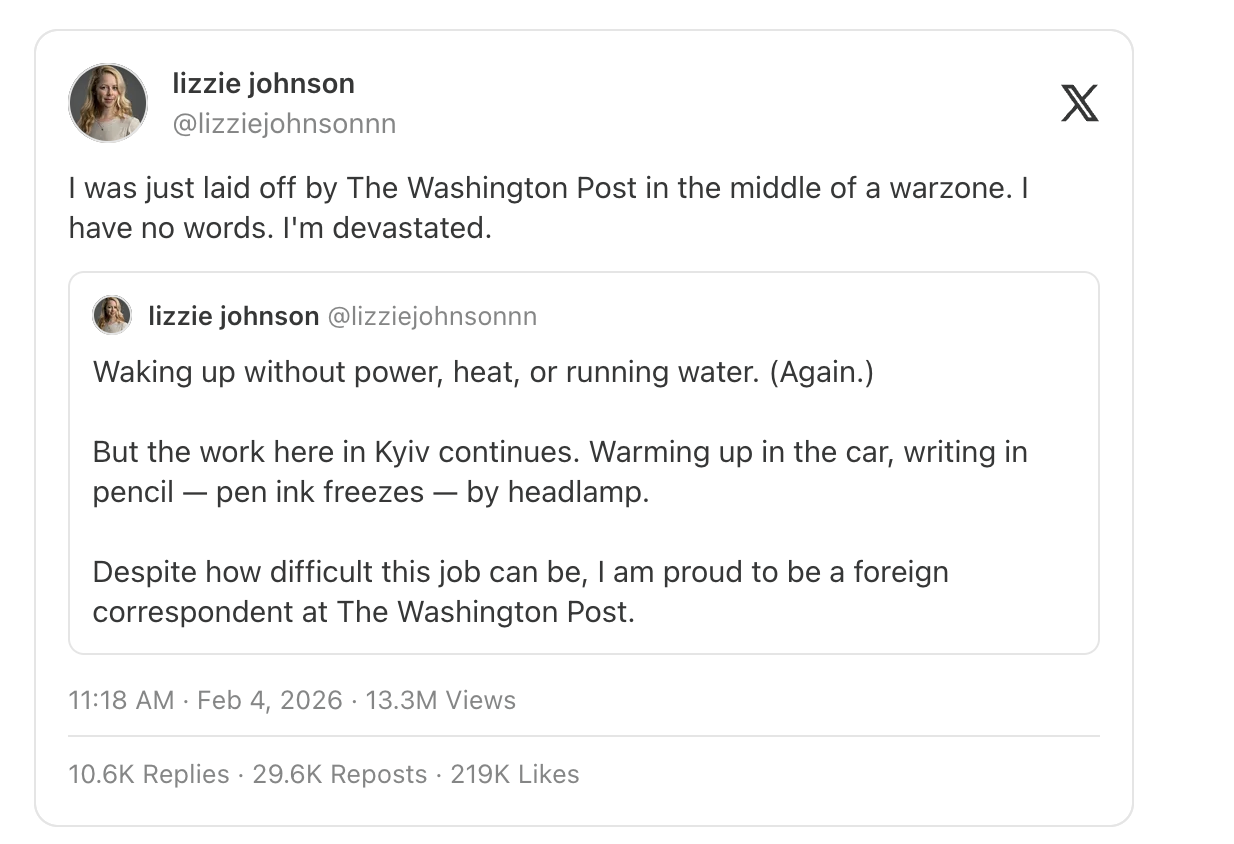
The Washington Post laid off roughly one-third of its staff (~300 reporters) this week, eliminating its sports section, most of its books coverage, and most of its foreign reporters. The shakeup has raised questions about the state of legacy media — and whether billionaire owners have any chance of saving publications in decline.
THE BILLIONAIRES
Amazon founder Jeff Bezos purchased the Washington Post in 2013 for $250 million. Since then, the Post has lost hundreds of millions of dollars in recent years.
Biotech billionaire Patrick Soon-Shiong bought the Los Angeles Times and other papers in 2018 for $500 million.
Salesforce co-founder Marc Benioff and his wife purchased TIME magazine for $190 million in 2018.
The Boston Globe and its other New England media properties were sold for $70 million in 2013 to Boston Red Sox owner John Henry.
Printing company billionaire Glen Taylor bought the Minneapolis Star Tribune in 2014 for $100 million.
The non-profit of Apple co-founder Steve Jobs’ widow, Laurene Powell Jobs, acquired a majority stake in The Atlantic in 2017.
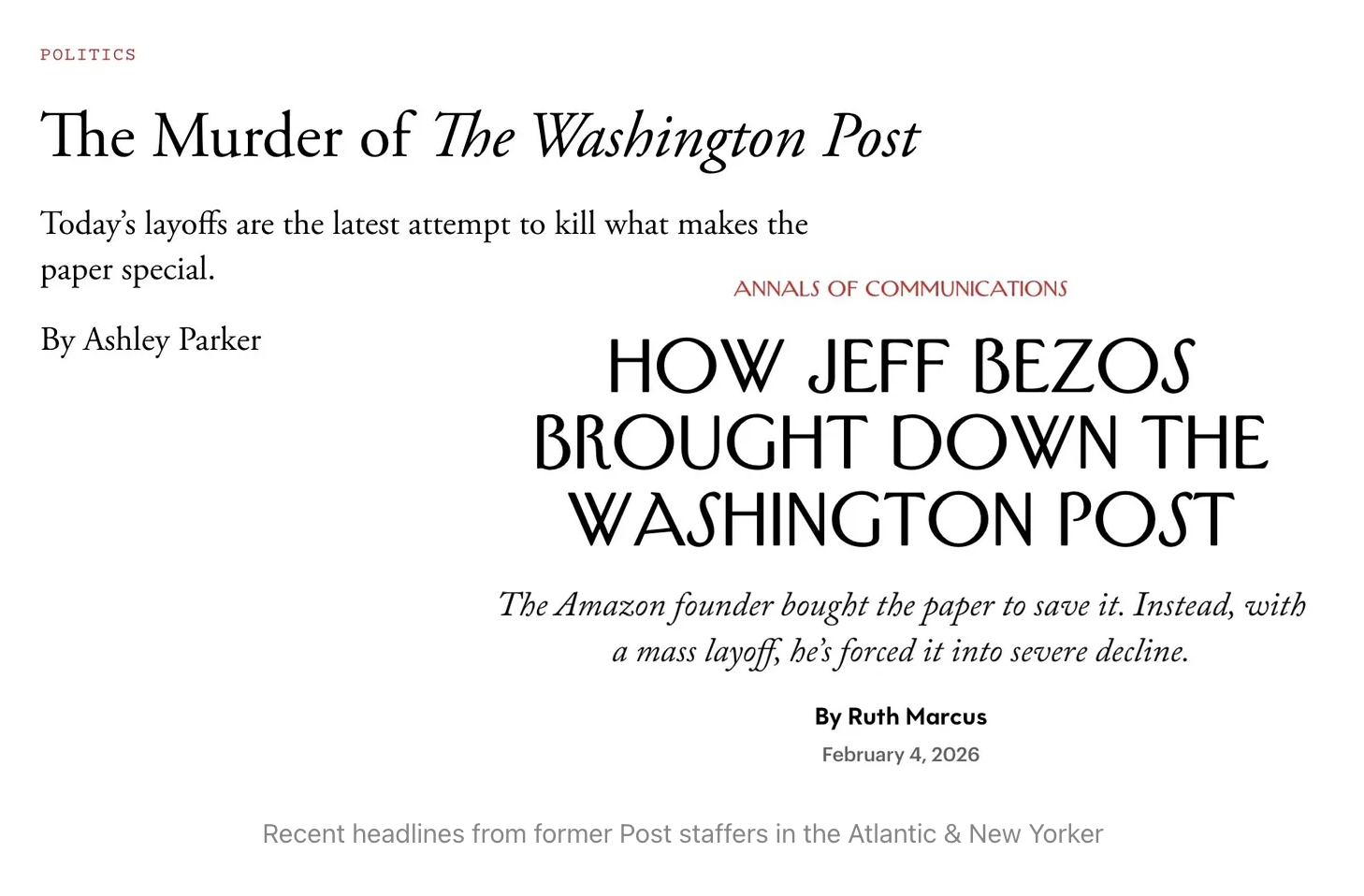
Some of the owners, and their publications, have fared better than others. However, Bezos and Soon-Shiong made headlines in 2024 after blocking their papers’ editorial boards from endorsing Democratic presidential candidate Kamala Harris — a move that sparked multiple resignations and mass subscription cancellations. Both newspapers are in pretty dire condition.
The question is how serious were the owners about really reviving and growing these brands given the role they play in democracy/society vs merely viewing them as trophies?
At the same time, the New York Times — which has been owned by the Ochs-Sulzberger family since 1896 — reported 2025 fourth-quarter revenue of about $802 million, a roughly 10% year-over-year increase, as the paper’s digital subscription and ad business continued to grow. The Times has been one of the few legacy outlets that has successfully diversified its revenue stream in recent years by diving into areas like games, cooking and acquiring The Athletic for sports coverage.
WHAT COULD JEFF HAVE DONE?
Bezos is facing mounting criticism for what many journalists and media executives describe as absentee ownership.
Former Washington Post reporter and Axios co-founder Jim VandeHei questioned why a “disinterested, disengaged” owner would tolerate ongoing losses instead of selling the paper, arguing that no organization succeeds without hands-on leadership.
Sen. Bernie Sanders (I-VT) noted that Bezos has been willing to absorb losses elsewhere — including a reported $75 million Amazon deal for Melania Trump’s documentary — while making deep cuts at the Post.
The other side: Meanwhile, some are coming to Bezos’s defense, pointing out how he absorbed huge costs to keep the newspaper afloat in recent years and calling the recent cuts a reasonable business decision, similar to how any owner would approach a company losing massive amounts of money.
INDUSTRY CHANGES
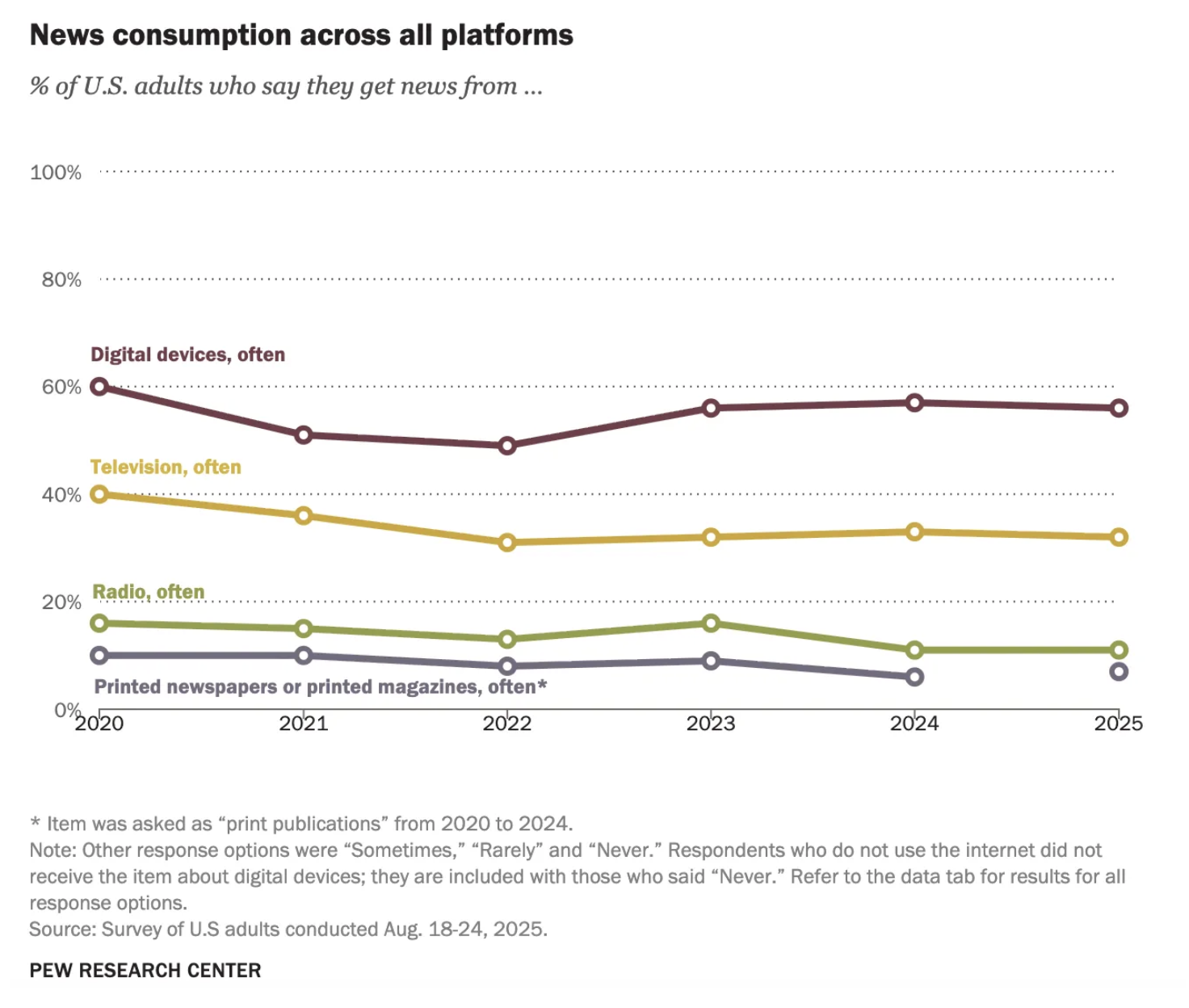
Americans’ trust in mass media fell to a new low in 2025, with just 28% saying they trust newspapers, TV, and radio — down from 40% five years ago.
Filling the gap are social media and digital-first outlets like Axios, Puck, Semafor, Punchbowl News, and Mo News.