
Homan Announces Immediate Pullback Of 700 Federal Agents In Minnesota As Congress Outlines DHS Demands

President Trump says U.S. immigration enforcement “could use a little bit of a softer touch.” He told NBC News on Wednesday that the decision to withdraw 700 federal immigration officers from Minneapolis earlier today came from him — after improved coordination between the federal government and state officials. But Trump said, “You still have to be tough.”
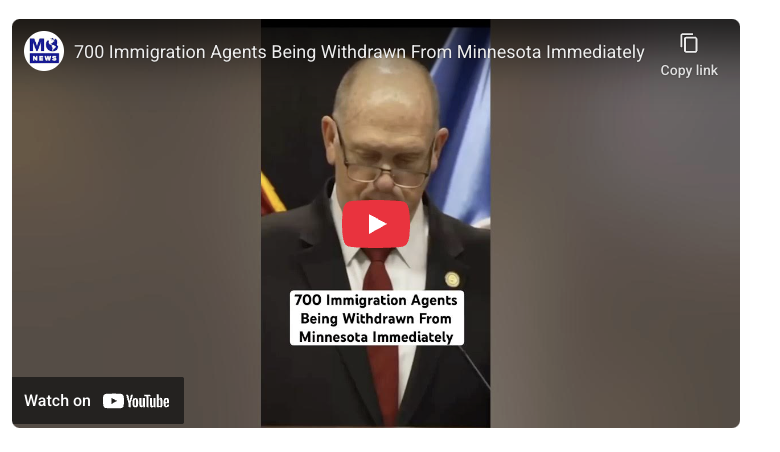
Border Czar Tom Homan announced the move this morning, saying 700 federal law enforcement officers would leave Minnesota effective immediately. It marks a roughly 25% reduction in the federal presence in the state. He said the goal is to “achieve a complete drawdown and end this surge as soon as we can.”
THE CHANGE: About 2,000 federal agents will remain in the Minneapolis area, down from a peak of as many as 4,000 last month. Homan credited “unprecedented cooperation” between the federal government and state and local entities for the pullback. He also said ICE would stick to “targeted” enforcement operations.
CONTEXT: Dubbed the “largest immigration operation ever,” the federal government sent agents to Minnesota last month after the state became the focus of national attention over a massive fraud scandal.
Trump and other Republican lawmakers focused attention on the state's large Somali community, as most of the fraud defendants are of Somali descent.
REACTION: Minneapolis Mayor Jacob Frey said, “The continued presence of 2,000 federal agents in a city that only has 600 police officers is still not deescalation.”
BEGINNING OF THE END?
Following the shooting deaths of two U.S. citizens, Renée Good and Alex Pretti, Trump sent Homan to Minnesota. Federal officials have faced mounting criticism over tactics and accusations of harassment.
To address that, Homan said the administration is moving toward a unified command structure so all officers operate under the same leadership, guidance, and rules of engagement — a change he said would help ensure everyone is “on the same page.”
He said the administration has heard concerns raised by local leaders and civil rights groups and argued that many problems stemmed from multiple agencies operating without a single chain of command.
“My goal, with the support of President Trump, is to achieve a complete drawdown and end this surge as soon as we can, but that is largely contingent upon the end of illegal and threatening activities against ICE and its federal partners that we’re seeing in the community,” Homan said.
ZOOMING OUT
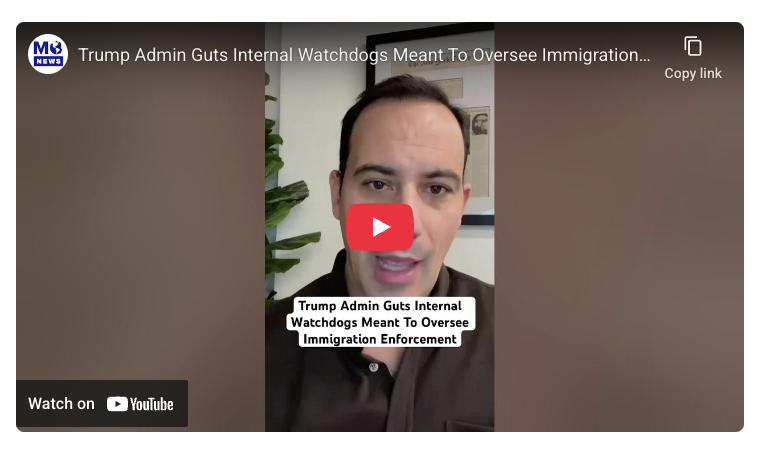
As immigration enforcement has expanded under the Trump administration, internal watchdogs with the Department of Homeland Security have been gutted.
IN THE AGENCY: Despite DHS receiving tens of billions more in funding last year, three congressionally created watchdog offices — Civil Rights and Civil Liberties, the Immigration Detention Ombudsman, and the USCIS Ombudsman — were nearly dismantled.
The civil rights office had about 150 staffers reviewing hundreds of abuse and due-process complaints before Trump’s second term — it now has just nine employees.
The administration argues the watchdog offices slowed enforcement and acted as internal adversaries. Former watchdog officials warn the cuts leave DHS with little independent oversight just as arrests and enforcement powers are rapidly expanding.
ON CAPITOL HILL: Now, lawmakers are pushing for more oversight. DHS funding expires in just nine days, and Democrats outlined demands Wednesday for the reforms they want before passing a full year of funding. DHS funding goes to ICE, as well as TSA, the Coast Guard, FEMA and other agencies.
House Minority Leader Hakeem Jeffries (D-NY) said all immigration agents will need to wear body cameras, stop wearing masks, and face tighter restrictions on how warrants are used during arrests.
Homeland Security Secretary Kristi Noem said Monday that federal immigration agents in Minneapolis will wear body cameras, and will expand nationwide as funding allows. Cameras were supposed to have been fully operational for all ICE agents by September of last year, after years of testing.
House Speaker Mike Johnson (R-LA) already said changes to judicial warrants are “unimplementable” and “not necessary.”
GOP lawmakers have their own demands, including requiring proof of citizenship to register to vote (it’s already illegal for noncitizens to vote) and imposing new restrictions on sanctuary cities.
NEW LOWS
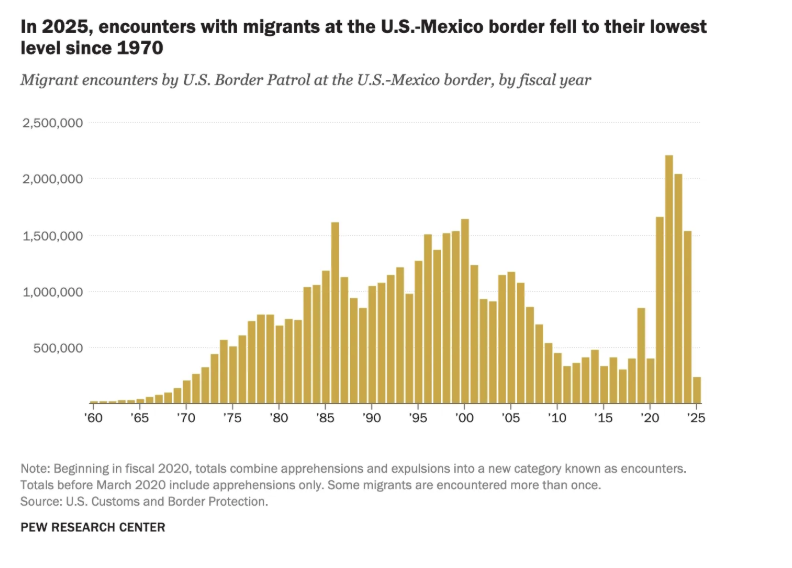
While deportations inside the U.S. remain a contentious political issue, migrant crossings at the U.S.–Mexico border are at the lowest level in more than 50 years. It comes as the U.S. saw negative net migration in 2025 — the first time in at least half a century — driven by the sharp drop in arrivals.