
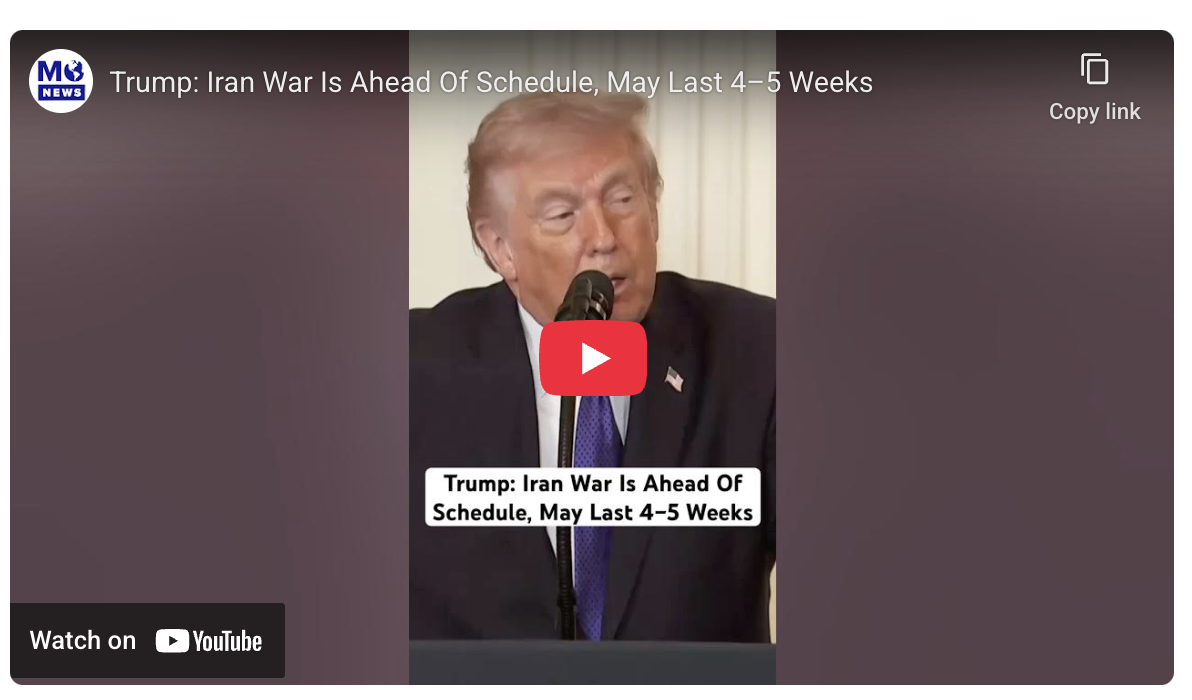
The U.S.-Israeli joint war against Iran entered its third day Monday, with the Trump administration starting to make its case for the war— as polls show just 1/4 Americans back the war.
President Trump said Monday that the war could last several weeks, and the biggest wave of attacks on Iran is yet to come. He added that the war is running “ahead of schedule,” without going into details. The U.S. and Israel said their core mission is to destroy Iran’s military capabilities, including their ballistic missile program and prevent Iran from getting nuclear weapons.
We learned Monday afternoon that six American service members have been killed so far in the operation, as the U.S. State Department warned hundreds of thousands of American civilians in fourteen Middle Eastern countries to evacuate due to “serious safety risks.”
THE RATIONALE: President Trump said the goal of the military operation is to destroy Iran’s missile capabilities, annihilate their navy, ensure Iran never gets a nuclear weapon, and also prevent the Iranian regime from arming and funding armies outside its borders.
Secretary of State Marco Rubio briefed lawmakers Monday, before telling the media that U.S. officials believed Iran’s expanding ballistic missile and drone capabilities posed an unacceptable risk, particularly if left to grow for another year.
Rubio also said Israel was about to attack Iran to destroy its missiles, and the U.S. learned that if Israel attacked, Iran would retaliate by attacking U.S. bases in the region. The US conclusion: Strike Iran first.
REGIME CHANGE? Rubio emphasized that regime change is not the administration’s objective. However, he said that if Iran’s current clerical leadership were to fall, it would be a welcome outcome given what he described as the radical and ideological nature of the regime. Sources told Fox News that the US and Israel have split their targets, with the US focused on military sites, and Israel primarily focused on sites that could help bring the regime down.
INSIDE IRAN: The first wave of strikes killed Iran’s Supreme Leader Ayatollah Ali Khamenei and 49 other Iranian leaders on Saturday, White House press secretary Karoline Leavitt confirmed Monday.
The Iranian Red Crescent says more than 550 people have been killed so far in the multi-day attacks in Iran.
JUST GETTING STARTED: President Trump told CNN’s Jake Tapper that the U.S. military is “knocking the crap” out of Iran, but that the most intense phase of the conflict — what he called a “big wave” of attacks — is still ahead.
FIRST U.S. CASUALTIES
Central Command now says that six U.S. service members “have been killed in action” with others seriously wounded.
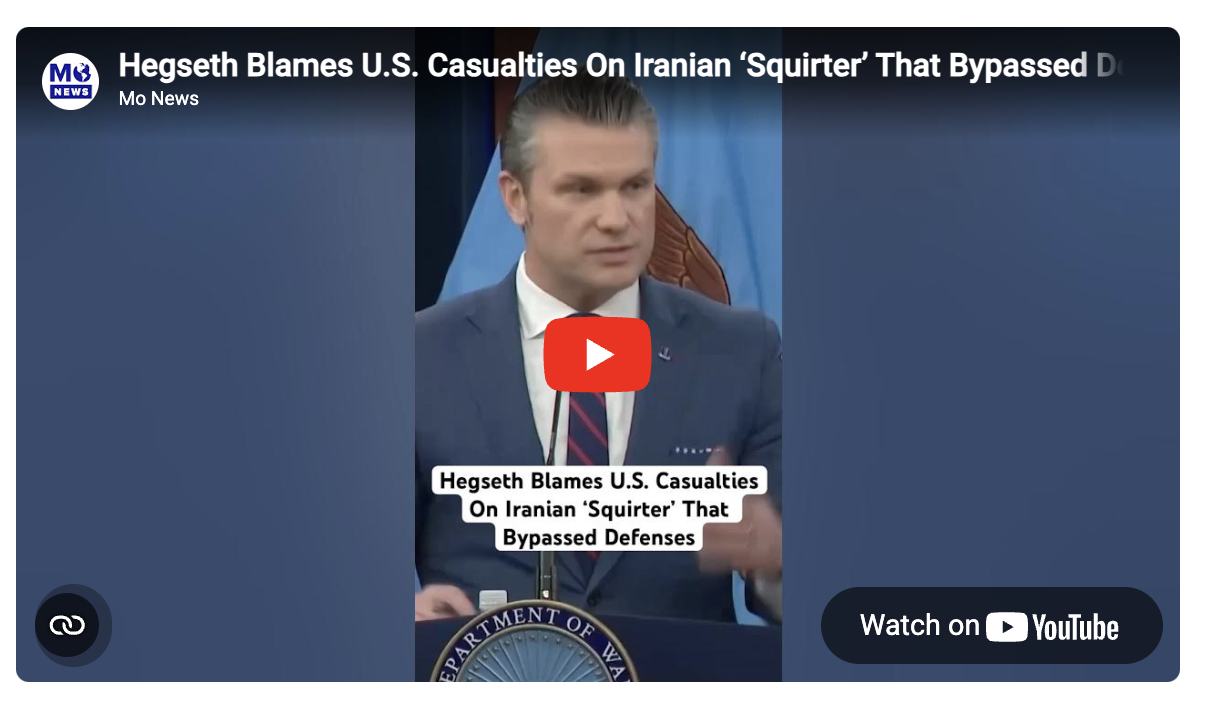
WHAT WE KNOW: Defense Secretary Pete Hegseth said an Iranian strike hit a tactical operations center in Kuwait, killing the service members.
Hegseth blamed the deaths on an Iranian “squirter” that managed to circumvent American air defense systems.
EXPECTED CASUALTIES: Trump told NBC News on Sunday that “we expect casualties with something like this.” Hegseth and Trump have both warned that more U.S. casualties are likely to come.
They both said there are no plans to put U.S. boots on the ground in Iran but wouldn’t rule it out.
FRIENDLY FIRE: Separately, Kuwaiti forces accidentally shot down three U.S. Air Force F-15s Monday morning local time in Kuwait, the U.S. Central Command confirmed. All six U.S. crewmen ejected safely and are in stable condition.
REGIONAL WAR?
Since Saturday’s strikes, Iran is attacking more than just the U.S. and Israel. Saudi Arabia's Crown Prince Mohammed bin Salman (MBS) warned of a wider regional war.
Iran has launched more than 1,000 missiles and drones at Jordan, the United Arab Emirates, Qatar, Kuwait, Saudi Arabia, Iraq and Bahrain in retaliation to the joint U.S.-Israel strikes — all countries with a U.S. military presence. However, they are targeting civilian sites, including hotels, as well as major energy production sites.
Those five countries say they intercepted 400 missiles and about 1,000 drones fired from Iran.
Iranian drones have targeted other Middle Eastern countries like Oman and Saudi Arabia, but they have yet to release official figures, according to the The Wall Street Journal.
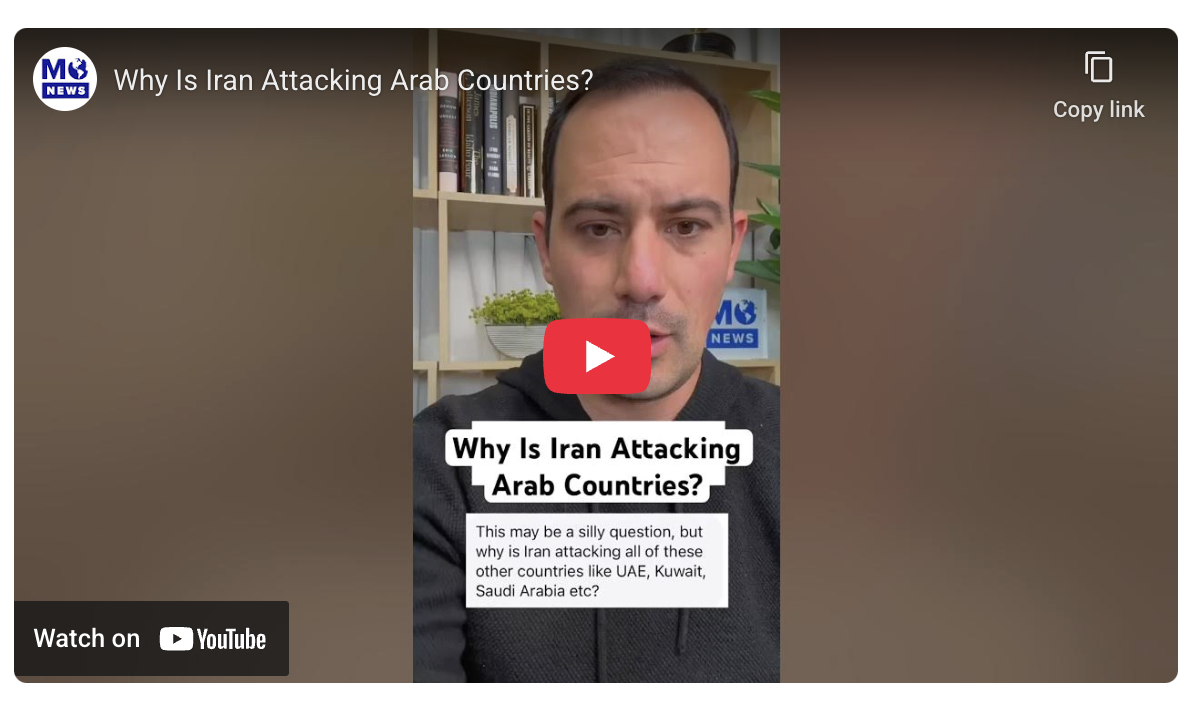
WHY STRIKE OTHER ARAB STATES? In the lead up to the war, Arab countries like Saudi Arabia, UAE, Qatar, Bahrain said they wouldn’t let the United States use their bases to attack Iran. In other words, they wanted to stay out of it.
Iran’s strategy? But Iran apparently is looking to make this a regional war. The idea would be to draw these countries into the war, and inflict economic pain, in hopes they’ll call the Americans and tell them to end it.
At this point, it looks like the strategy could be backfiring and causing more animosity toward the regime. Mosh breaks it down.
WHAT NEXT?
In comments to The New York Times and ABC News on Sunday, Trump outlined several possible post-war transition scenarios for Iran.
#1: SURRENDER: The current Iranian military forces would voluntarily surrender its weapons to the public and yield power. This is EXTREMELY unrealistic.
The same military forces killed thousands of street protesters in January.
#2: VENEZUELA-STYLE: Iran could remain largely in tact under new leadership in a “Venezuela-style” model more aligned with Washington.
#3: UPRISING: Trump also suggested the idea of an uprising, wherein the Iranian people overthrow the regime. Given what unfolded earlier this year, with 30,000+ protesters murdered by the regime in a matter of weeks, it is not clear demonstrators have the weapons or training in order to try this again unless regime military forces defect.
Trump added he has “three very good choices” in mind to lead a post-transition Iran, though some potential figures were killed in recent airstrikes.
"The attack was so successful it knocked out most of the candidates," Trump said. "It’s not going to be anybody that we were thinking of because they are all dead. Second or third place is dead.”

IMPACT AT HOME
Besides of the death toll amongst American service members, the war in Iran has disrupted the global economy, and activated fear of “terror cells” that target North Americans.
GAS PRICES: The conflict with Iran is disrupting crude oil supplies and will likely push prices for gasoline higher. Crude prices have already jumped, but it takes six weeks for crude oil to be processed and turned into gasoline for delivery so the full impact may be somewhat delayed, per CNBC.
BEHIND THE BUILDUP: Qatar shut down liquefied natural gas (LNG) production at the world’s largest export facility on Monday after it was targeted by an Iranian drone attack. Traffic has also largely stopped through the Strait of Hormuz — a key waterway for energy in the Middle East that carries roughly 20% of the world’s LNG.
REFINERIES: Strikes in the Middle East have also resulted in the temporary suspension of operations at Saudi Arabia’s biggest domestic oil refinery, along with most oil production in Iraqi Kurdistan and several Israeli gas fields.

FEAR OF TERROR CELLS: U.S. Senator Jeanne Shaheen (D-NH), the senior ranking member of the Foreign Relations Committee, told CNN Monday that there might be “terror cells” activated in the U.S. in the wake of U.S. strikes on Iran over the weekend.
Shaheen pointed to the mass shooting early Sunday morning in Austin, being investigated as an act of terrorism. The shooter wore a sweatshirt that read “Property of Allah” and an Iranian-flag-style shirt.
Investigators also reportedly found an Iranian flag and photos of Iranian leaders in his home.
Authorities cautioned that it is too early to determine a motive, but said certain factors point to a potential terrorism connection.