
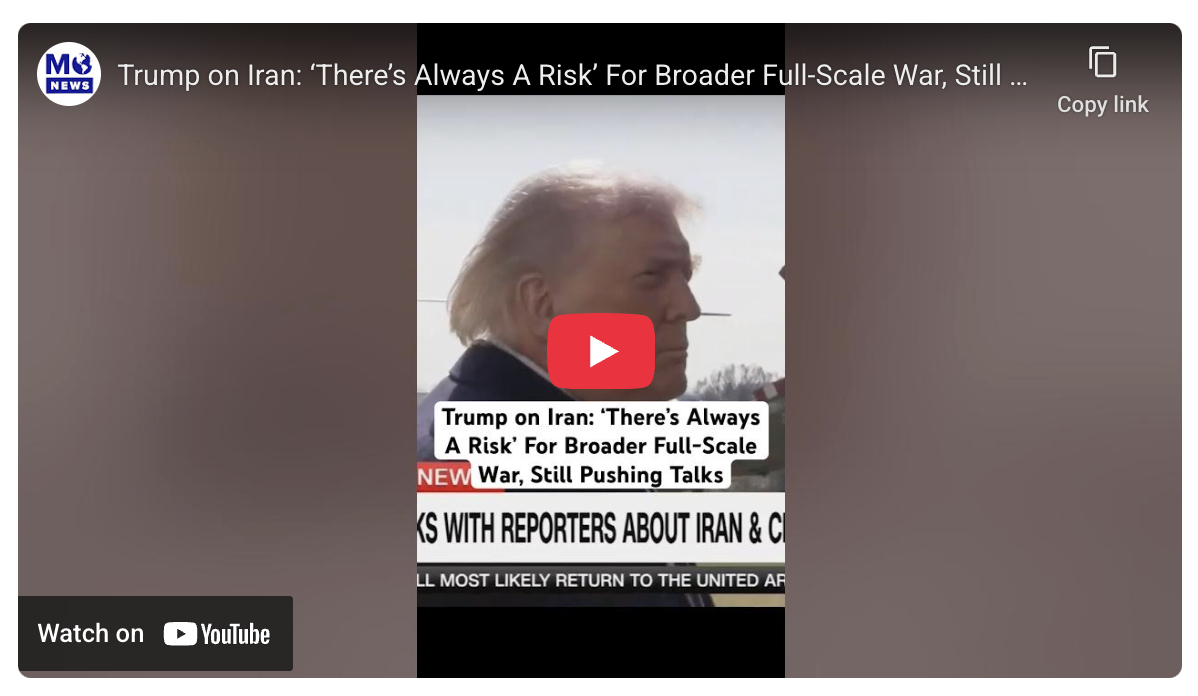
The U.S. State Department authorized non-essential personnel and their families to leave Israel Friday, as a possible U.S. strike on Iran appears more likely. Thursday’s nuclear talks between the U.S. and Iran did not result in any meaningful breakthroughs, but the Trump administration said Friday that additional talks are planned for next week. Secretary of State Marco Rubio is set to travel to the region in the coming days.
“We’re not exactly happy with the way they’re negotiating. They cannot have nuclear weapons,” President Trump told reporters outside the White House Friday. The US demands Iran give up on enriching uranium, stop expanding its ballistic missile arsenal and stop funding terror groups in the region like Hezbollah, Hamas and the Houthis.
Iran continues to insist on its right to enrich uranium for civilian nuclear needs like power, and has rejected U.S. demands for permanent restrictions on several fronts. The U.S. said there is clear evidence that Iran has been previously enriching uranium at levels only necessary for nuclear weapons-grade materials.
WHAT’S NEXT
If the diplomatic talks collapse, the U.S. has already positioned an array of military assets within striking distance of Iran in recent weeks.
Any U.S. action would likely trigger Iranian retaliation against Israel — which is expected to join the strikes — and American forces in the region. Trump acknowledged Friday that there is “always a risk” that U.S. strikes on Iran could spiral into a broader conflict.
TIMING? Those wishing to leave “should do so TODAY,” U.S. Ambassador to Israel Mike Huckabee wrote in an email to embassy personnel in Israel on Friday, adding that “there is no need to panic.”
Meanwhile, Secretary of State Marco Rubio is set to visit Israel early next week, which could signal a longer timeline before a potential strike.
As tensions mount, Mo News spoke with Israel’s ambassador to the U.S., Yechiel Leiter, about the potential consequences of a new war with Iran.

IS ISRAEL DRAGGING AMERICA INTO WAR WITH IRAN?“We don't run American foreign policy. That's nonsensical,” Leiter said, when pressed on whether Israeli influence in the Trump administration. He added that the U.S. is the most powerful country in the world, and Trump is known to pursue his own policies.
BACKGROUND: Israel and Iran have not had diplomatic relations since the 1979 Islamic Revolution, and Iran has made the destruction of Israel a central tenet of its foreign policy for more than 40 years. The two countries engaged in a 12-day war last June after Israel targeted Iran’s nuclear facilities, and was joined by the U.S. Iran also funds terrorist organizations that have targeted Israel, such as Hamas in Gaza, Hezbollah in Lebanon, and the Houthis in Yemen.
Leiter pushed back on the idea that Israel was somehow “dragging” the U.S. into an endless Middle East War. In fact, he argued that taking out extremists in Iran while uplifting moderates in the region would help end conflict sooner, eliminating the need for long-term U.S. involvement in the region.
WHAT ABOUT REGIME CHANGE?
Trump did not rule out regime change in Iran while speaking to reporters Friday. “There might be, and there might not be,” he said. The Islamic regime recently murdered tens of thousands of protesters who took to the streets earlier this year.
Asked about America’s complicated and failed track record of regime change in recent decades, Leiter agreed regime change should stem from the Iranian people, but that the U.S. could help “set the stage.”
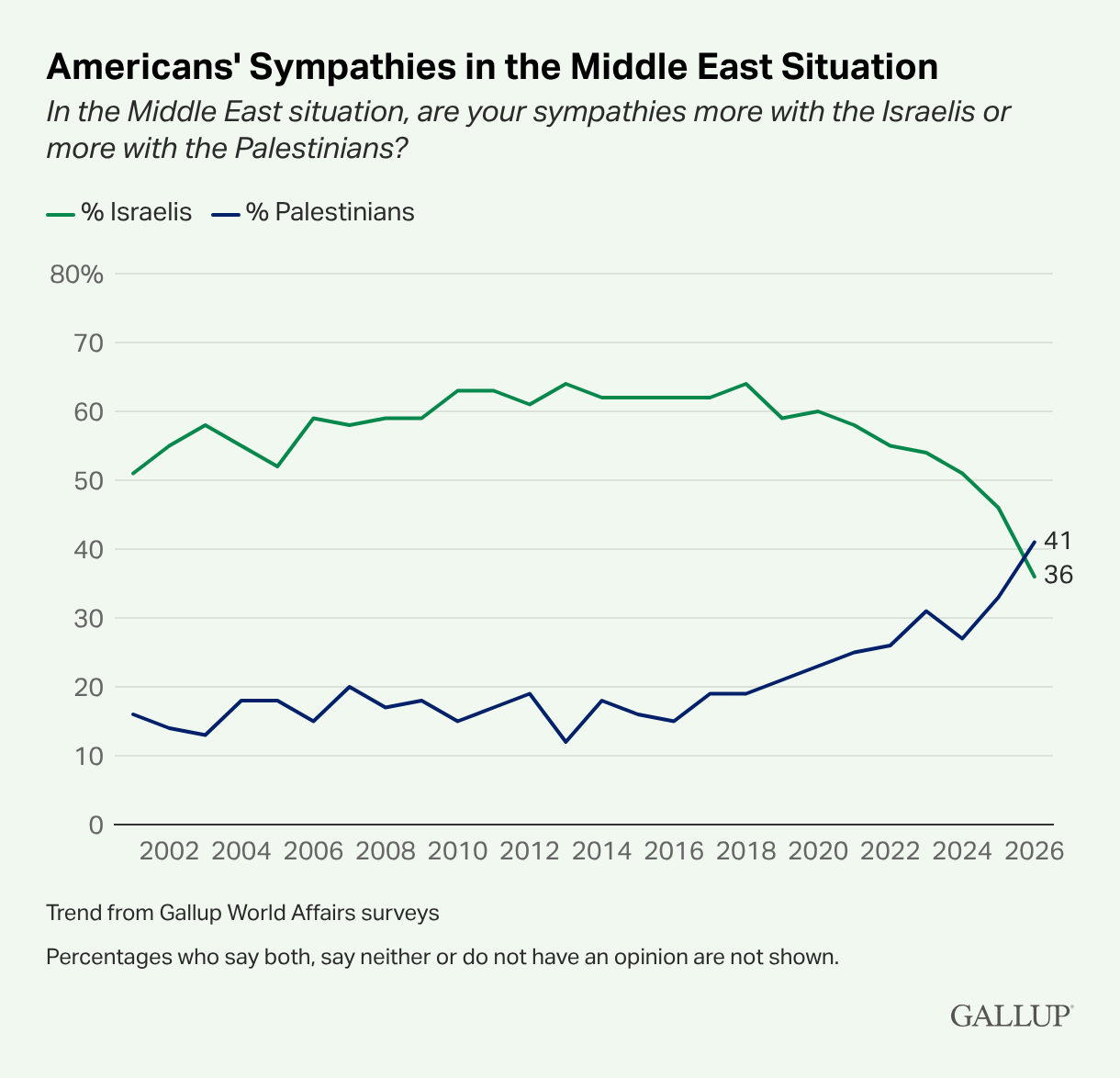
AMERICANS DIVIDED ON ISRAELA new Gallup poll released Friday shows that, for the first time, more Americans express sympathy for Palestinians (41%) than Israelis (36%) when it comes to the situation in the Middle East.
Political independents drove the shift in the past year — though Democrats’ sympathies for Palestinians have risen sharply since about the mid-2010s.
GENERATIONAL GAP: Among respondents ages 18 to 34, 53% say they sympathize more with the Palestinians — the first time a majority in this age group expressed that opinion. Meanwhile, support for Israel among the same group sits at a record low of 23%.
Support shifted during Israel’s two-year war in Gaza, which followed Hamas’ October 7 attacks in Israel.
Leiter did not express concern with declining support for Israel. He argued that the poll, which surveyed more than 1,000 Americans in all 50 states, was not broadly reflective of the American public.
“When I leave the big cities and I go into rural America…I find the support for Israel rock solid,” Leiter said. He argued American journalists are providing a skewed view of the conflict, including the use of misleading and manipulative images.
Access issues: Israel has still not allowed reporters to enter the Gaza Strip independently, more than two years since the war began. Many international outlets must rely on sources from inside the region, or embed with the IDF for access. Foreign journalists are calling on the U.S. and other international leaders to pressure Israel to let them freely report in Gaza in a new campaign #LetUsIn.
Leiter also emphasized that a good public image wasn’t Israel’s top priority. In the face of an existential conflict, Leiter said Israel is prioritizing its survival more than its public perception. “Survival is not a popularity contest,” Leiter said. “We’ll overcome.”
🎧 In our full interview with Leiter, we also discuss the changing Israel-U.S. relationship, the prospects of a future Palestinian statehood, and antisemitism. Listen now on the Mo News podcast, available wherever you get your podcasts.