
Venezuela’s Maduro Pleads Not Guilty; Inside The U.S. Operation To Capture Him
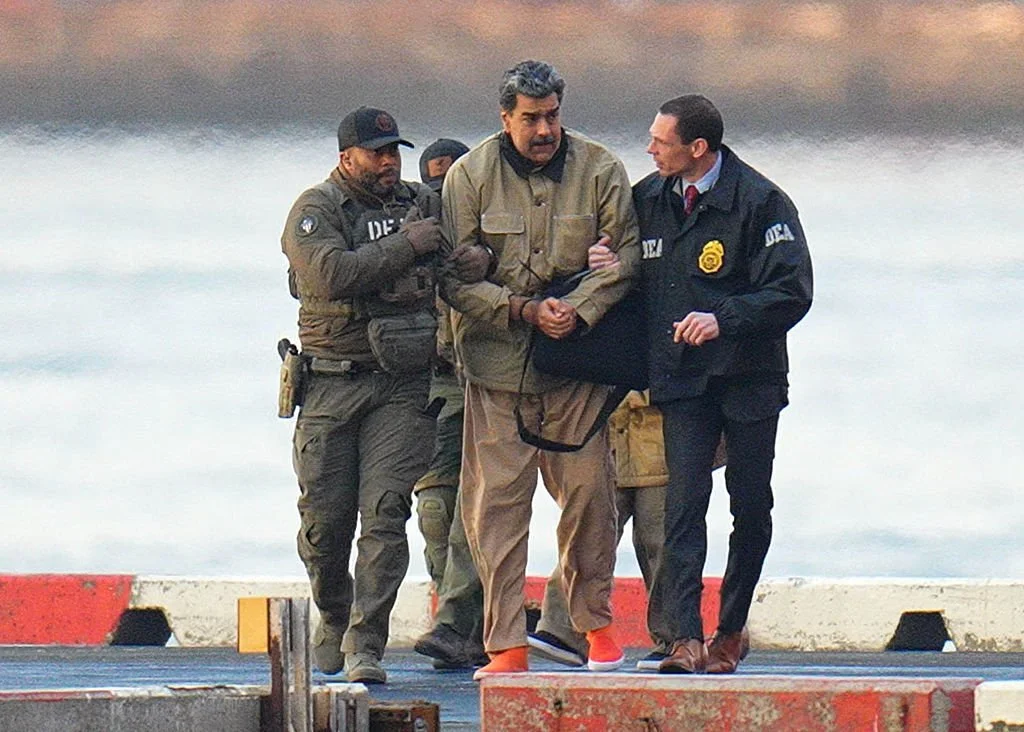
Venezuelan President Nicolás Maduro and his wife, Cilia Flores, appeared in a Manhattan federal court Monday, following a dramatic overnight operation that culminated in their capture by American troops early Saturday morning.
Both pleaded not guilty to multiple drug-related charges, including accusations that Maduro helped transport thousands of tons of cocaine to the U.S. over decades.
“I’m innocent. I’m not guilty. I am a decent man,” Maduro pled in court. He maintained he is “still the president of Venezuela” and that he was “kidnapped” from his home in Caracas.
Judge Alvin Hellerstein cut him off, saying, “There will be time and place to get into all of this.”
Criminal defense lawyer Barry Pollack (who also represented WikiLeaks founder Julian Assange) is defending Maduro. The next hearing will take place on March 17. Maduro and his wife did not seek bail.
THE WEEKEND OPERATION
The U.S. mission, Operation Absolute Resolve, was a massive tactical success with no loss of U.S. personnel, though about half a dozen soldiers were injured. On the Venezuelan side, about 80 people — both military and civilian — were killed in the operation to capture Maduro, as well as simultaneous airstrikes across the country.
How it happened: Roughly 150 aircraft launched from 20 different bases late Friday night. The U.S. dismantled Venezuelan air defenses to allow American military helicopters to enter Caracas. One U.S. aircraft was hit, but remained operational.
U.S. forces arrived at Maduro’s compound just after 2 a.m. local time, withstanding fire along the way. Maduro and his wife attempted to make it into a safe room, but U.S. forces got to them first, and they surrendered.
In total, the mission lasted about 2 hours and 20 minutes.
Reconnaissance: A C.I.A. source within the Venezuelan government kept the U.S. abreast of Maduro’s movements in the days and hours leading up to the mission. Since August, the C.I.A. has had officers on the ground in Venezuela monitoring the president’s whereabouts and habits.
After Maduro and his wife’s capture, they were transported via aircraft and ship to New York City. President Trump posted a photo of Maduro in custody – wearing a Nike sweatsuit. In a sign of the times, that sweatsuit is now selling out.
Once in the U.S., Maduro was seen wishing law enforcement officers a Happy New Year.
THE TRUMP FACTOR
The U.S. reportedly gave Maduro multiple off-ramps to leave power peacefully. But after recent public appearances by him – including numerous song and dance videos – the Trump team was reportedly led to believe the dictator was not taking negotiations seriously.
At issue for the White House was Maduro’s alleged role in drug trafficking, migration, ties to countries like Iran and China, and Venezuela’s vast oil reserves.
The administration chose to ramp up its tactics following months of deadly military strikes on alleged Venezuelan drug-trafficking boats and a U.S. military buildup in the region.
The oil of it: Trump has been clear that this operation is, in part, about energy.
Trump said the U.S. plans to “take back the oil” from Venezuela on Saturday. “We’re going to be taking out a tremendous amount of wealth out of the ground,” he added, saying the money would go to Venezuelans and “to the U.S. in the form of reimbursement for the damages caused us by that country.”
Venezuela holds the largest proven oil reserves in the world — more than 300 billion barrels, even more than Saudi Arabia. Production collapsed by nearly 75% under years of mismanagement, nationalization, and sanctions since Maduro’s socialist predecessor, Hugo Chavez, came to power in 1999.
American refineries would be set to profit massively from renewed access to Venezuelan oil.
INSIDE VENEZUELA
Most of Maduro’s governing apparatus remains intact. Delcy Rodríguez, Maduro’s deputy, was sworn in Monday as the interim president. Despite Trump saying Saturday that the U.S. is “going to run the country,” there is no U.S. personnel governing on the ground.
On Sunday, Secretary of State Marco Rubio clarified that the U.S. military would maintain an “oil quarantine” around Venezuela — blocking oil tankers under sanctions to preserve leverage.
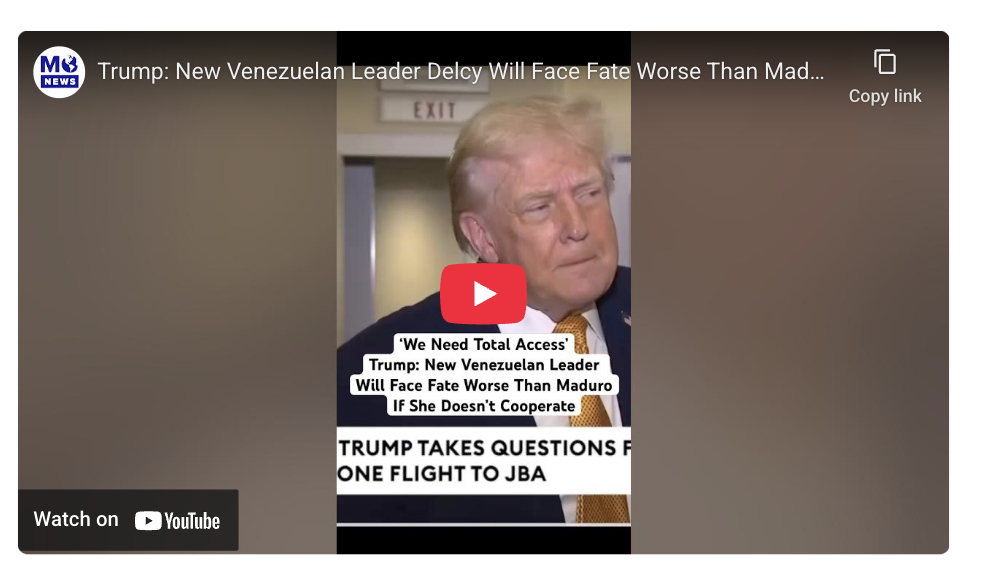
Immediately following the U.S. raid, Rodríguez maintained Maduro was Venezuela’s rightful leader and that U.S. actions violated “international law.” But her tone changed Sunday, as she said she hoped to build “respectful relations” with Trump after he threatened she could face a fate worse than Maduro’s if she didn’t cooperate.
While Rodríguez has been accused of being a key architect of the Maduro political apparatus, U.S. officials view her as potentially more pro-business and open to energy investment.
Opposition leader María Corina Machado, whose coalition won about 70% of the vote in 2024 and who recently won the Nobel Peace Prize, was not embraced by Trump Saturday. He said she does not have “support within or the respect within the country.” Machado still thanked Trump for ushering Venezuela into a new era.
REMAINING QUESTIONS
Was the attack on Venezuela and Maduro’s capture legal? And is the U.S. now entering a new war?
The legality: While Trump has framed the operation as being tied to Venezuela’s oil, other top administration officials have emphasized that it was a law enforcement mission to arrest Maduro on drug-trafficking charges.
Under U.S. law, federal courts have historically deferred to presidents on foreign policy and overseas arrests — though that power is not unlimited.
The administration did not seek congressional approval, arguing it wasn’t required in this case, and that lawmakers would “leak” crucial information. Rubio, Defense Secretary Pete Hegseth, and other administration officials will brief top lawmakers Monday evening.
International law experts argue that the U.S. military operation likely violated the UN Charter’s protections of national sovereignty, but that the U.S. veto power on the Security Council leaves no real enforcement mechanism.
So, is it war? Hegseth rejected a comparison to the U.S.’s 2003 invasion of Iraq, saying this is the “exact opposite” because it bolsters U.S. economic interests. Rubio agreed the U.S. is not at war with Venezuela, and added “it’s in our national interest” to push the country in a different political direction.
REACTIONS
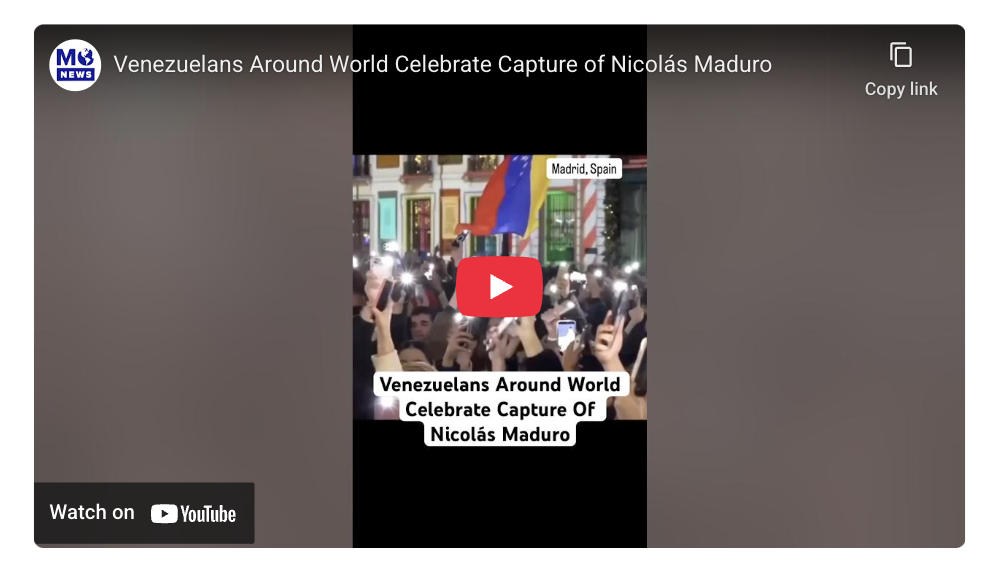
Around the world, Venezuela’s allies and nearby countries like Mexico pushed back against U.S. intervention. Many Venezuelans, inside and outside the country, celebrated the move.
Since 2014, hyperinflation and repression led to the exodus of nearly 8 million Venezuelans — 20% of the population.