
Is The U.S. Considering Military Action in Greenland?
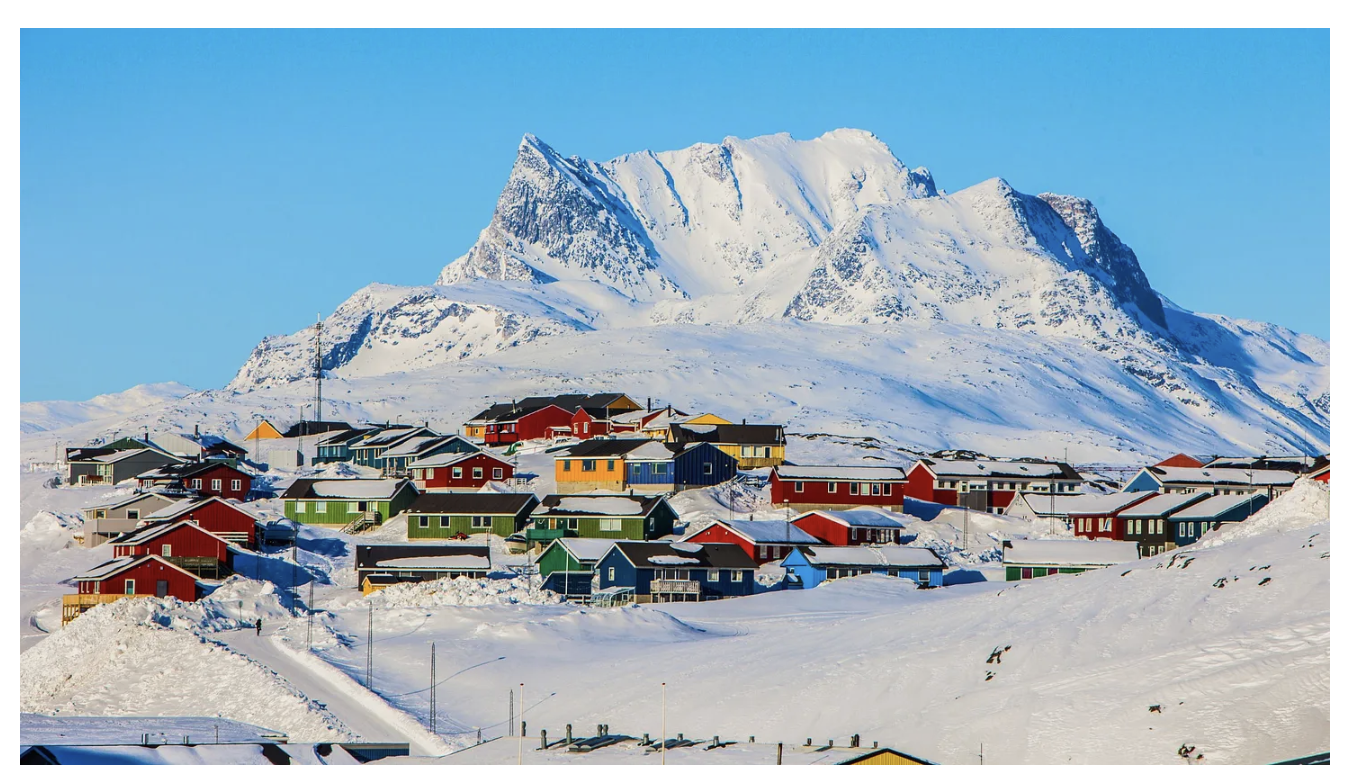
President Trump and his team are considering “a range of options” in order to acquire Greenland — including “utilizing the U.S. military,” White House press secretary Karoline Leavitt said Tuesday.
European leaders, including Danish Prime Minister Mette Frederiksen, on Tuesday issued a joint statement pushing back against Trump’s renewed interest in Greenland following the U.S. military operation in Venezuela.
“Greenland belongs to its people,” the statement said. “It is for Denmark and Greenland, and them only, to decide on matters concerning Denmark and Greenland.”
Greenland is a self-governing territory of the Kingdom of Denmark and therefore part of the NATO military alliance.
INSIDE THE WHITE HOUSE
Trump officials on Tuesday told Reuters that the president’s drive to acquire Greenland during his remaining three years in office is “not going away.”
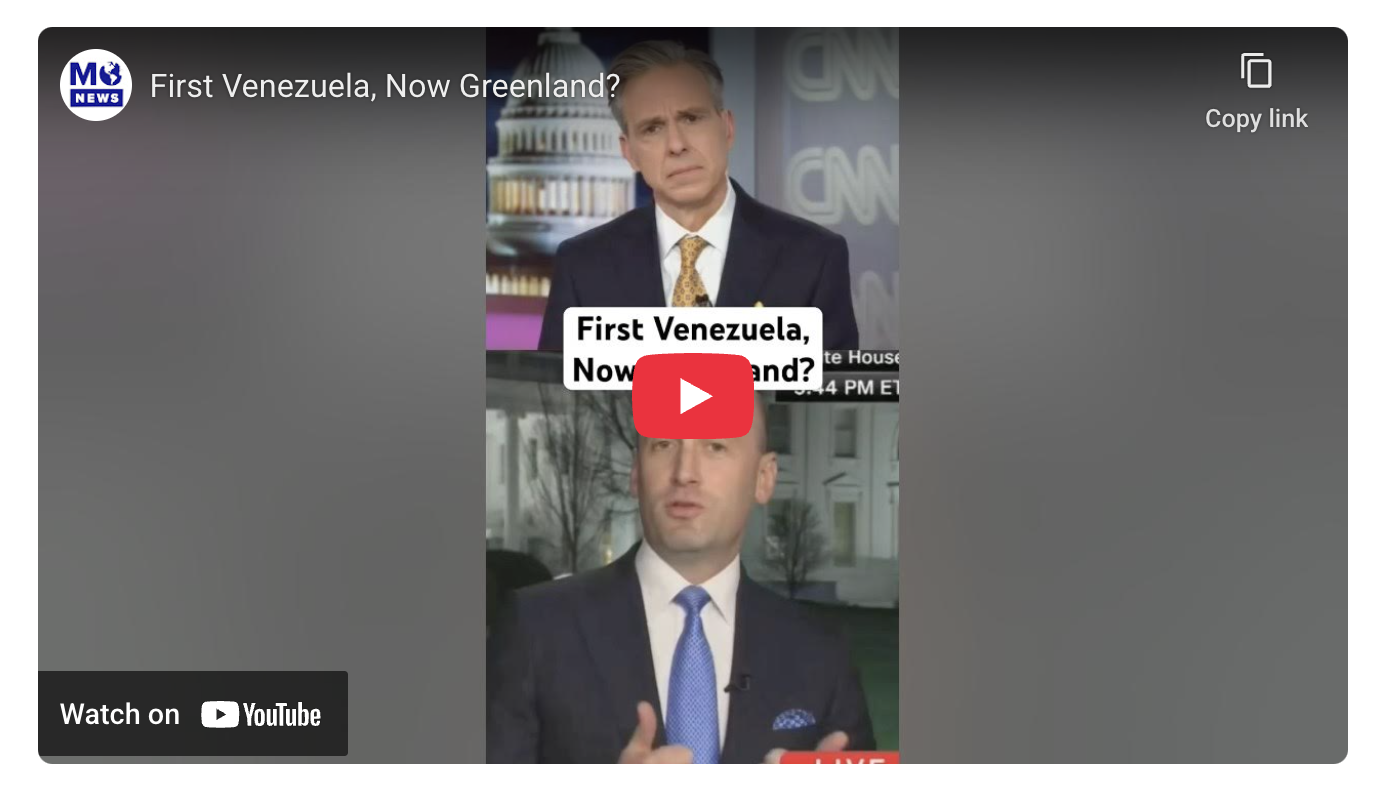
White House Deputy Chief of Staff Stephen Miller said “Nobody’s going to fight the United States militarily over the future of Greenland.”
CNN’s Jake Tapper repeatedly asked Miller whether he would rule out using military force. Miller said, “We live in a world, in the real world, Jake, that is governed by strength, that is governed by force, that is governed by power.”
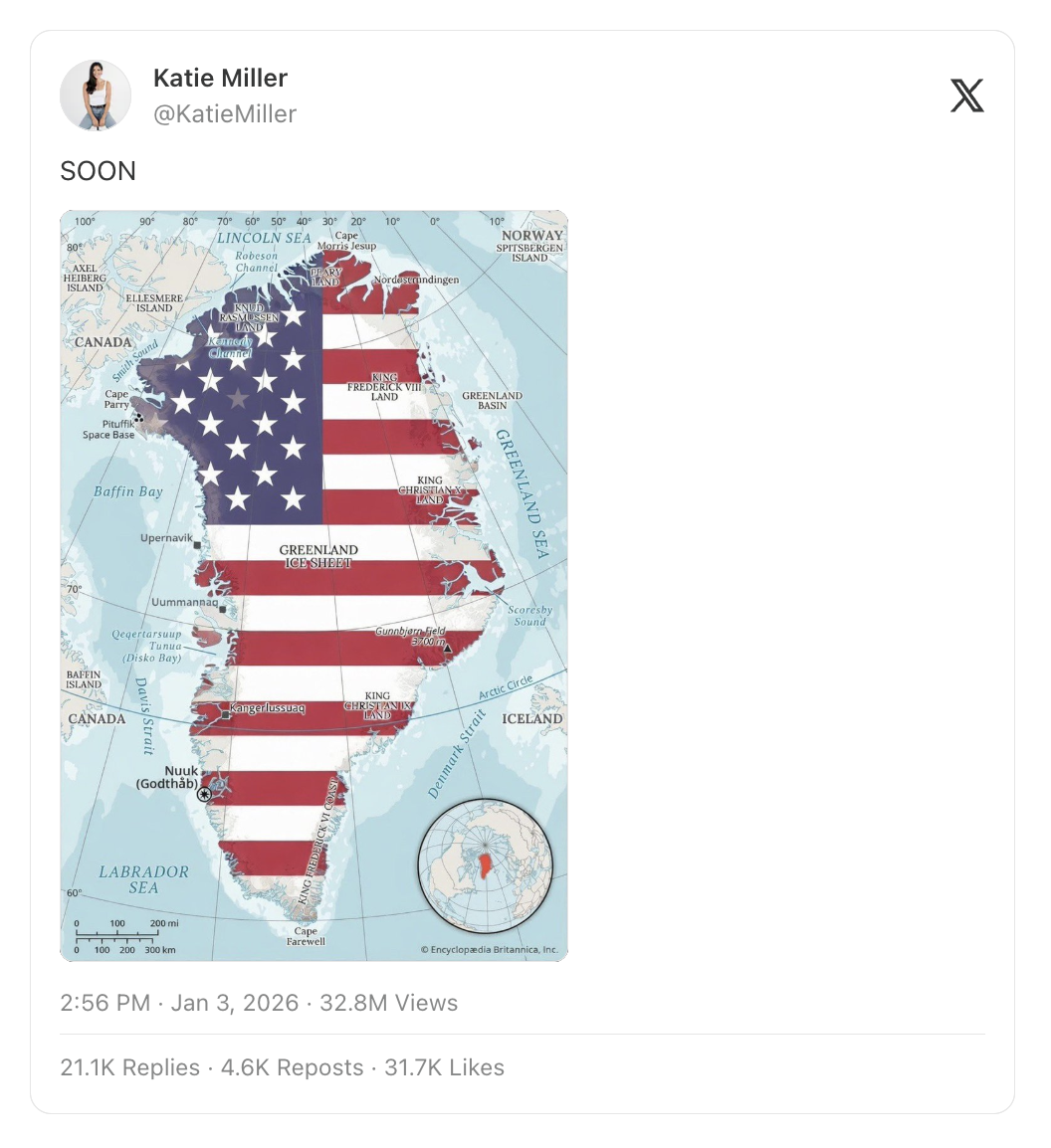
Tapper was pressing Miller about Greenland after Miller’s wife on Saturday, shortly after the Venezuela operation, posted a map of Greenland covered by the American flag.
🥶 HOW WE GOT HERE
This is not new. In 2019, during his first term as president, Trump floated the idea of purchasing Greenland. It’s something he talked about on the campaign trail, and exactly one year ago, he wrote on Truth Social: “Greenland is an incredible place, and the people will benefit tremendously if, and when, it becomes part of our Nation.”
What’s so special about Greenland? The mineral-rich Danish territory has a plethora of natural resources, including rare earth metals in high demand for making electric cars, wind turbines, and military equipment. Trump officials have also said it would help counter Russian and Chinese national security concerns. Greenland is already home to a key U.S. military base.
When asked by reporters on Sunday about Greenland, Trump reiterated his position, saying the U.S. needs Greenland “from the standpoint of national security.” But also said, “we’ll worry about Greenland in about two months.”
🇻🇪 TO VENEZUELA
Trump has made it clear that he wants more than just to prosecute Venezuelan leader Nicolás Maduro, he also wants to boost U.S. access to Venezuela’s oil and critical minerals.
Later this week, Trump administration officials are expected to meet with executives from oil and gas giants Chevron, ConocoPhillips, and ExxonMobil to discuss Venezuela plans.
Iraq vs. Venezuela: MS Now’s Joe Scarbrough, who said he spoke to Trump about the military operation that captured Maduro, pressed Trump on running Venezuela and how it compares to President George W. Bush’s invasion of Iraq back in 2003.
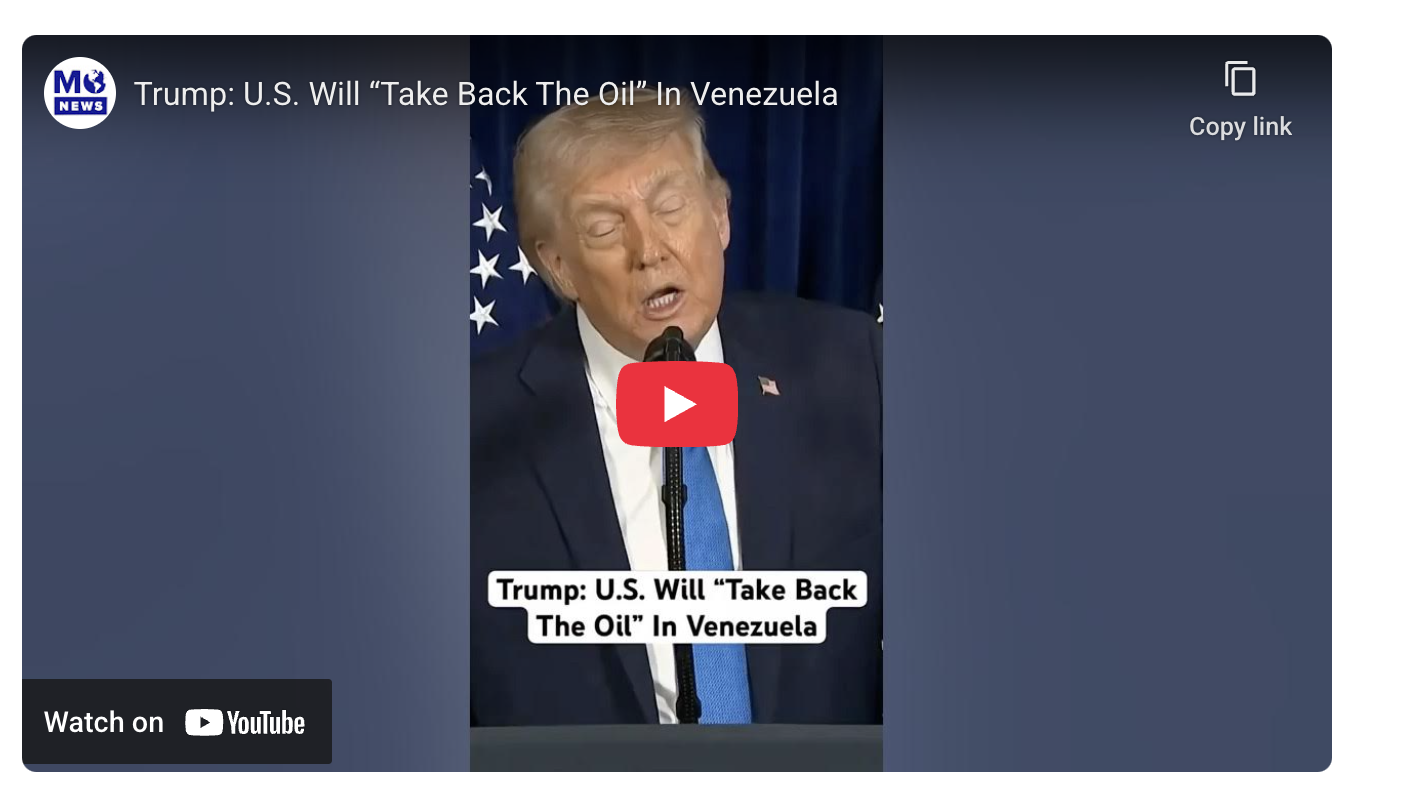
“The difference between Iraq and this is that Bush didn’t keep the oil. We’re going to keep the oil,” Scarborough said, quoting Trump.
Scarbrough quoted the president as saying, “In 2016, I said we should have kept the oil. It caused a lot of controversy. Well, we should have kept the oil.”
“We’re going to rebuild their broken-down oil facilities, and this time we’re going to keep the oil.”
Then vs. Now: Today, the U.S. is far less energy-desperate than it was during the Iraq War, thanks to the domestic shale revolution.
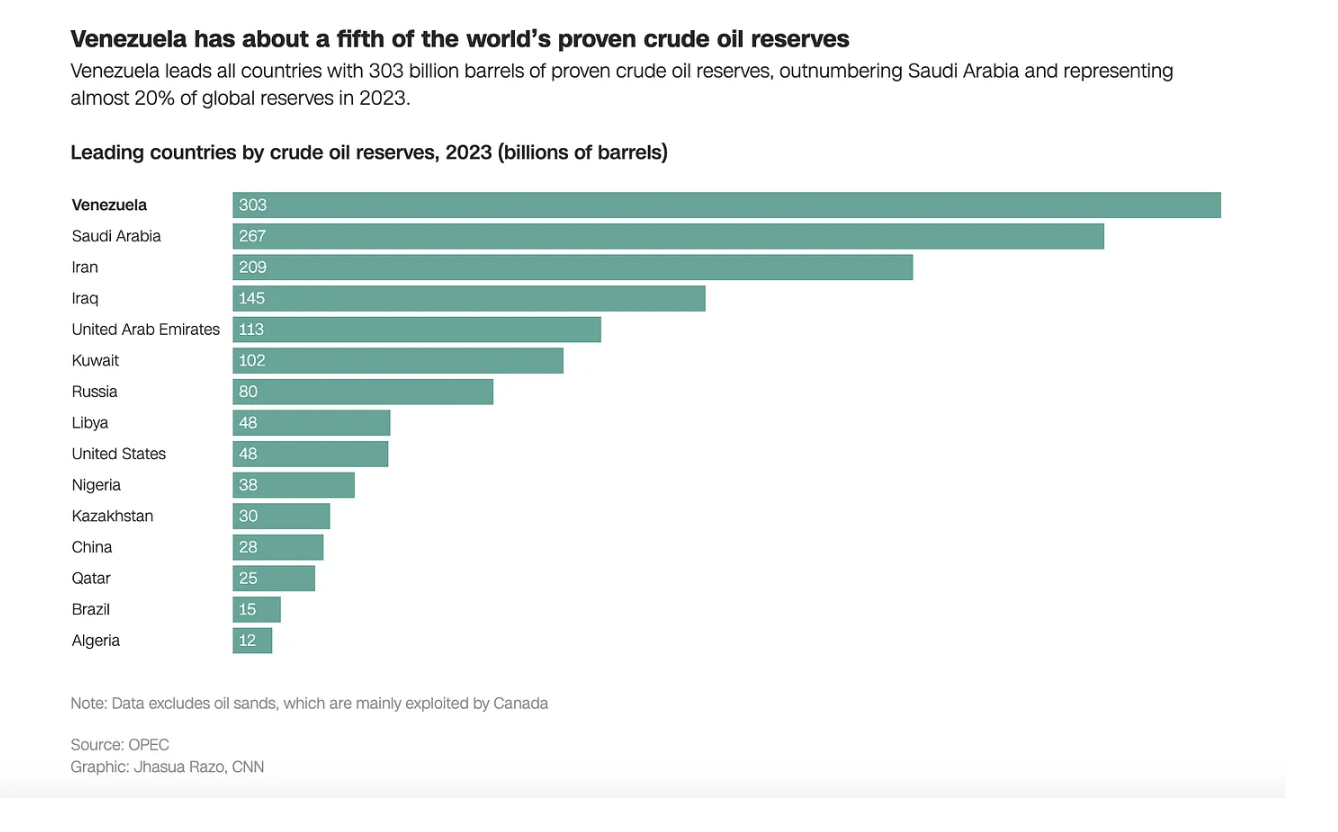
ALL THAT OIL
Venezuela holds the largest crude oil reserves in the world — yet its economy and energy sector collapsed after decades of isolation and mismanagement.
Rewind: For much of the 20th century, U.S. oil companies helped build Venezuela’s industry, making it a top global producer and a founding member of OPEC in 1960. The industry was nationalized in the 1970s, reopened to foreign investment in the 1990s — and rebounded — then went back to nationalization in the early 2000s under Hugo Chávez, who pushed out experienced managers and replaced them with political loyalists.
In the late 1990s, production was at over 3.5 million barrels/day; by 2024, that number was under 1 million barrels/day.
Sour, sticky, and heavy: The U.S. Gulf Coast and West Coast refineries are built to process Venezuela’s heavy crude, which requires special equipment to get and refine.
U.S. shale oil — which has led to historic oil production in the U.S. — is not compatible with those U.S. refineries.
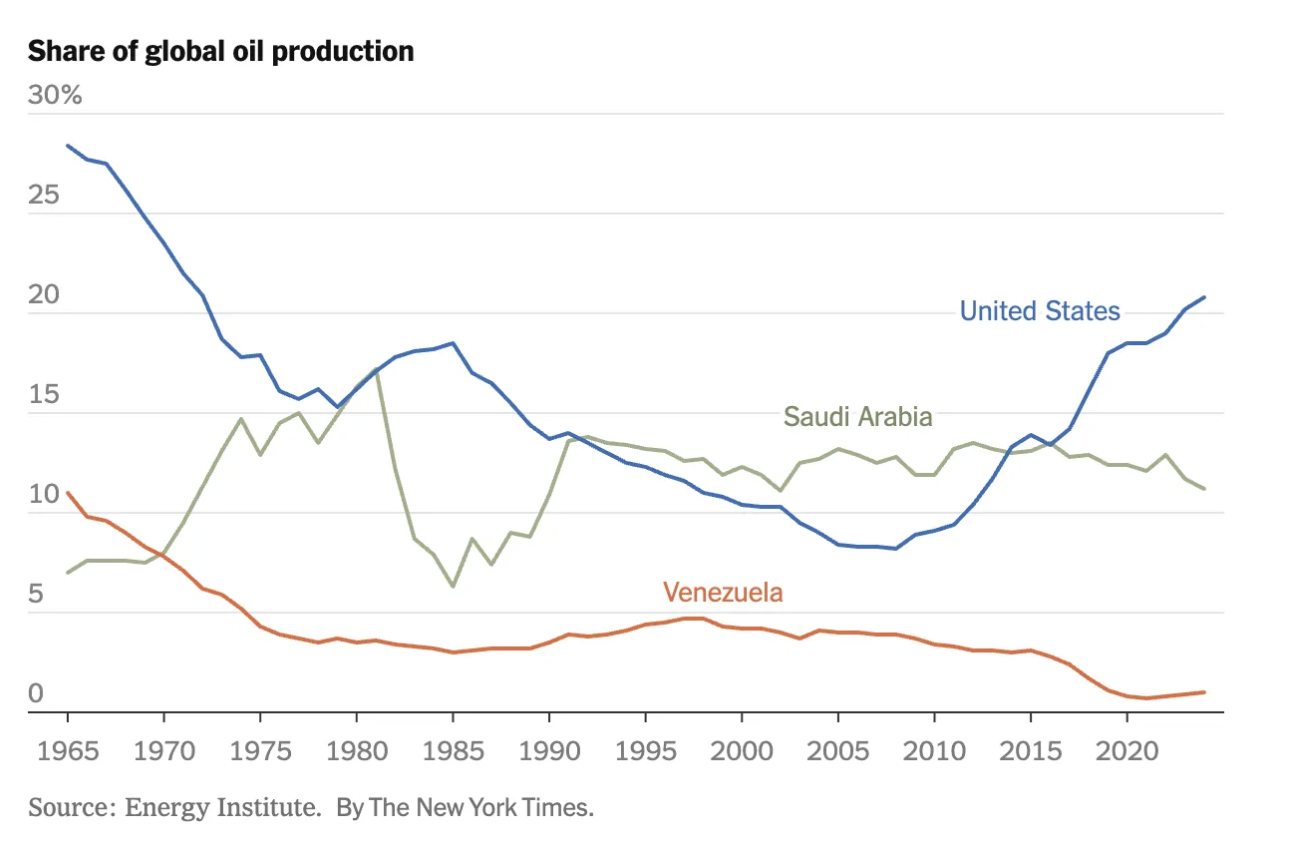
Bottom line: Restoring Venezuelan oil production would take years and tens of billions of dollars, analysts note.