
Key Conservative Justices Appear Skeptical Of Trump Order To Limit Birthright Citizenship
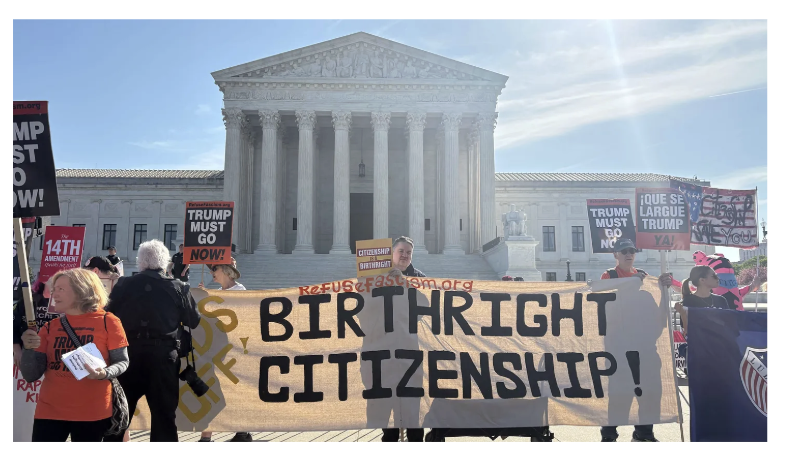
Supreme Court justices heard arguments Wednesday over the constitutionality of President Trump’s executive order aimed at ending automatic, birthright citizenship for children of undocumented immigrants, temporary residents and people traveling here on visas. A majority of justices — including key conservative swing votes — appeared skeptical of the administration’s arguments about the order, which is currently blocked by lower courts.
The case challenges over 150 years of precedent regarding the 14th Amendment, which grants citizenship to all persons born or naturalized in the U.S. The Trump administration argued that the 14th Amendment has long been misinterpreted.
For more than a century, the 14th Amendment has been understood to broadly confer citizenship to nearly all babies born on U.S. soil, with some rare exceptions. Trump’s order takes a more narrow view.
Trump actually attended the arguments in person — becoming the first sitting U.S. president to do so. He left after about an hour, when U.S. Solicitor General John Sauer finished presenting the administration’s case.
INSIDE THE COURT
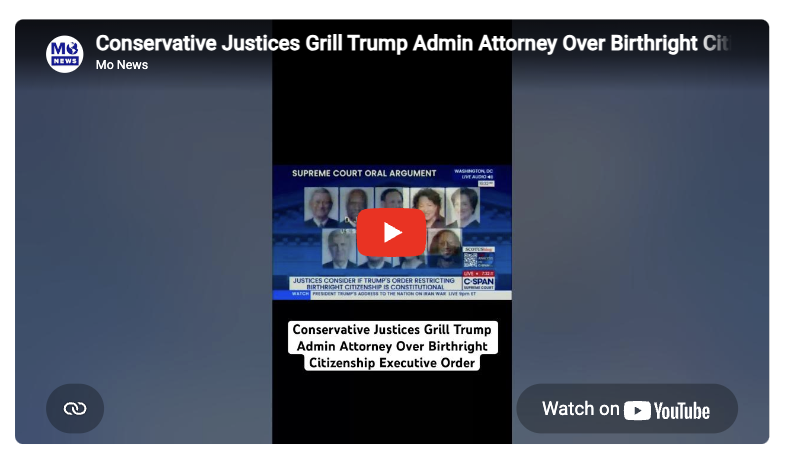
Several of the court’s six conservative justices — including Trump appointees like Justices Amy Coney Barrett and Neil Gorsuch — pressed Sauer. The court’s three liberal justices also expressed skepticism.
NEW WORLD, SAME CONSTITUTION: Chief Justice John Roberts, appointed by former President George W. Bush, questioned Sauer on the popularity of "birth tourism": a phenomenon where non-U.S. citizens deliver babies in the U.S. to take advantage of birthright citizenship laws.
Sauer talked about the potential that pregnant tourists from other countries could travel here simply to ensure their children have U.S. citizenship.
Sauer cited Senate estimates of up to 1.5 million Chinese nationals in the past 15 years coming to the U.S. to give their children citizenship. "It's a new world," Sauer said.
Roberts pushed back on the administration’s use of an executive order on this constitutional issue: “It’s a new world; it’s the same Constitution.”
Gorsuch criticized Sauer’s arguments for being rooted in antiquated cases. “It’s like Roman law sources you’re going to,” he said.
Gorsuch pressed Sauer on whether Native Americans would qualify as birthright citizens under the administration’s test. Sauer, appearing caught off guard, said he believed they would if “lawfully domiciled,” adding, “I have to think that through.”
Barrett questioned Sauer’s argument that birthright citizenship should depend on the parents’ intentions to stay in the country, not the condition of the child.
“What if you don’t know who the parents are?” Barrett asked Sauer. “You’re not going to know at the time of birth, for some people, whether they have the intent to stay or not.”
LIBERAL JUSTICES: Justice Ketanji Brown Jackson, one of the court’s three liberal justices, pressed Sauer on the practicality of the order, specifically whether pregnant women would be brought in for depositions and how parents could prove intent to stay in the U.S.
Sauer said birth certificates would be issued through an existing system and disputes would be handled afterward. Jackson pushed back, noting that families would need to challenge the decisions after a baby is denied citizenship.
On the other side, American Civil Liberties Union Legal Director Cecilia Wang — herself a birthright citizen — argued for the plaintiffs, saying, “Ask any American what our citizenship rule is, and they’ll tell you: Everyone born here is a citizen alike. That rule was enshrined in the 14th Amendment to put it out of the reach of any government official to destroy.”
WHAT’S AT STAKE
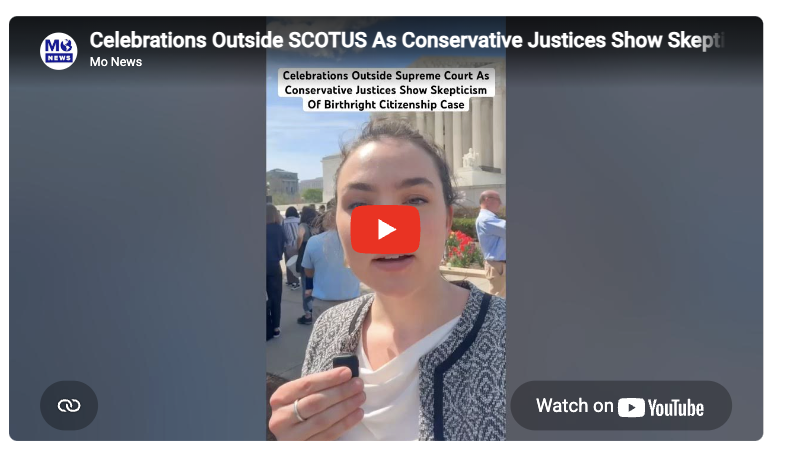
The case is one of the most anticipated this term, with a ruling expected by late June or early July. Trump has framed it as central to his immigration agenda.
If Trump’s order is upheld, it could strip citizenship from an estimated 250,000 babies born each year to parents without permanent legal status moving forward.
By 2050, it could mean that as many as 6.4 million U.S.-born children could lack legal status, according to a new study. Asian immigrants would be most impacted — 41 births without citizenship per 1,000 unauthorized people — compared to 17 per 1,000 among undocumented Latinos, the study found
HOW WE GOT HERE
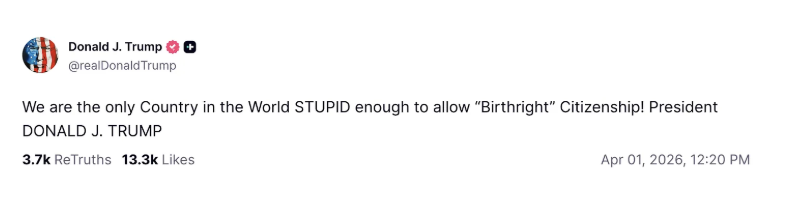
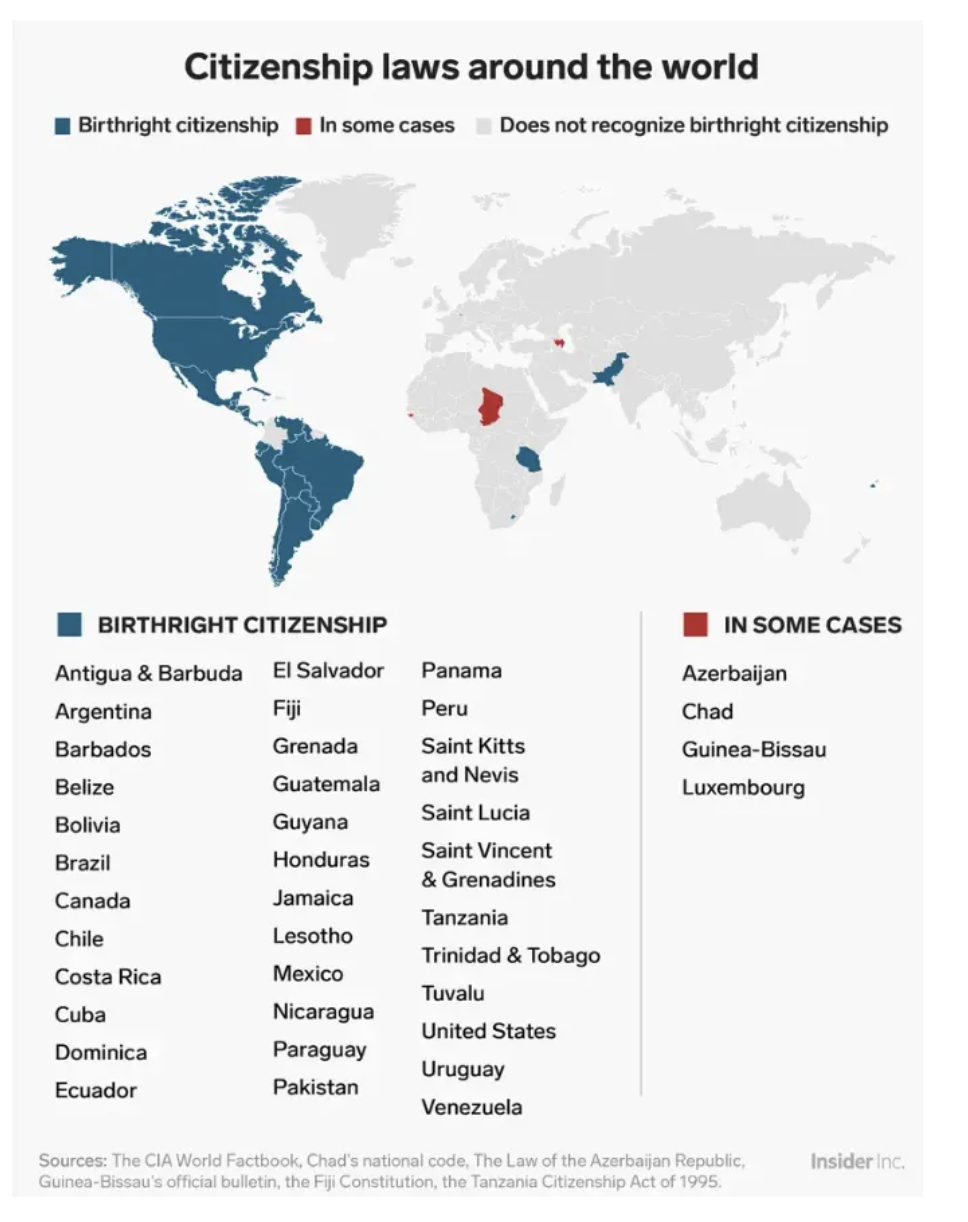
The U.S. is only one of about three dozen countries with unrestricted birthright citizenship.
In the U.S., the 1898 Supreme Court decision in US v. Wong Kim Ark granted citizenship to virtually anyone born on American soil. Before that, the 14th Amendment was ratified in 1868 to grant citizenship to formerly enslaved people.
THE CASE: Wong Kim Ark was born in San Francisco to Chinese parents. He was denied reentry to the U.S. after a trip abroad. The Supreme Court ruled that because he was born on U.S. soil and his parents were not diplomats, he was automatically a U.S. citizen under the 14th Amendment.