

A landmark jury trial kicked off Tuesday in Los Angeles targeting Meta’s Instagram and Google’s YouTube, accusing the platforms of deliberately addicting and harming children — a case being described as Silicon Valley’s “Big Tobacco moment.”
If successful, the case could bypass key legal protections, including Section 230 and First Amendment defenses that have long shielded tech platforms from liability.
INSIDE THE COURTROOM
At the center of the case is a 19-year-old plaintiff, identified only as “KGM,” whose lawyers argue that addictive and deliberate design features — such as infinite scroll, autoplay, and 24/7 notifications — led her to become hooked on social media at a young age. The lawsuit claims companies sought more addictive features to boost profits.
The trial could last six to eight weeks, with high-profile executives — including Meta CEO Mark Zuckerberg and head of Instagram Adam Mosseri — expected to testify.
The arguments: Lawyers for KGM say her social media use at a young age led to her developing depression and suicidal thoughts. On the other side, social media companies have said there is a lack of conclusive research to prove the claims.
Meta has accused the plaintiffs of constructing a “misleading narrative,” and says it has made changes to help protect teens online. Google, which owns YouTube, is expected to highlight safety features and argue its site more closely resembles a streaming platform than social media.
Not in court: Snapchat and TikTok were supposed to be part of this trial, but they reached their own settlements with KGM prior to Tuesday.
BIGGER PICTURE
Legal commentators call it a “bellwether” trial, a case chosen from a large group of similar lawsuits meant to test how juries respond to the arguments and what damages might be awarded.
REWIND: Two years ago, Mark Zuckerberg and other tech executives testified before the Senate about child safety. He apologized to families of kids who have been the victims of online abuse and harm. Zuckerberg said that’s why Meta has invested “so much” in safety mechanisms.
In the hearing, Sen. Lindsey Graham (R-S.C.) told Zuckerberg and the other companies: “You have blood on your hands.”
Since then, in October, Mosseri rolled out new movie–style guardrails on Instagram, limiting certain content for users aged 13 to 18 (similar to PG-13 and R ratings). The company will likely highlight these measures in court.
Instagram Teen Accounts also blocked search terms for sensitive topics, restricted access to content and messaging abilities, and made stricter parental controls the default setting.
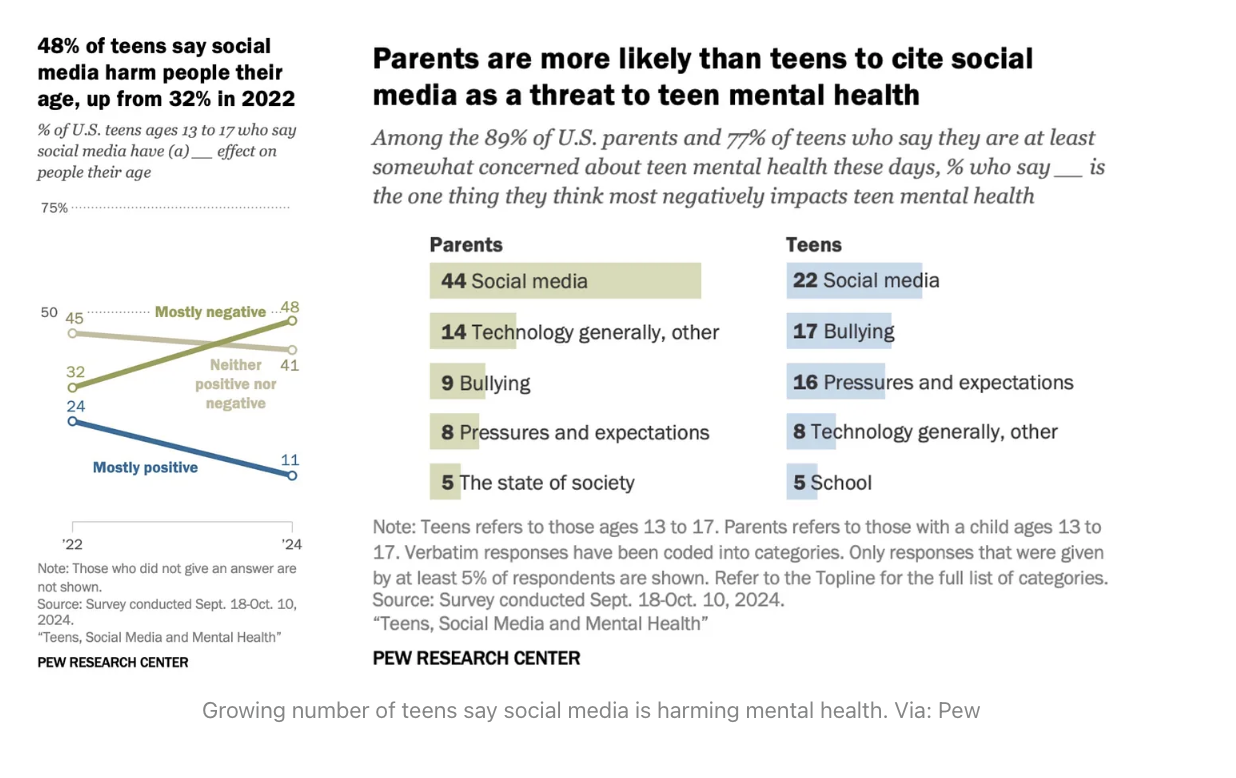
PREVIEW OF WHAT’S TO COME
More than 40 states, both Republican and Democrat, are also suing Meta, Snap, TikTok, and Google’s parent company, Alphabet, on similar grounds in federal court. And some countries are taking action beyond the courts.
France’s National Assembly backed a bill Monday to ban children under 15 from social media, citing concerns about bullying and mental health.
It follows a similar move by Australia, which last year became the first country to bar social media use for teens under 16.
In the U.S., a Fox News poll from last month found that about two-thirds of Americans support a social media ban for kids under 16.