
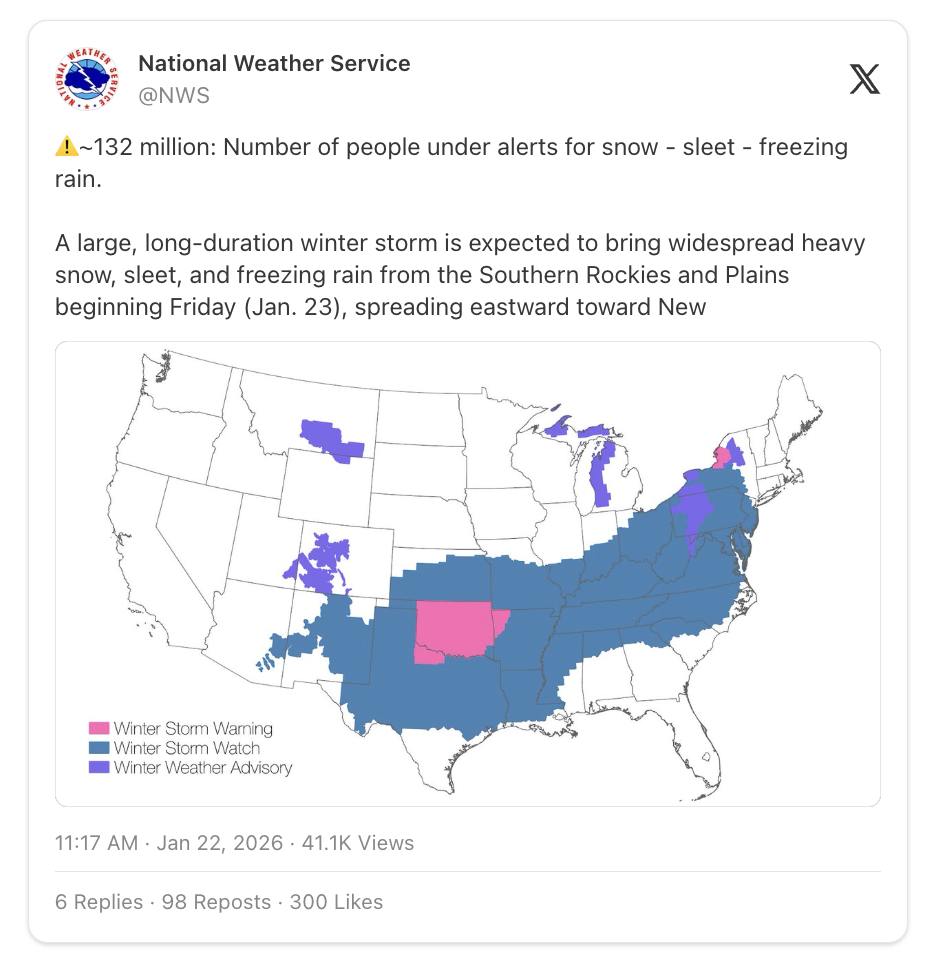
The National Weather Service warned Thursday that 160 million Americans are under winter weather alerts for heavy snow, sleet, and freezing rain in the next several days. The storm — which is set to affect up to 230 million people — is expected to stretch nearly 2,000 miles across the country as it persist into early next week.
Wind chills of 40 to 50 below zero are possible in parts of the Upper Midwest and Great Lakes — conditions that can cause frostbite in just minutes of outdoor exposure.
The big concern around the country is that ice and snow will weigh down trees and power lines, cut electricity, and make roads and sidewalks unsafe well into next week.
Officials are urging people to limit travel and prepare now — charging phones in advance and stocking up on essentials.
STATES PREPARE & RESPOND
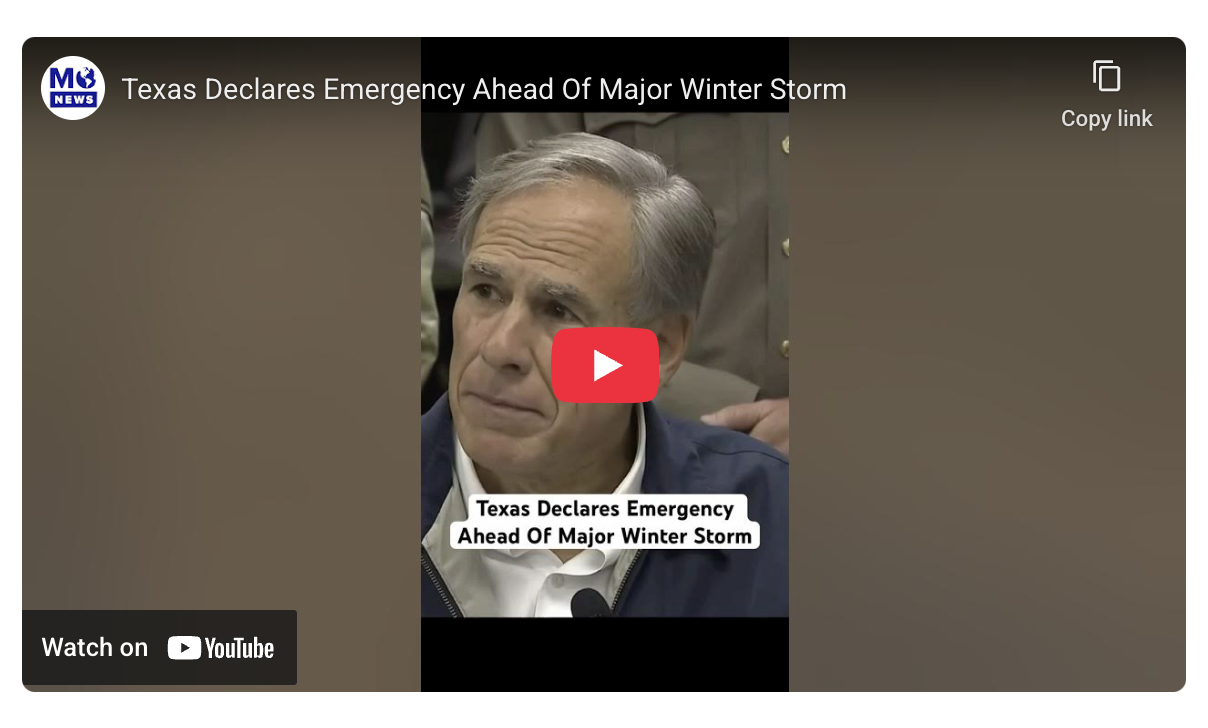
Texas Gov. Greg Abbott issued a disaster declaration for 134 counties across the state, as the storm arrives as early as Friday afternoon. Texas and other Gulf Coast states could see feels-like temperatures in the single digits to -10°F.
Back in 2021, the Texas power grid failed during a major winter storm — this time, the governor said there is “no expectation” that will happen. He urged residents to begin preparing: “You’re gonna have the ability within your own hands to be able to save your own lives,” he said.
STATE OF PLAY: Governors in Georgia, Virginia, and Arkansas also issued emergency declarations ahead of the storm. New York City Mayor Zohran Mamdani said 2,000 sanitation workers will be deployed Saturday for pre-storm treatment before the storm moves North on Sunday.
BIGGER PICTURE
Meanwhile, more than two-thirds of the U.S. is facing drought or unusual dryness — making this the driest national stretch since 2012. A severe snow drought in the West could cause major water supply issues and wildfire risks come summertime.
UTAH VS. FLORIDA: About 93% of Utah is in some level of drought, with temperatures nearly 10 degrees above average. Utah’s Salt Lake Valley has seen just 0.1 inches of snow. Meanwhile, parts of Florida’s Panhandle picked up as much as an inch last week.
Not enough snowfall out West impacts the already-strained Colorado River, the water source for much of the region. It's also impacting local economies centered on ski and winter activity tourism.
La Niña–related cooler waters, a persistent marine heat wave in the North Pacific, and climate change are all contributing to the drought. Blizzards, like we are set to see, are also expected to get more intense as temperatures around the globe rise.