
New Trump Admin Social Media Rules Could Make It Harder To Visit, Work In The U.S.
The Trump administration’s newest rules will require foreign visitors and workers to have their social media accounts reviewed before entering the U.S.
Foreign tourists, even from U.S. allies who normally face fewer entry requirements, and high-skilled workers on H-1B visas are set to face sweeping new rules as the administration expands screening to identify potential national security threats. The changes already appear to be slowing the entry process.

FRIEND OR FOE
Foreign tourists from dozens of visa-waiver countries may soon have to provide five years of social media history when applying to visit, according to a new U.S. Customs and Border Protection (CBP) proposal.
Impacted countries include the U.K., Germany, Spain, Australia, Japan, South Korea, Israel, Singapore, and others that typically do not need a visa to visit the U.S.
In total, citizens from 42 visa-waiver countries would be affected. Millions of people use the Electronic System for Travel Authorization (ESTA) application each year, which allows visitors to stay up to 90 days and is valid for two years.
Previously, social media information was optional, and applicants could decline to answer without penalty.
The plan would make social media disclosure a mandatory part of ESTA, along with additional data such as past phone numbers, email addresses, IP information, and some biometrics.
A 60-day public comment period will take place before the rule can take effect.
Why now? CBP said the changes, which still have to be reviewed by the White House’s budget office, are designed to enforce an executive order issued earlier this year to deny entry to foreigners who may pose a threat to national security or public safety.
This year, the State Department has already revoked visas over online comments said to celebrate the assassination of conservative commentator Charlie Kirk and others accused of being pro-Hamas.
The logistics of “maximum vetting” remain unclear, but foreign students recently subjected to similar scrutiny were required to set their social media pages to public.
INSIDE THE H-1B ISSUES
The Trump administration’s new social media screening rules will also extend to H-1B visa holders — set to take effect December 15 — and are already causing widespread disruptions.
In India, the largest source of H-1B visa recipients, the U.S. Embassy and consulates are postponing visa appointments scheduled for December to March, reportedly due to the expanded vetting requirements.
Among other things, it means that visa holders who recently returned from the U.S. for appointments back in India may be stuck there for months.
They must keep all social media accounts set to public for review. Officials will then examine online activity to determine whether applicants pose a national security risk.
BIGGER PICTURE
Attorneys warn that the policy could create new barriers for highly skilled workers trying to enter the U.S. The Trump administration also announced a new H-1B visa fee of $100,000 in September.
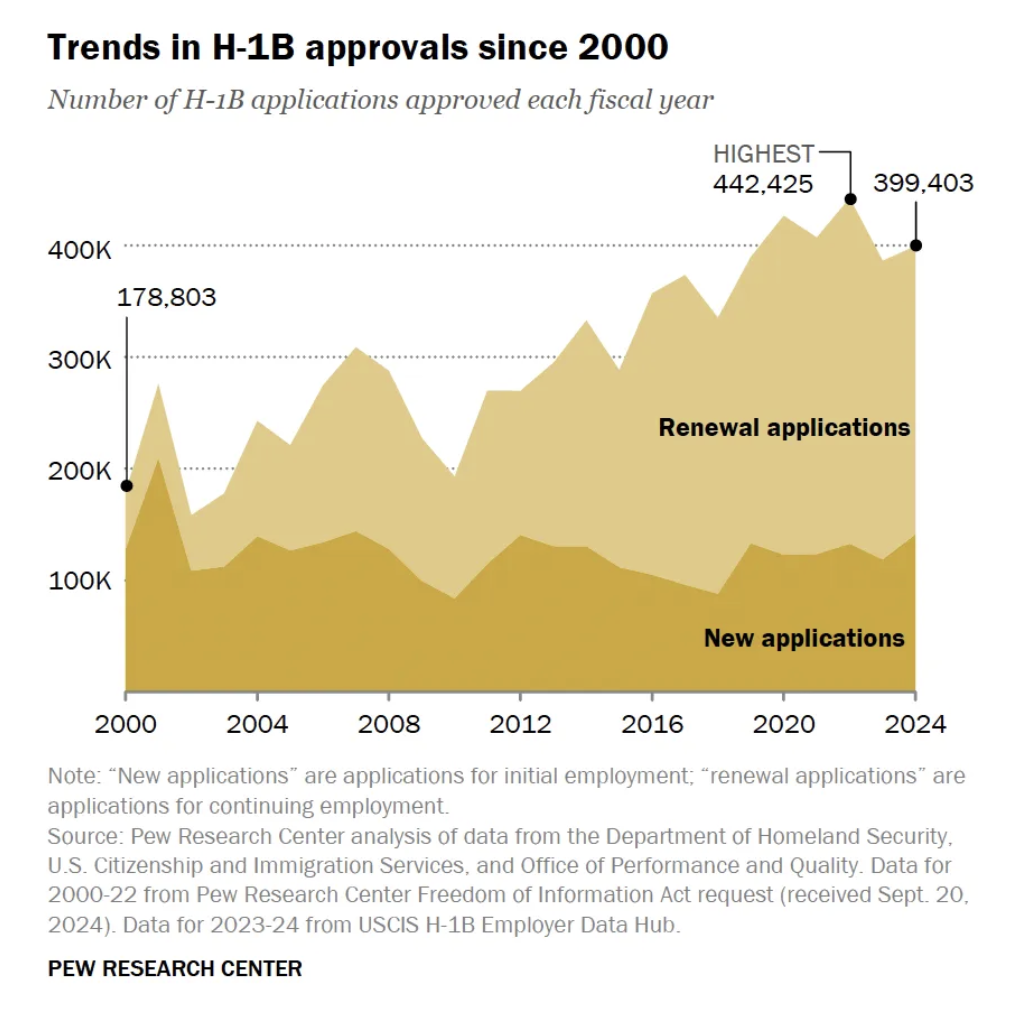
While the majority of the nearly 400,000 new or renewed H-1B visas granted last year have computer-related jobs — about three-quarters from India — about 17,000 are medical professionals, many of whom help underserved communities.
A Washington Post report shows how the American health care system depends heavily on H-1B workers, especially in rural and underserved areas in Iowa, North Dakota, and West Virginia.
🇨🇦 O, CANADA! Meanwhile, Canada announced a major initiative to attract H-1B holders frustrated with U.S. policies through an “accelerated pathway,“ while also investing more than $1 billion to recruit researchers and skilled workers.