AIPAC’s Influence Tested: Wins, Losses, & Growing Scrutiny
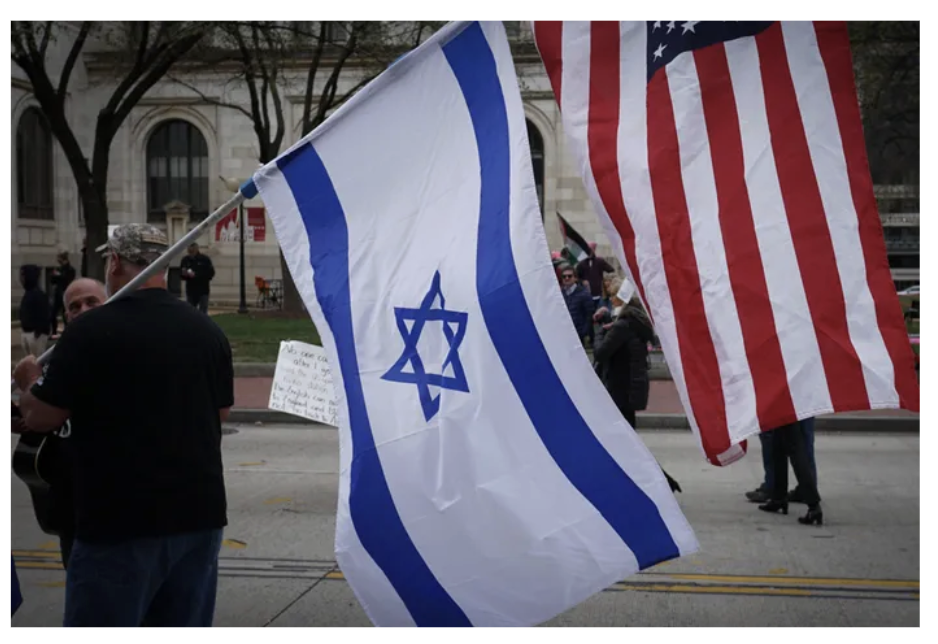
With the war in Iran intensifying debate over U.S. policy and influence in Washington, AIPAC — the most prominent pro-Israel advocacy group in the country — is drawing renewed attention, criticism, and confusion. And as primary election results begin to offer a real-world test of its political influence, here’s a closer look at how the group actually operates.
AIPAC saw mixed results in a major midterm test Tuesday in Illinois, where super PACs aligned with the advocacy group spent nearly $22 million on congressional House primary races.
MIXED BAG: Overall, AIPAC-backed House candidates split the night, with two wins and two losses on Tuesday.
WINS: Former Rep. Melissa Bean won the Democratic nomination in the 8th District, along with Cook County Commissioner Donna Miller, who defeated former Rep. Jesse Jackson Jr. for the Democratic nomination in the 2nd District.
LOSSES: AIPAC and its affiliated super PAC spent roughly$7 million in the 9th District, where Evanston Mayor Daniel Biss came out ahead. Biss, whose mother is Israeli, has been critical of Israel’s actions in Gaza. After his victory, he said, “AIPAC found out the hard way: the 9th District isnot for sale.” The group also spent nearly$5 million in the 7th District race, where the candidate they supported lost to Rep. La Shawn Ford.
The results come as AIPAC faces growing scrutiny from both sides of the political spectrum, including from former U.S. counterterrorism official, Joe Kent, who resigned over his opposition to the Iran war.
In a letter, he claimed the U.S. decision to strike Iran was driven by “pressure from Israel and its powerful American lobby.”
WHAT IS AIPAC
Since its founding in the 1950s, the bipartisan U.S. lobbying group — now with its 6 million American members — works to strengthen and promote the U.S.-Israel relationship. The group formed a super PAC — which may raise and spend unlimited sums of money in political races — for the 2022 midterms.
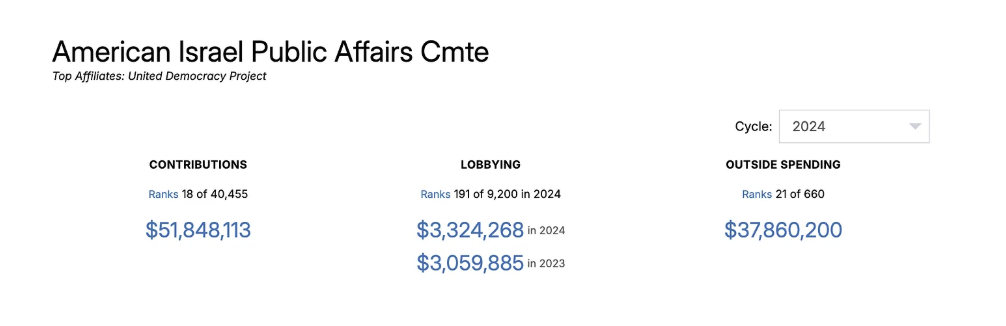
BY THE NUMBERS: AIPAC spent only about $3 million in direct lobbying in 2024. That ranks them 191st when it comes to lobby groups. Compare that to the US Chamber of Commerce at $72 million annually. That said, their influence often comes from members who donate directly to candidates — about $51 million during the 2024 campaign cycle. Though, that number also puts them at 18th when it comes to advocacy groups. A lot of their spending is pushed to an arm of the group, the super PAC United Democracy Project.
At its core, AIPAC’s mission is straightforward: elect candidates it views as strongly supportive of Israel. But in practice, that effort has evolved beyond traditional pro-Israel messaging. In key races, AIPAC-aligned groups are increasingly creating ads and funding campaigns that focus on a broader set of issues — like crime, economic policy, or local governance — using those messages to boost their preferred candidates or weaken opponents, even when those issues aren’t directly tied to Israel.
In Illinois, the pro-Israel group routed some spending through newly created PACs, including Elect Chicago Women, Affordable Chicago Now, and Chicago Progressive Partnership.
BIPARTISAN INFLUENCE: For decades, AIPAC has been one of the most influential advocacy groups in Washington, helping elect hundreds of candidates from both parties and building overwhelming bipartisan support for Israel on Capitol Hill. Lawmakers across the political spectrum routinely backed pro-Israel legislation, often by very wide margins. Congressional leaders and presidents from both parties — including Bill Clinton, George W. Bush, Barack Obama, and Donald Trump — have spoken at AIPAC’s annual Washington conference, underscoring its mainstream political clout.
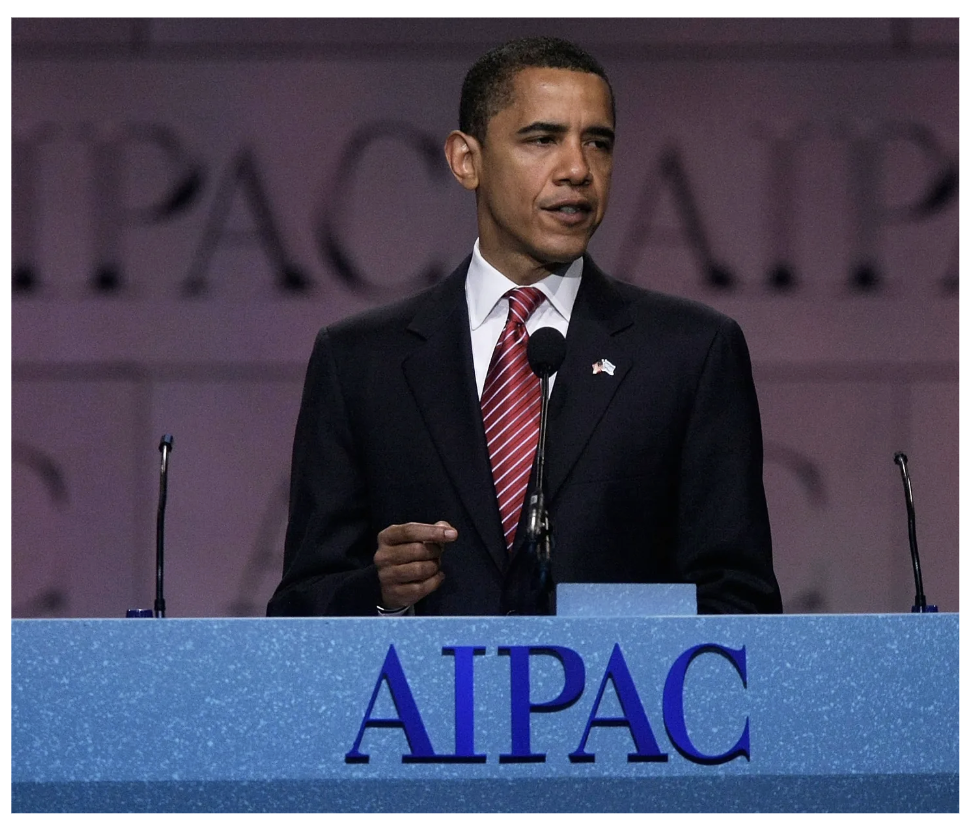
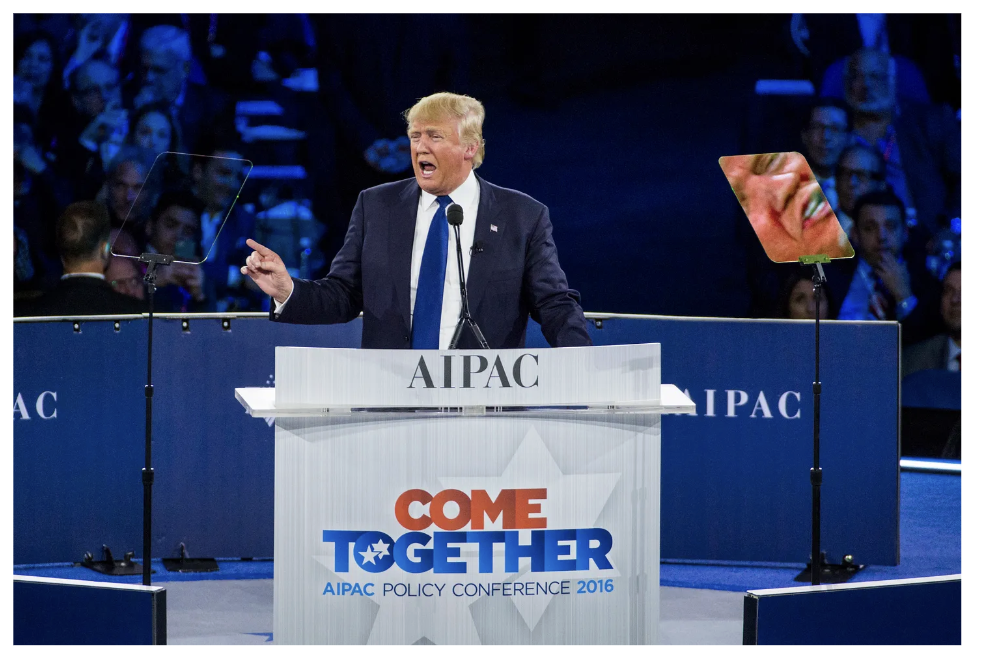
That bipartisan image began to shift in 2015, when AIPAC forcefully lobbied against the Obama administration’s Iran nuclear deal (JCPOA). The group ultimately lost that fight against the White House in Congress, but the episode marked a turning point — cementing perceptions among many Democrats that AIPAC was aligning more closely with Republican foreign policy priorities.
SHOULD AIPAC BE CONSIDERED A ‘FOREIGN AGENT?’: The lobbying that AIPAC does is by American citizens who want to promote the US-Israeli relationship, not Israel itself. Under the Foreign Agents Registration Act, foreign governments cannot give to U.S. political campaigns. Still, the group faces criticism for funding candidates who promote Israeli interests.
Similar models exist across other diaspora-driven advocacy groups in the U.S. — from pro-India organizations like USINPAC to Armenian groups like ANCA and Greek-American groups like HALC — all of which work to shape U.S. policy and back friendly candidates, though typically with far less spending and electoral reach than AIPAC.
A LOOK AT FOREIGN COUNTRIES’ LOBBYING CONGRESS
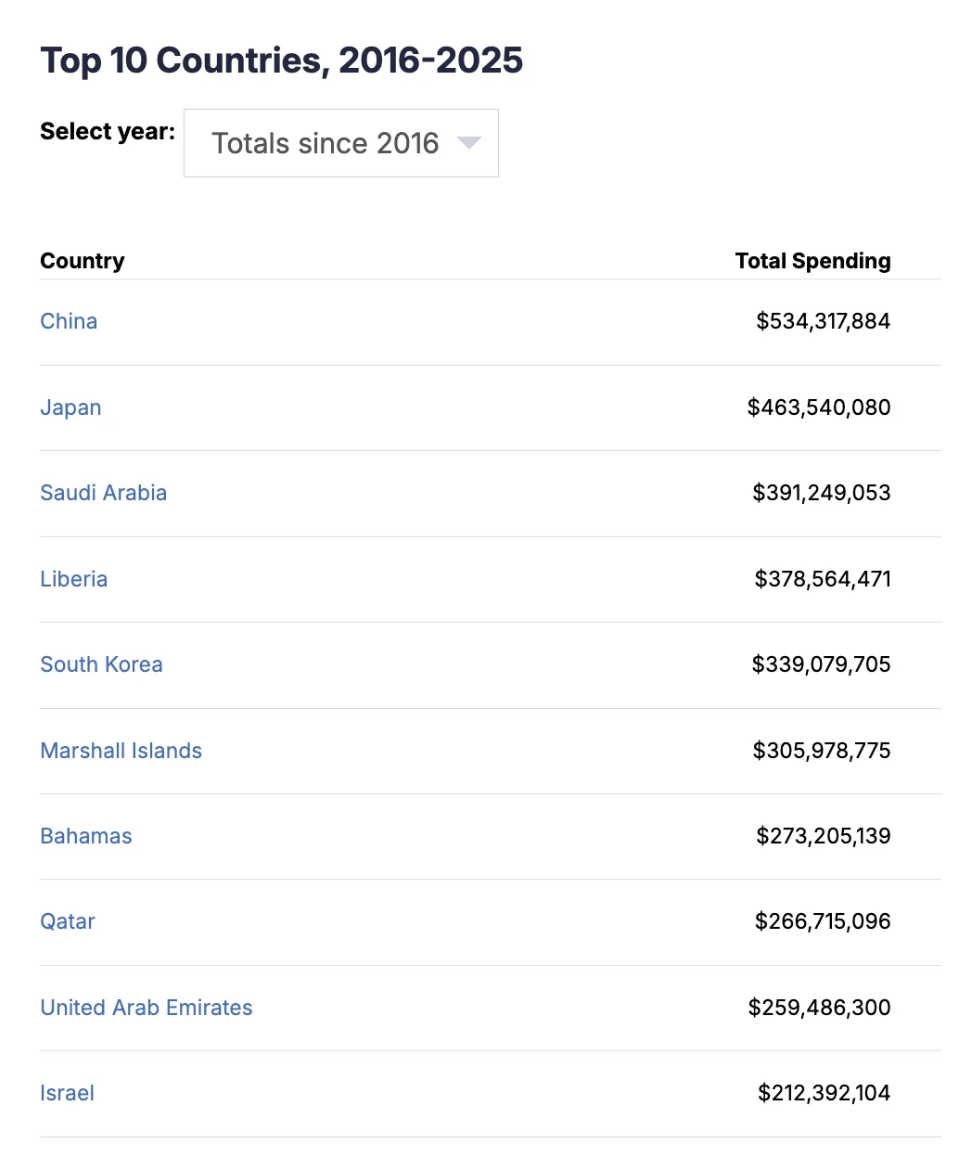
Foreign governments and affiliated organizations do actively lobby Congress — and over the past decade, countries like China, Japan, Qatar, and Saudi Arabia have spent hundreds of millions to shape U.S. policy. Israel, often at the center of political debate and scrutiny, actually ranks 10th in total spending over that period.
2026 MIDTERMS
AIPAC’s United Democracy Project has nearly $100 million ready to spend on pro-Israel candidates in this year’s midterms. That’s not as much as other interest groups, but it is still expected to play a role.
For example, Fairshake, a crypto-backed super PAC, had $193 million on hand at the start of 2026. Trump’s super PAC has a record-breaking $300 million it can spend.
For context, a total of $11 billion is expected to be spent on campaigns during the 2026 midterms.
PUSHING AWAY
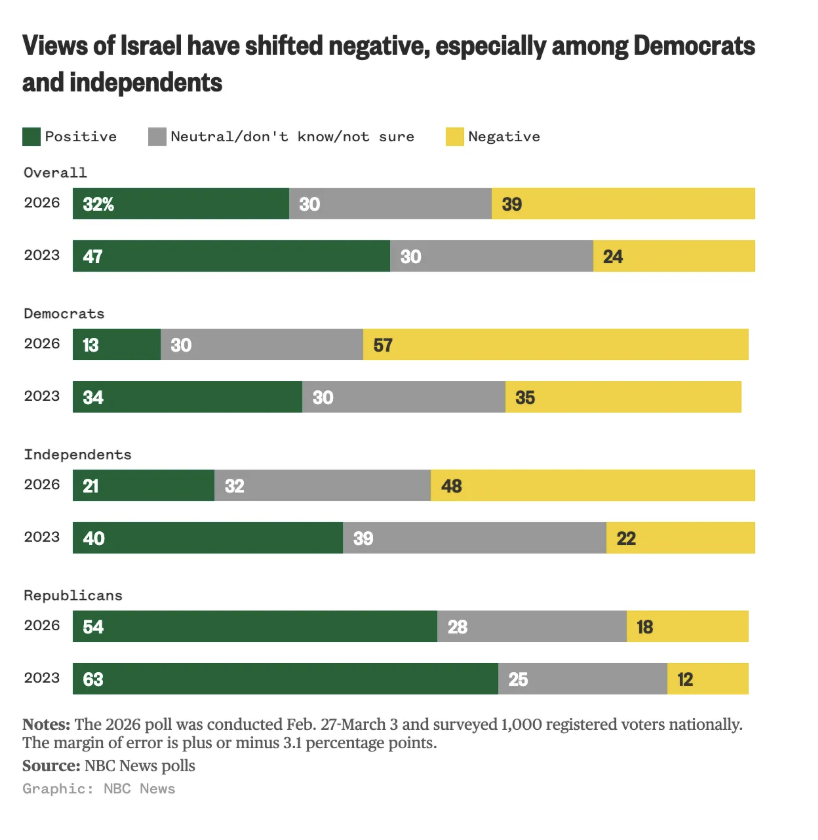
Anti-AIPAC groups note that most members of Congress have received funding from AIPAC members, though its support is becoming less popular — especially among Democrats. Since the Israel-Hamas war in Gaza, criticism of the group has grown, alongside declining public sympathy toward Israelis.
TOP CANDIDATES: Democratic presidential hopefuls Govs. Gavin Newsom of California and JB Pritzker of Illinois have also criticized AIPAC in recent months. That is something that was extremely uncommon over the last couple of decades, especially among frontrunners.
Newsom said last month he would “never” accept money from AIPAC.
Pritzker told the New York Times last week, “I still believe it is significantly MAGA-influenced,” after previously being a major AIPAC donor. He pulled his support around 2015.
Recent polling shows Americans — especially Democrats — shifting away from Israel. An NBC News poll found 57% of Democrats now view Israel negatively, up from 35% after the Oct. 7 attacks. A Quinnipiac survey found 44% of voters — including 62% of Democrats — say the U.S. is too supportive of Israel.