
Trump Slams Supreme Court’s 6-3 Tariff Ruling, Criticizes Justices He Appointed
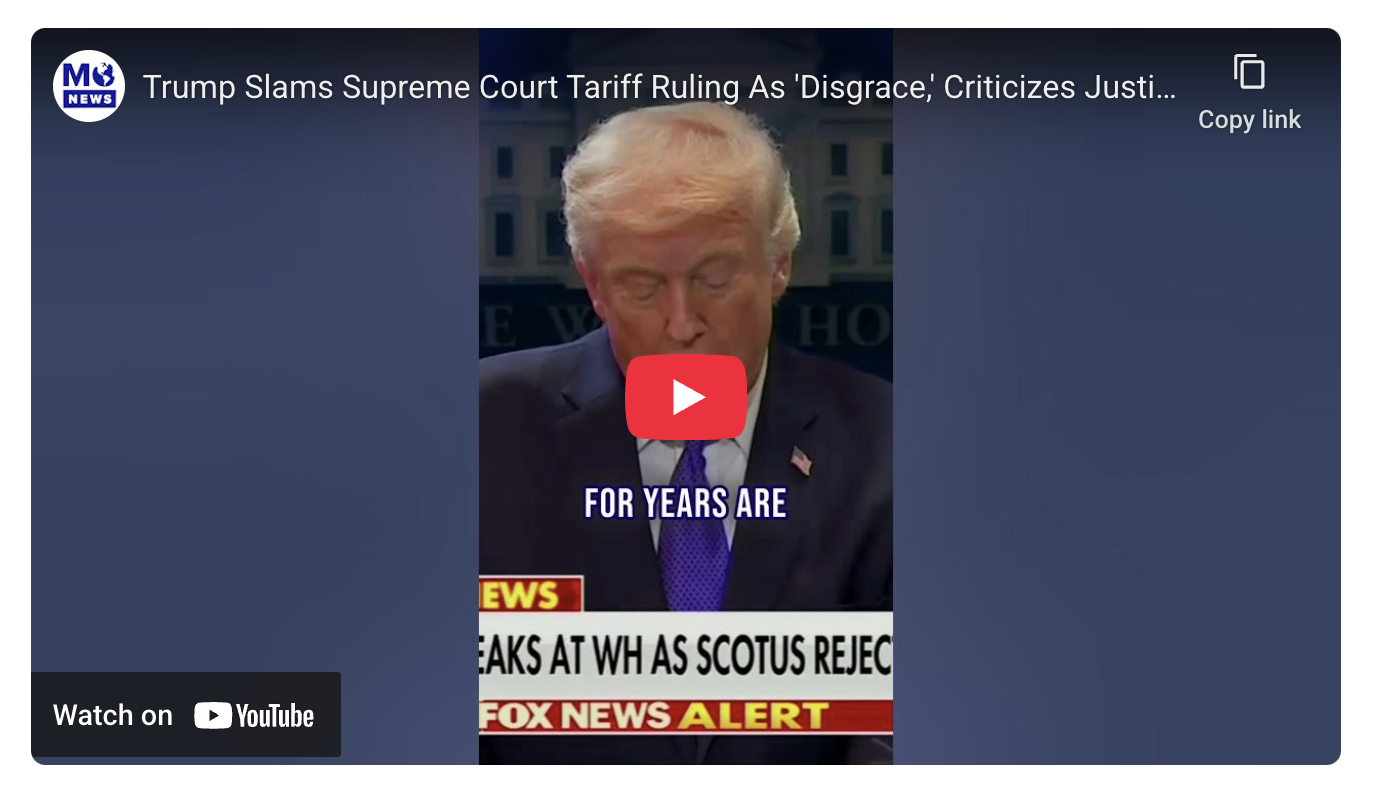
President Trump called the Supreme Court’s tariff ruling Friday “deeply disappointing” and said he was “ashamed” of certain justices, after they ruled he exceeded his authority by imposing sweeping tariffs under a law reserved for national emergencies. Trump then vowed to restore tariffs — including a 10% global levy — using other trade authorities available to him.
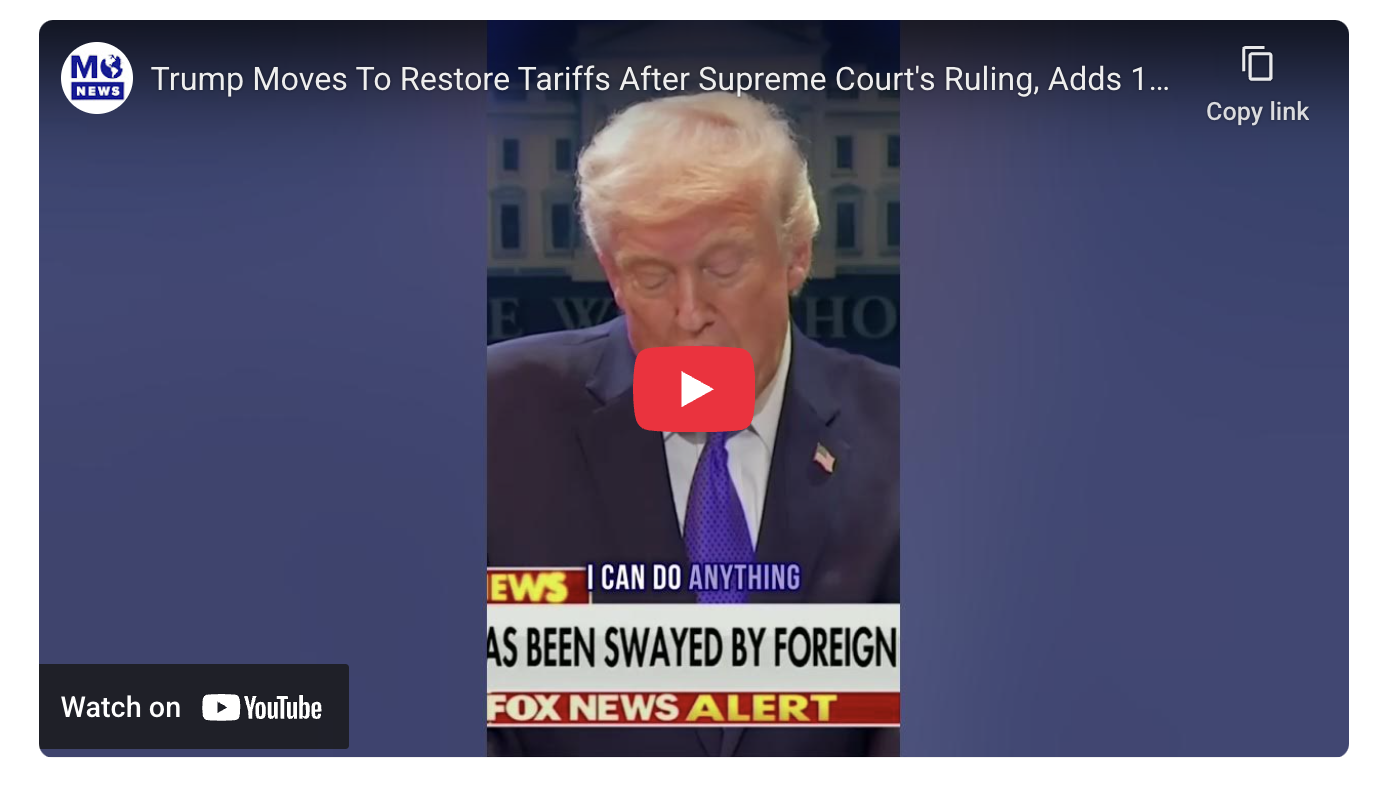
The SCOTUS breakdown: Two of the three justices Trump appointed during his first term — Amy Coney Barrett and Neil Gorsuch — ruled against his executive power to enact certain tariffs, alongside Chief Justice John Roberts and the Court's three liberal justices. Trump called those justices “FOOLS” and “LAPDOGS,” alleging without evidence that the Court was “swayed by Foreign Interests.”
“I can destroy the trade. I can destroy the country,” Trump said from the White House Friday. “I can do anything I want, but I can’t charge $1.”
INSIDE THE RULING
The majority opinion specifically addresses tariffs Trump imposed under the 1977 International Emergency Economic Powers Act (IEEPA), a law meant for national emergencies that had never previously been used to enact tariffs. Trump cited “large and persistent” trade deficits as the national emergency. IEEPA tariffs accounted for more than half of U.S. levies on foreign countries.
The opinion: “[T]he Government reads IEEPA to give the President power to unilaterally impose unbounded tariffs and change them at will. That view would represent a transformative expansion of the President’s authority over tariff policy,” wrote the Chief Justice.
On the other side: Justice Brett Kavanaugh, who Trump effusively praised Friday, wrote in a dissenting opinion that while “the tariffs at issue here may or may not be wise policy,” he viewed them to be “clearly lawful.”
He also warned it will be a “mess” to refund “the billions of dollars that it has collected from importers.”
Trump’s other tariffs, including those on foreign cars, pharmaceuticals, furniture, and aluminum, will remain in place because they are covered by different statutes.
WHAT’S NEXT?
The Budget Lab at Yale, which has been tracking the impacts of Trump’s tariffs, estimates nearly $200 billion were collected from tariffs in 2025. While they are a tax on imports, it is American consumers who have eaten the costs. Questions now remain about what happens to the billions of dollars in revenue collected under the emergency powers law.
Meanwhile, Trump says more tariffs are on the way. He outlined Friday that the administration will replace the IEEPA tariffs with other measures.
Section 122 of the Trade Act allows the president to address “large and serious” balance-of-payments deficits. Trump plans to use the law to impose a 10% global tariff on all countries — on top of the remaining tariffs.
The fine print: Section 122 has never been used by a president to impose broad global tariffs. It also caps tariffs at 15% for up to 150 days before requiring Congressional approval.
Sections 301 can be used to address trade deficits, but requires formal investigations by the U.S. Trade Representative and the Commerce Department. Trump said Friday that he plans to open investigations to use that law.
Rewind: Trump used Section 301 to hit China with tariffs during his first term.
By the numbers: Before the Supreme Court’s ruling, the average effective tariff rate was nearly 17%, according to Budget Lab estimates. Without the IEEPA tariffs, it would drop to just over 9%. But if Trump successfully imposes a new 10% across-the-board tariff, the rate could rise back above 15%.
BOTTOM LINE: While Trump may talk tough, he will no longer be able to threaten sweeping economic measures during international negotiations — like when he threatened imposing a 50% tariff on Brazilian imports, which the U.S. runs a trade surplus with, because he disagrees with the prosecution of former Brazilian President Jair Bolsonaro. Those actions have been central to his foreign policy agenda — with Trump even crediting them for helping him end multiple wars.
On Main Street, economists say U.S. consumers could see savings in the coming months, thanks to the Supreme Court ruling.