
Sports’ Biggest Stages Are Becoming Political Battlegrounds
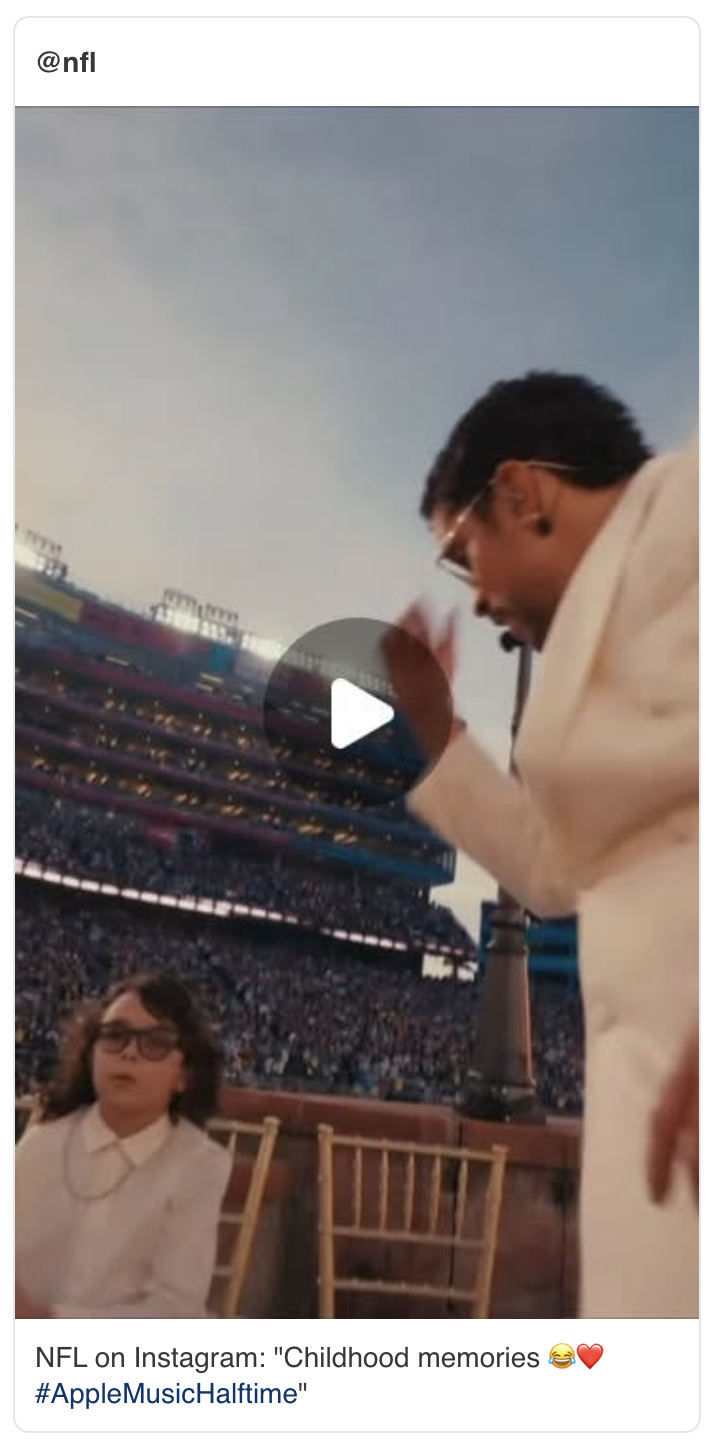
Two of the world’s biggest sporting events this weekend revealed how politics seems to be infused into everything these days.
At the Milan–Cortina Olympics, some American athletes used their platform to speak out about the challenges of representing the U.S. when they disagree with U.S. government policy. Meanwhile, Bad Bunny’s Super Bowl halftime performance Sunday sparked outrage on the right, and a similarly hostile defense on the left. President Trump weighed in on both.
SUPER BOWL LX
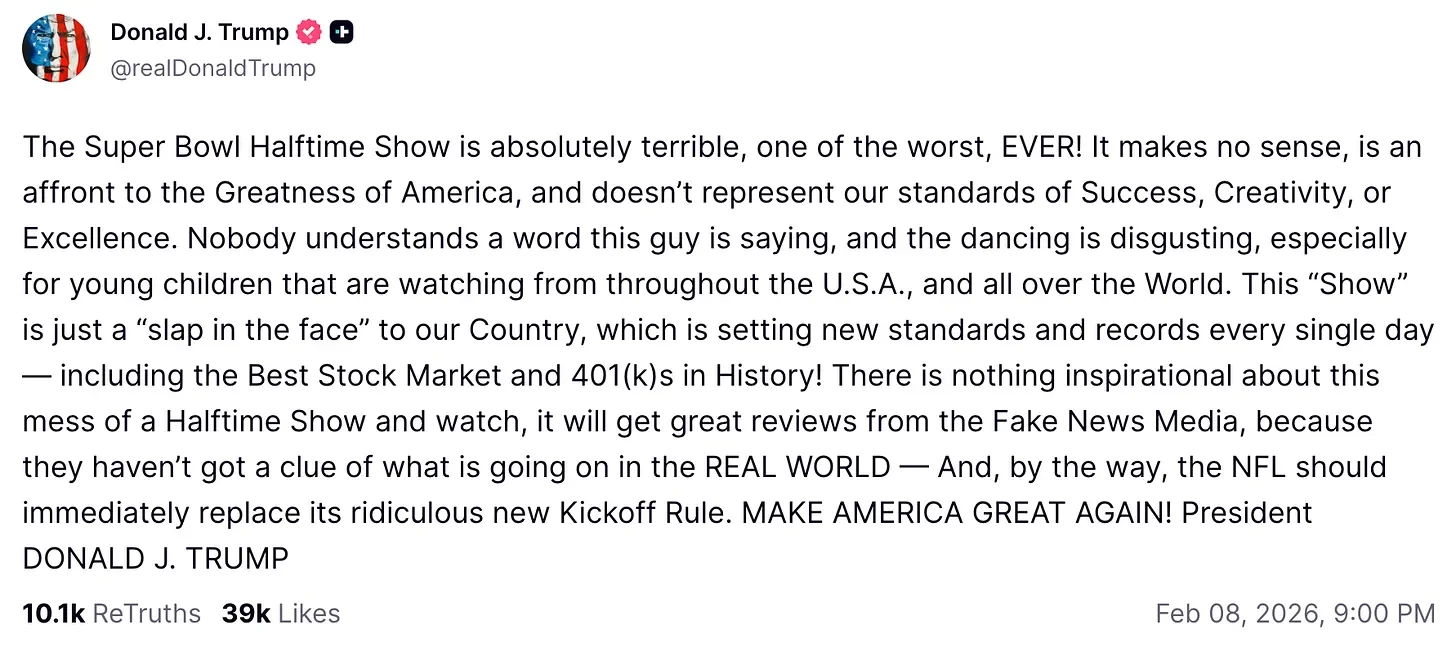
The Seattle Seahawks beat the New England Patriots 29–13 on Sunday, delivering a defensive masterclass on the field. But the action on the field was overshadowed by political backlash to Bad Bunny’s Super Bowl halftime performance.
Much of the controversy stemmed from Bad Bunny’s decision to deliver the performance almost entirely in Spanish on the biggest stage in U.S. television during the American sport’s biggest game. Those defending the move said the show was about celebrating Latino culture and his music’s global dominance (he is the world’s most-streamed artist) at a time the NFL is looking to expand its appeal around the world and to younger fans. Some conservatives called it un-American, woke and unpatriotic.
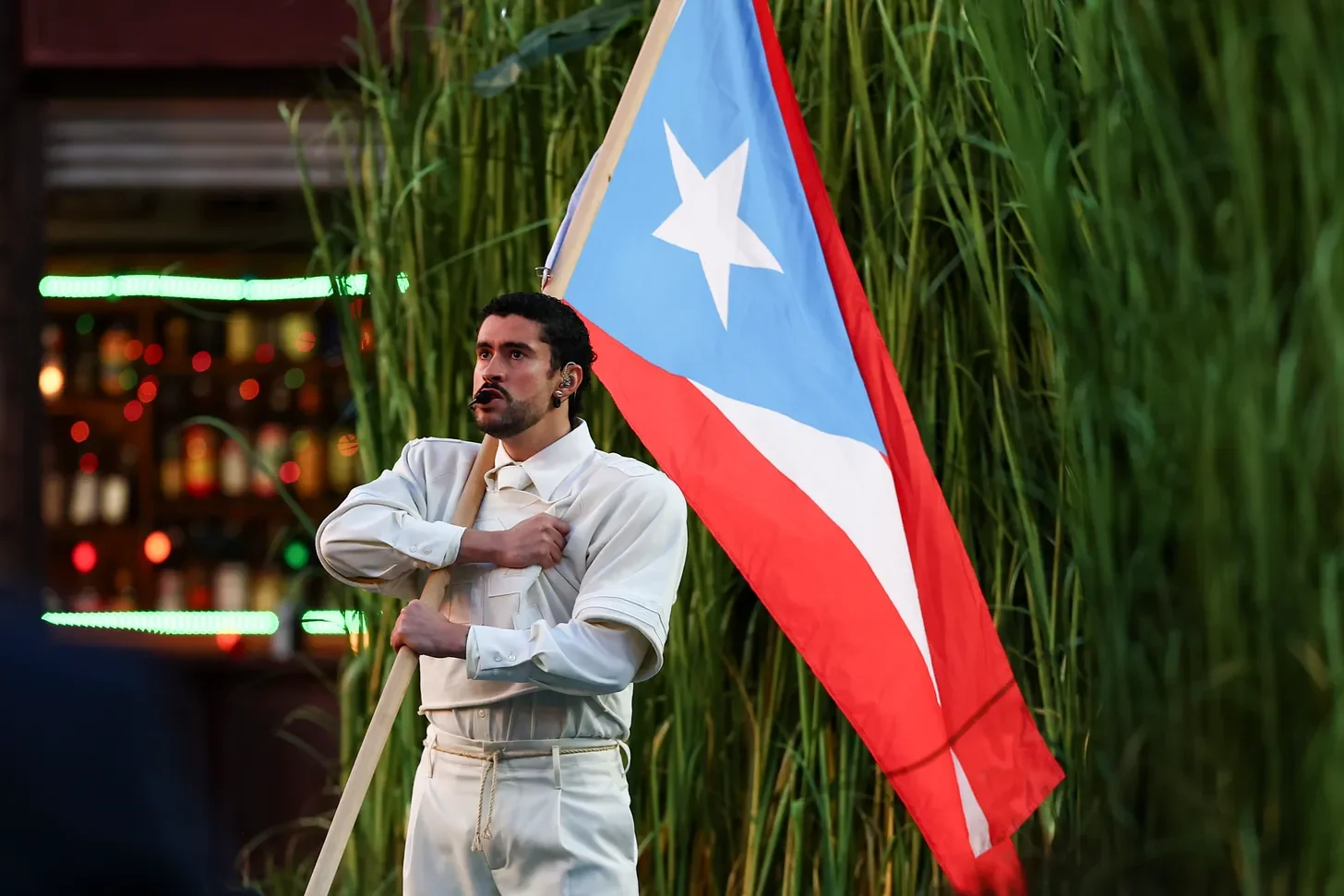
Visual notes: From sugar cane fields (symbolizing colonialism and slavery in the Caribbean) to the electric poles (representing Puerto Rico’s fragile power grid and frequent outages), Bad Bunny didn’t shy away from political messaging. Still, there were no explicit anti-ICE calls like the one he made at the Grammys. His overarching message centered on unity: “Together, we are America,” read a football he held.
But that, too, proved politically divisive: after Bad Bunny declared “God Bless America” (in English) during his performance, he called out the names of more than a dozen nations across South, Central and North America — not just the United States of America — challenging who gets included in the idea of “America.”
Fact vs fiction: There was a rumor that Liam Conejo Ramos, the 5-year-old detained with his father during an immigration raid in Minnesota, was featured during the performance; but the boy in question was actually a child actor meant to symbolize Bad Bunny as a young boy. However, what was real was the wedding during the show!
Conservative activist group, Turning Point USA, ran counter-programming, featuring Kid Rock, that they dubbed the “All-American Halftime Show.” It drew more than 6 million live views on YouTube. The show is now up to a total of 20 million views as of Monday afternoon. By comparison, Bad Bunny’s performance is projected to have gotten 130 million live viewers and is up to 30 million views on YouTube.
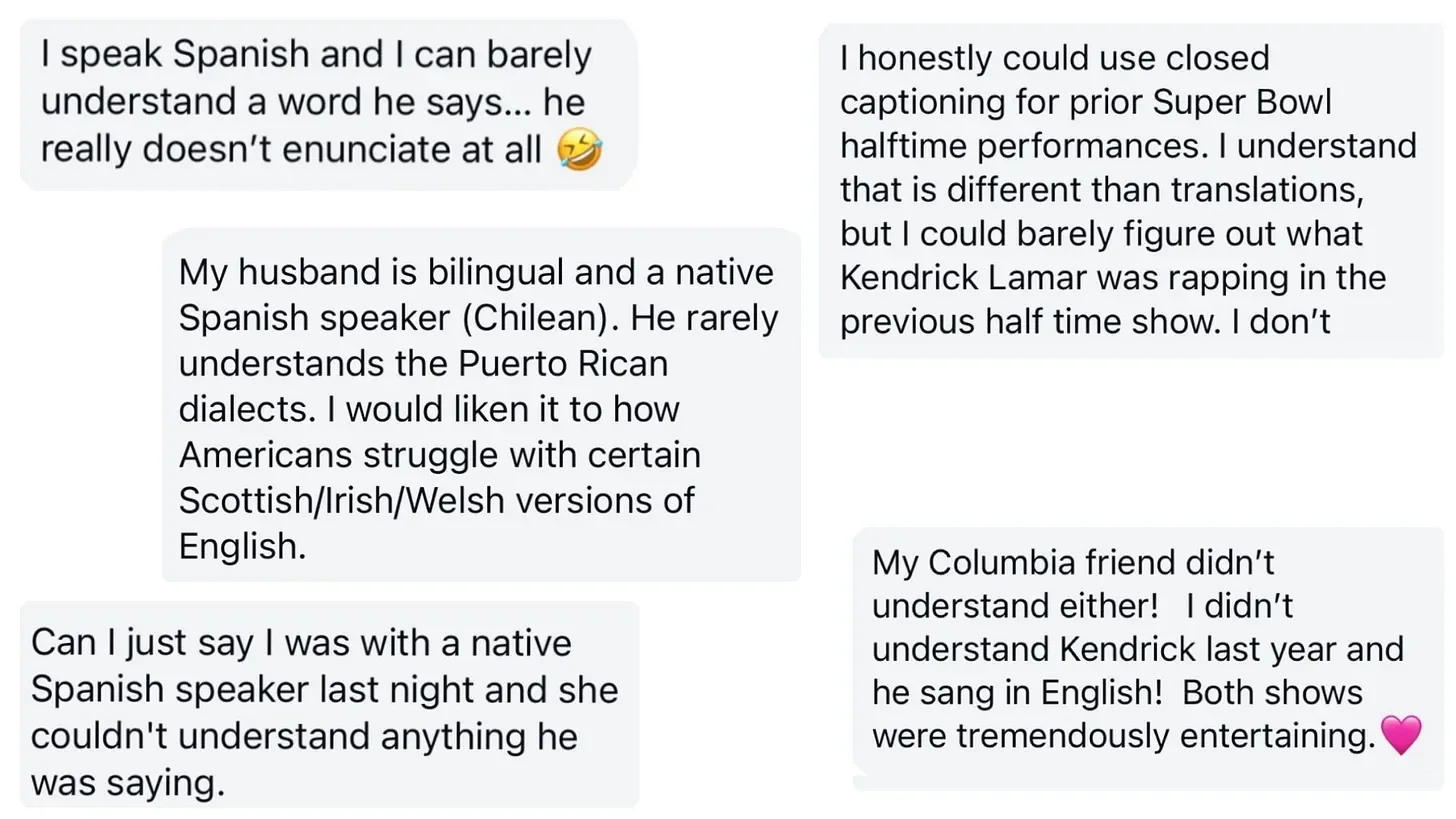
If you don’t speak Spanish, and couldn’t understand him, you are not alone. Some native Spanish speakers told us they also had trouble understanding Bad Bunny’s unique Puerto Rican accent/dialect.
WINTER OLYMPICS
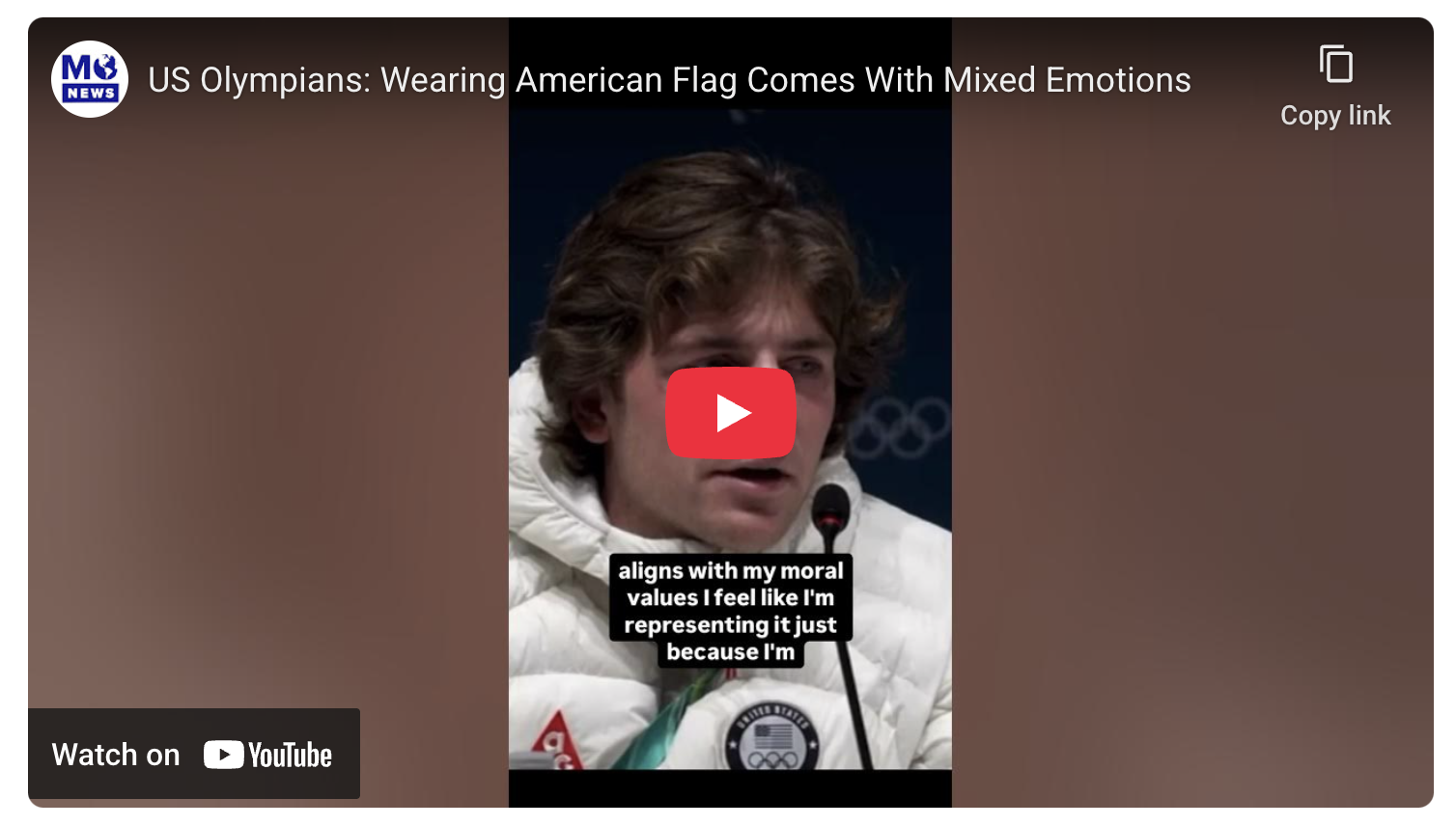
Trump also took to Truth Social on Sunday to criticize U.S. Olympic freestyle skier Hunter Hess as “a real Loser” after Hess said that wearing the American flag doesn’t mean he represents every administration policy. U.S. snowboarder Chloe Kim, the daughter of immigrants, defended athletes’ right to voice their opinions in response to Trump’s post on Monday: “We need to lead with love and compassion,” she said.
Speaking Friday in Milan, Hess was addressing questions about representing the country amid the administration’s ICE enforcement and backlash: “It’s a little hard,” he said. “There’s obviously a lot going on that I’m not the biggest fan of, and I think a lot of people aren’t.”
Rep. Tim Burchett (R-TN) told Hess on X to “shut up and go play in the snow.” Some other prominent conservatives are saying they will not support US athletes who are critical of the US government and there are even calls to send athletes like Hess home.
Fellow U.S. skier Chris Lillis said, “I love the USA and I would never want to represent a different country,” but added that he feels “heartbroken” by events surrounding ICE and protests back home. Lillis said he hopes that when people watch American athletes compete, “they realize that that’s the America that we’re trying to represent.”
Amber Glenn, who won a gold medal as part of the team event this weekend, is the first openly queer woman to represent Team USA in figure skating. She said the LGBTQ+ community is facing “hard times… in this administration.”
BIGGER PICTURE
This isn’t the first time athletes have leaned into politics on a national or global stage. A few examples:
2018: NBA star Lebron James criticized President Trump’s policies and comments as “laughable and scary.” Some conservatives attacked him, and said he should “shut up and dribble.”
2016: NFL quarterback Colin Kaepernick knelt during the national anthem to protest police brutality and racial injustice. He became a polarizing national figure and did not ever play another down in the NFL after that season.
1968: After winning gold and bronze in the 200m at the Mexico City Olympics, Tommie Smith and John Carlos gave the Black Power Salute, raising their fists during the national anthem in a statement against the systemic oppression of Black people in the U.S.
They were suspended from the U.S. team and expelled from the Olympic Village within 48 hours. The symbol has since become a common and defining act of the civil rights movement.
1936: Jesse Owens, a Black American, entered the Berlin Olympics as a political target in Nazi Germany. His four gold medals became a powerful rebuke of Hitler’s Aryan supremacy propaganda.