
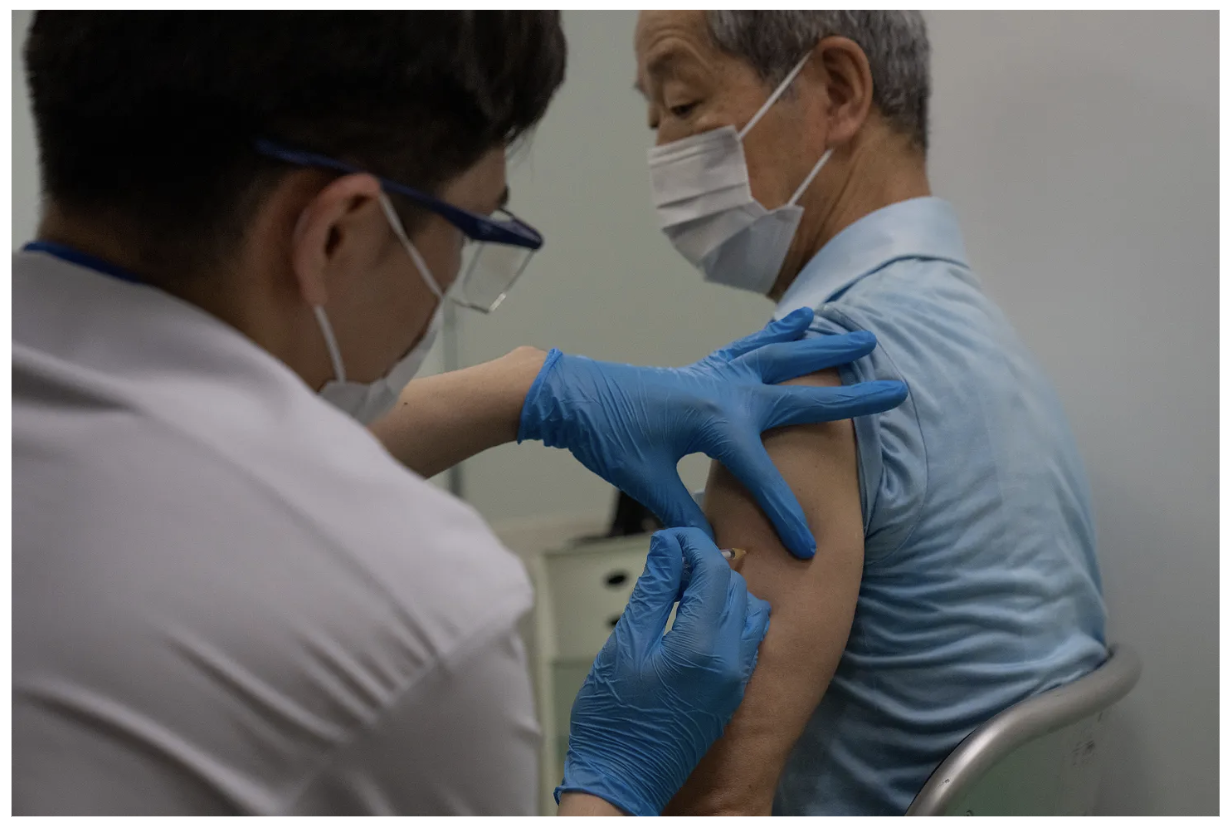
A common vaccine meant to prevent shingles appears to do something unexpected: slow the progression of dementia.
By the numbers: Researchers found that the shingles vaccine cut the risk of developing dementia by 20% over seven years, and adults who already had dementia were nearly 30% less likely to die from the disease over nine years compared with those who did not get vaccinated — suggesting the vaccine may actually slow its progression.
A new study, published Tuesday in Cell, found that adults who received the shingles vaccine showed about a 3% lower risk of developing new cases of mild cognitive impairment — an early warning sign of dementia — over nine years compared with those who weren’t vaccinated.
AN UNEXPECTED FIND
Scientists say the findings were completely unexpected. “Obviously, the vaccine was not designed or optimized to prevent dementia, so this is sort of an incidental finding. In some ways, we are being lucky,” Harvard Medical School professor Alberto Ascherio told The Washington Post. Other experts called it, “almost too good to be true.”
The research took advantage of a quirk in Wales’ 2013 shingles vaccine rollout, where adults born on or after Sept. 2, 1933 qualified for vaccination while those just a day older did not — creating a natural comparison group. Researchers are now calling for full randomized controlled trials and are seeking funding to conduct them.
Two doses of the shingles vaccine are currently recommended for adults 50+, or adults 19+ with weakened immune systems.
Shingles, caused by the varicella-zoster virus, affects about 1 in 3 Americans in their lifetime, with risk increasing sharply with age.
Less than 5% of people between 65 and 69 have dementia, but cases rise to 35% for people age 90+, according to Columbia University.