
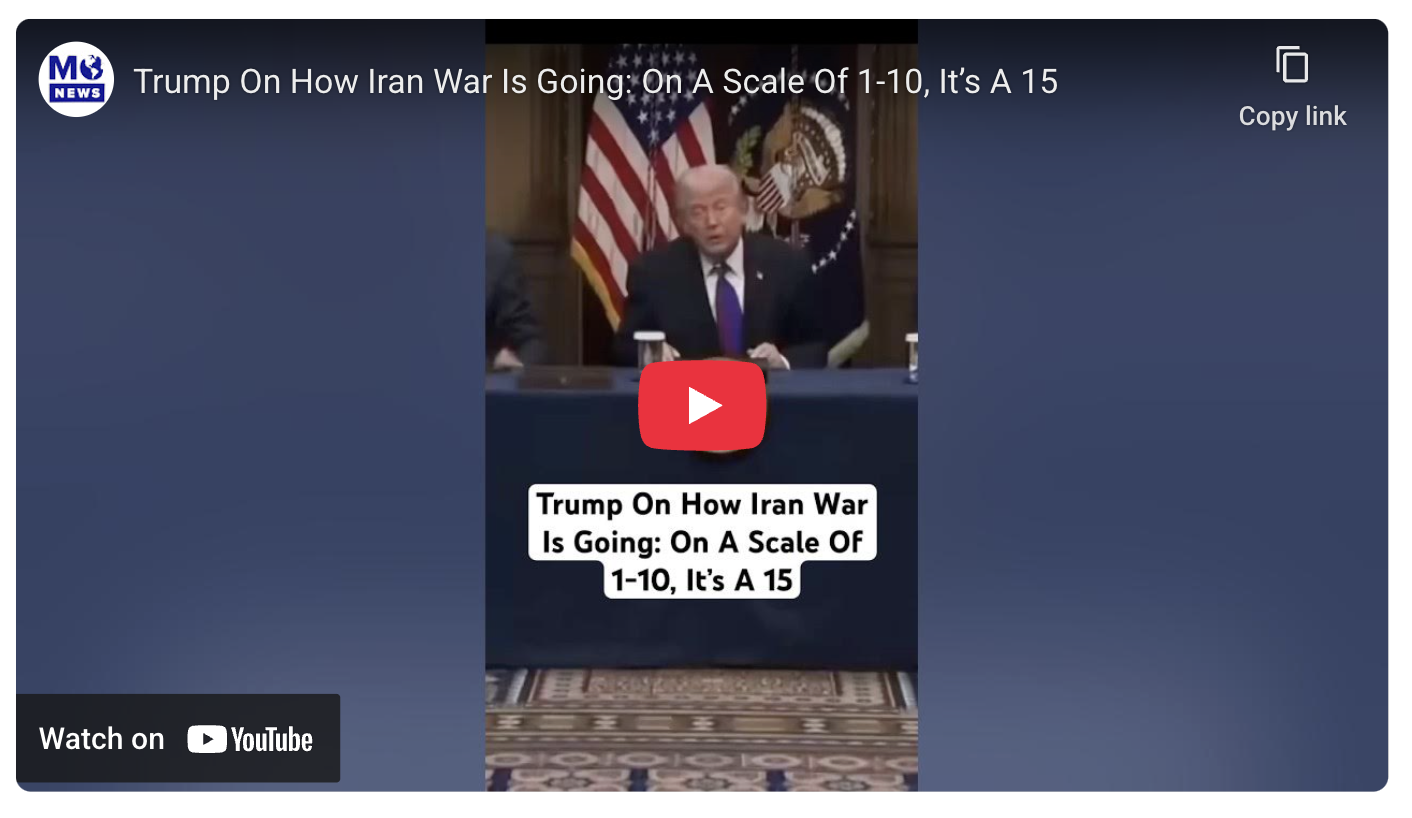
The war against Iran entered its fifth day on Wednesday, with the Trump administration touting early successes against the Iranian regime and the president ranking the war a 15 on a 10-point success scale.
The U.S. military has hit more than 2,000 targets in Iran, including ballistic missile sites and the Islamic Revolutionary Guard Corps headquarters. Military leaders say the U.S. and Israel have near total domination over the skies of Iran, and have almost destroyed the entire Iranian navy.
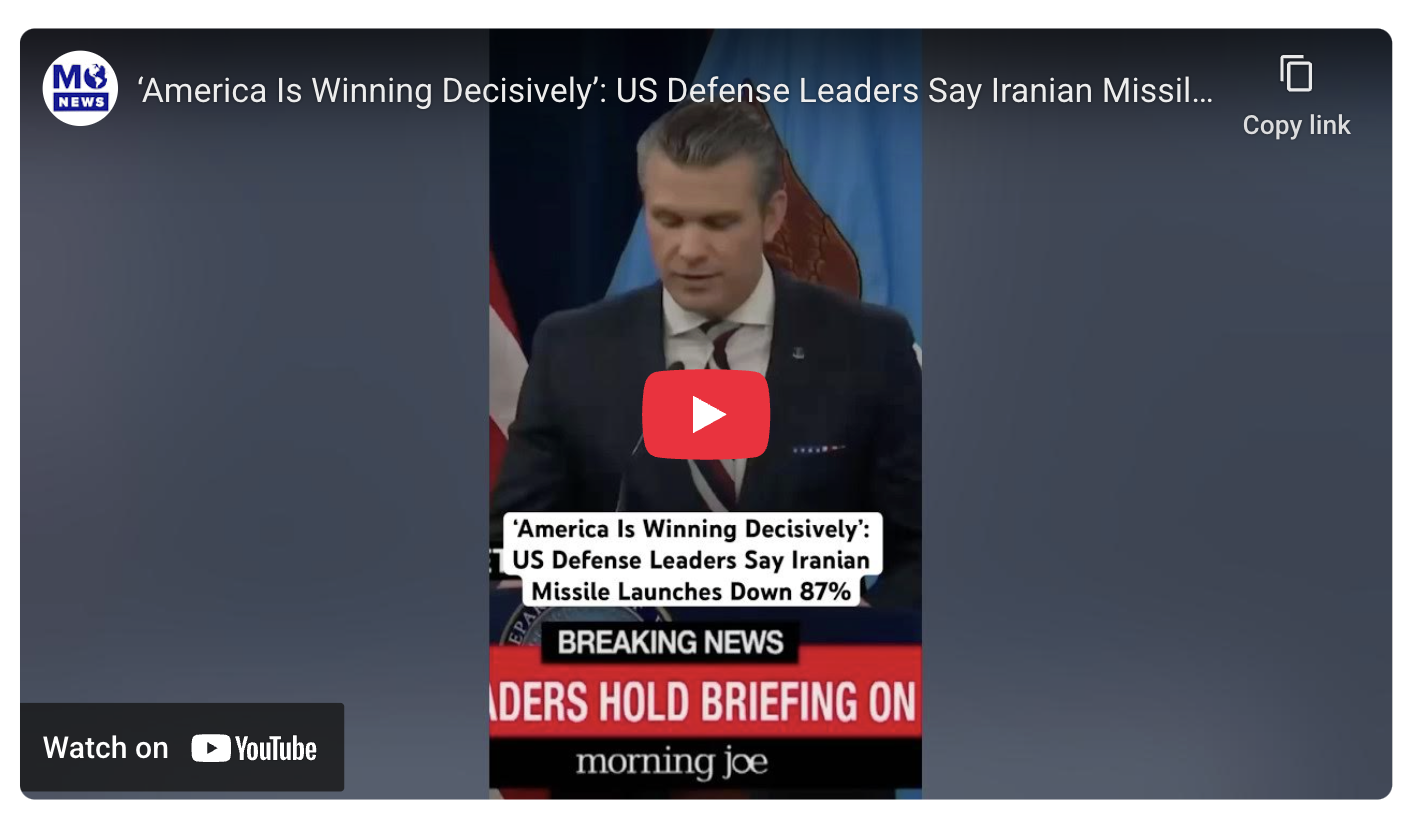
WAR ROOM UPDATESSecretary of Defense Pete Hegseth and Chairman of the Joint Chiefs of Staff Gen. Dan Caine held a joint press conference Wednesday morning, where they expressed optimism about America’s progress in the war.
HEGSETH: “AMERICA IS WINNING”: Hegseth said that progress during the U.S.-Israeli war against Iran has been “incredible” and that the Islamic regime in Iran is “toast.”
Hegseth says within a week, the U.S. and Israel will have complete, uncontested control of Iranian airspace, allowing for 24/7 targeting of the Iranian defense industrial base.
Hegseth warned Americans that it’s “very early” in military operations against Tehran. “And as President Trump has said, we will take all the time we need to make sure that we succeed,” he added.
Trump said Monday that the U.S.-Israeli military campaign against Iran is ahead of schedule and could last about four to five weeks. Asked about progress in the war on Wednesday, Trump added, “Somebody said on a scale of 10, where would you rate it? I said about a 15.”
FEWER MISSILES FROM IRAN: In the briefing, Caine describes a significant decline in Iranian missile and drone launches since the start of the military operation.
“Iran’s theater ballistic missile shots fired are down 86% from the first day of fighting, with a 23% decrease just in the last 24 hours… Their one-way attack drone shots are down 73%,” Caine says.
He mentioned how Iran has been firing 23% fewer missiles in the past 24 hours alone.
U.S. TO STRIKE DEEPER INTO IRAN: Caine also said Wednesday that the U.S. will start “striking progressively deeper into Iranian territory” as the war progresses to create “additional freedom of maneuver for U.S. forces.”
WARSHIP DOWN
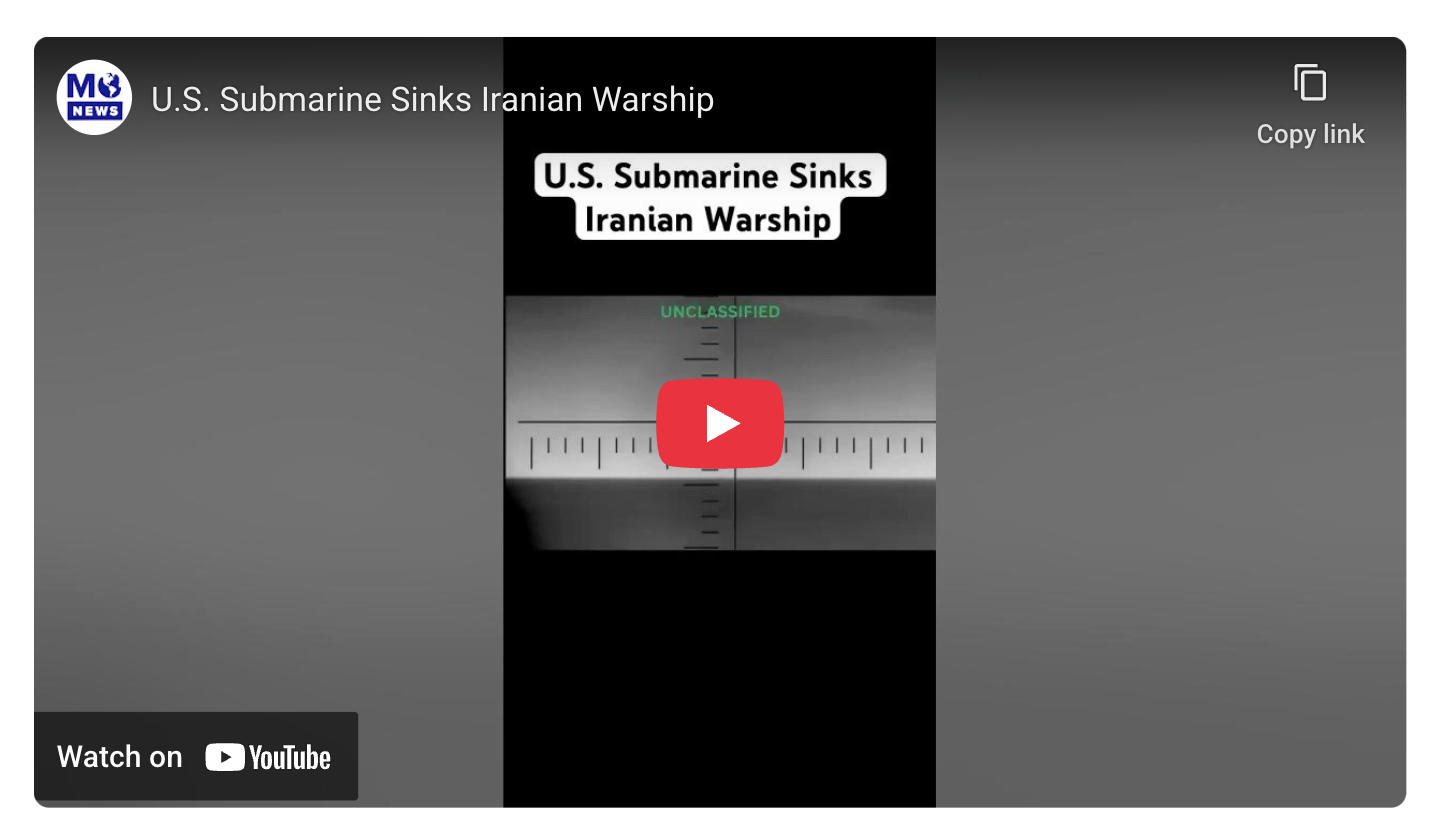
Also on Wednesday, a U.S. submarine torpedoed and sank a prized Iranian warship in the Indian Ocean — the first time since World War II that an American sub has sunk an enemy vessel.
Hegseth said the U.S. Navy targeted the Soleimani, the Iranian flagship named for Qasem Soleimani, the commander of the Islamic Revolutionary Guard Corps’ Quds Force who was killed in a U.S. drone strike in January 2020.
The Sri Lankan Navy said Wednesday it recovered 87 bodies and rescued 32 people from the incident.
The U.S. has struck or sunk over 20 Iranian ships, according to the U.S. Central Command.
WIDENING WAR
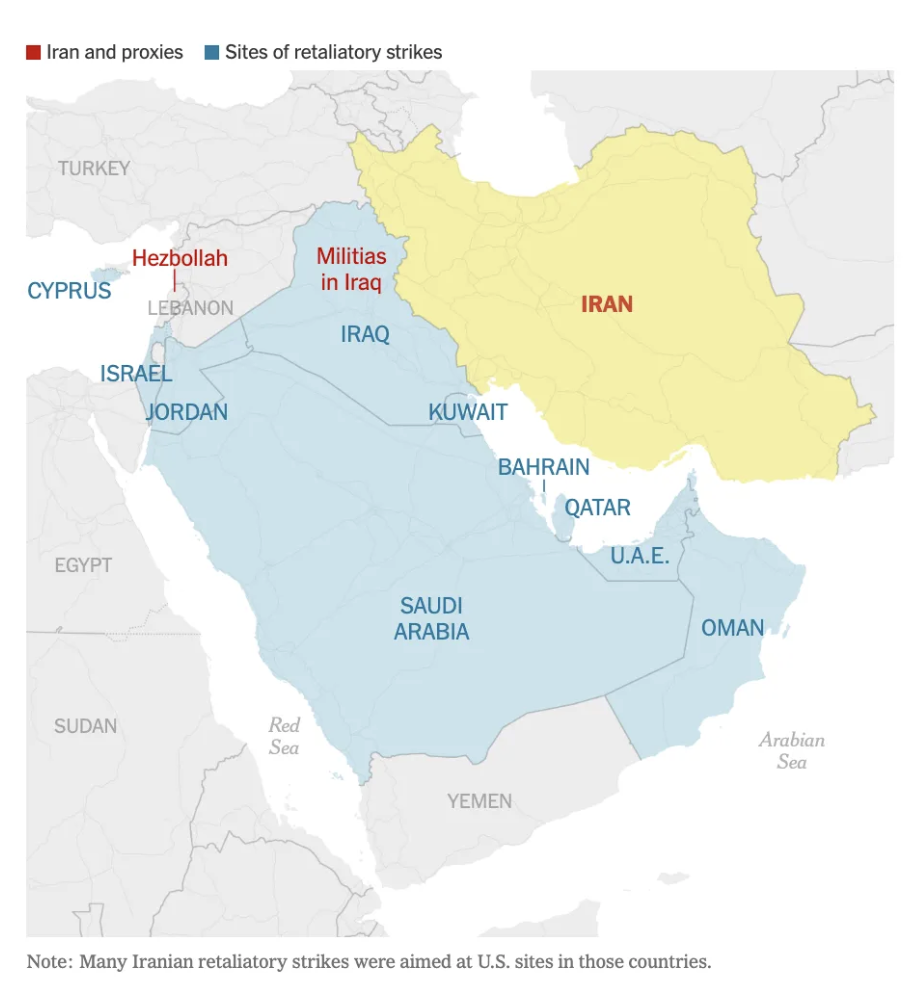
Meanwhile, NATO defense systems shot down a ballistic missile launched from Iran on Wednesday as it was heading towards Turkey. No casualties were reported, and it is unclear what the intended target of the missile was.
Turkey is a NATO member bordering Iran. The strike marks the first time Turkey has been directly affected by the fighting. Iran has launched retaliatory strikes in nearly a dozen countries since Saturday— striking both U.S. embassies and civilian infrastructure.
EVACUATION ORDERS
The U.S. State Department has urged Americans to evacuate 14 countries across the Middle East. But it’s easier said than done. The department is trying to organize military aircraft and charter flights for American citizens who want to leave the region, but it’s an active war zone, so in some cases, air space has been closed and flights cancelled.
The State Department on Tuesday told Americans to call a hotline at 1-202-501-4444 to let them know their location and if they’re in need of help evacuating.
At one point, a State Department recording said it could not help anyone evacuating. As of Wednesday, the number is working again, Press Secretary Karoline Leavitt confirmed.

DEMS PUSH BACK: BOOTS ON THE GROUND?
The White House is not currently considering sending ground troops to Iran, but still won’t rule it out, Leavitt said during a press briefing Wednesday.
CONGRESSIONAL BRIEFING: Leavitt’s comments come after Senate Democrats said they left a closed-door briefing on Iran, from the Trump administration on Tuesday, increasingly worried that the U.S. may deploy boots on the ground.
Boots on the ground: “I just want to say that I am more fearful than ever after this briefing that we may be putting boots on the ground and that troops from the United States may be necessary to accomplish objectives that the administration seems to have,” said Sen. Richard Blumenthal (D-CT) to reporters on Tuesday.
Rep. James Comer (R-KY) added Wednesday that U.S. boots on the ground in Iran may be unavoidable, although he hopes it would not happen.
“I think that's something the president knows, that members of Congress certainly hope doesn't happen, but sometimes that's unavoidable in a situation like this,” Comer told Newsweek.
A DIVIDED SENATE AND AMERICAN PUBLIC
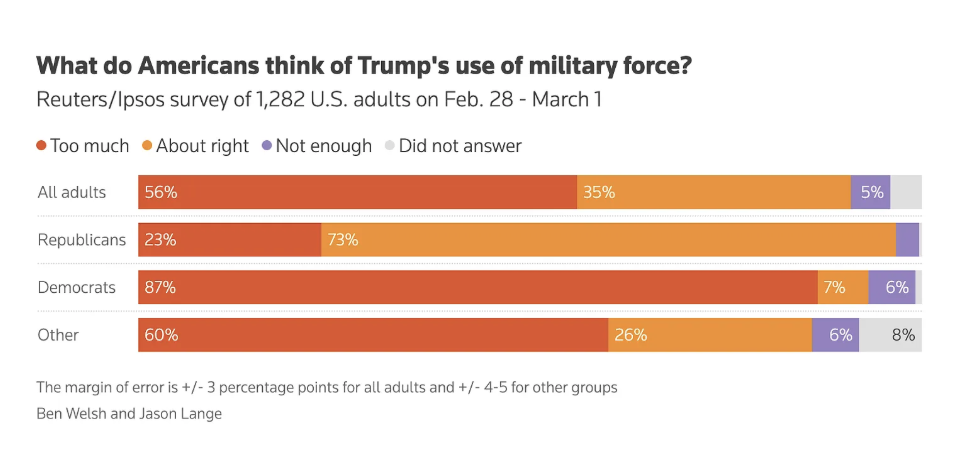
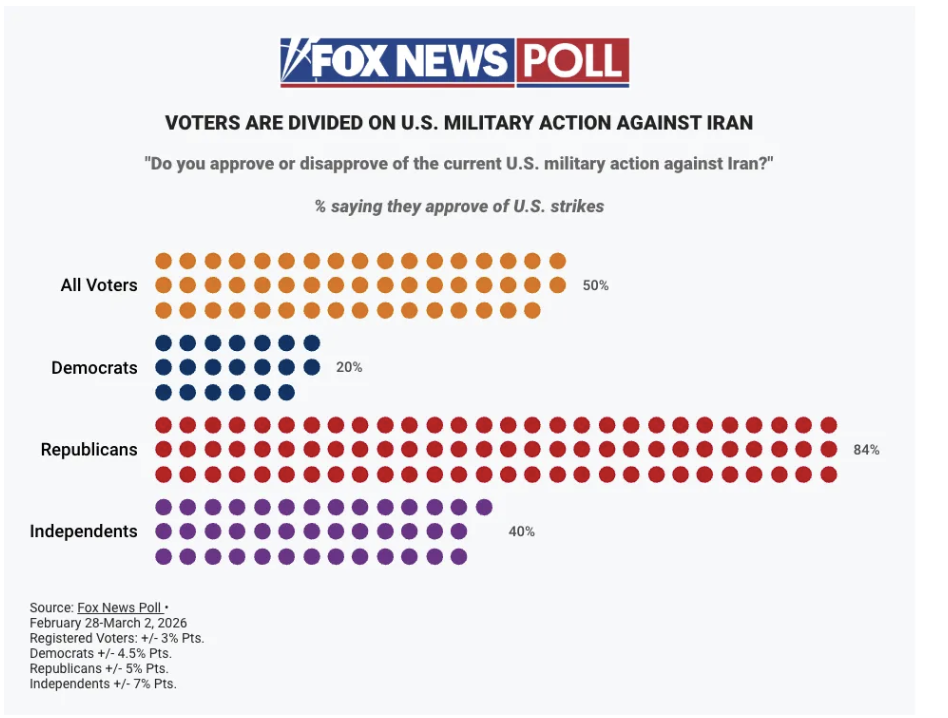
Republicans are much more likely to support America’s war efforts to rid Iran of nuclear capabilities than Democrats.
A new Reuters/IPSOS poll of around 1,200 adults shows that only one in four Americans say they back the U.S. strikes on Iran. The vast majority of Democrats (87%) say Trump is too willing to use military force, whereas only around a quarter (23%) of Republicans say the same.
In a separate Fox News poll of more than 1,000 voting adults, more than 8 in 10 Republicans say they approve of the current U.S. military action against Iran, whereas only 1 in 5 Democrats say the same.
THE WAR POWERS RESOLUTION
Democrats — joined by Sen. Rand Paul (R-KY) — also forced a vote in the Senate on a war powers resolution on Wednesday that tests Trump’s decision to embark on a war against Iran without congressional approval. The Senate rejected the measure late Wednesday, though the House still plans to take up the resolution tomorrow.
WHAT IT IS: The 1973 resolution, first passed during the Vietnam War, prevents a president from sending troops overseas without first acquiring congressional approval. If passed, the act would require the withdrawal of US forces from the conflict unless Congress approves the operation.
WILL IT MATTER? Even if the vote on the War Powers Act were to pass the Senate, it still needs to get through a Republican-controlled House, and even then, it will be vetoed by Trump. Congress would need to muster a 2/3 majority to override the veto.