Global trust in institutions is falling, and people are increasingly relying on family, friends, coworkers, and even bosses for information. That's according to Edelman’s annual Trust Barometer, which tracks confidence in business, government, media, and nonprofits worldwide.
By the numbers: Only 39% of people globally say they regularly get news from sources with varying political views, reports Axios, which received early data from the report that comes out Sunday.
That's down six points in just one year, according to Edelman's survey of nearly 40,000 people across 28 countries.
The data shows in the past five years, trust in national government leaders has dropped 16 points, while trust in news organizations is down 11 points.
Where are people turning to get information? Their family, friends, coworkers, and even bosses. Trust in personal circles is up around 10 points in the same timeframe.
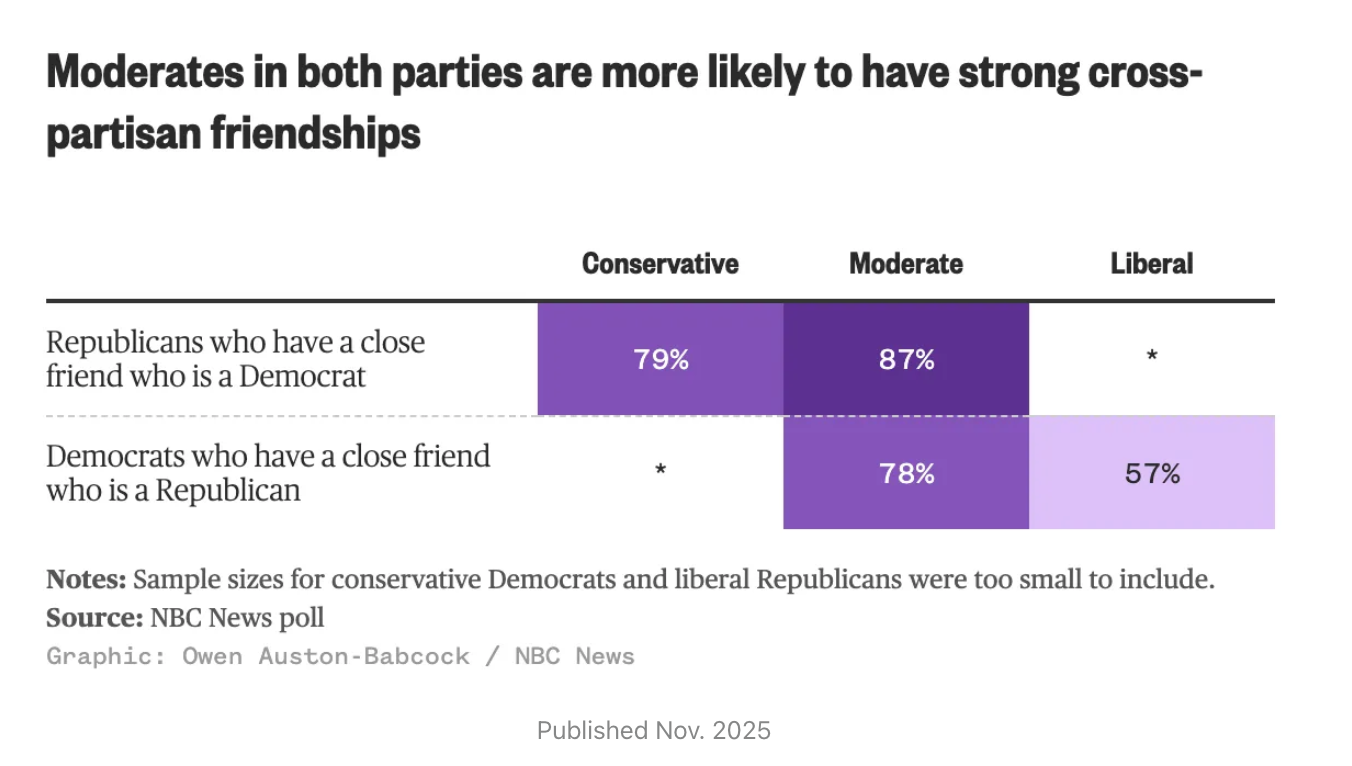
The issue: In the U.S., people on the far sides of the political spectrum are less likely to have friends across party lines. The issue is most pronounced among liberals, who are least likely to have close friends on the right.
BIGGER PICTURE
The snapshot from the report reveals that information largely flows through personalized feeds, algorithms, and creators – rather than shared news ecosystems. Axios calls it the “shards of glass” effect, adding that sometimes those “shards” intersect.
EXAMPLES: Liberal baby boomers watching MSNOW often consume the same narratives as younger liberals following MeidasTouch on social media. Fox News and conservative digital creators play a similar role on the right.
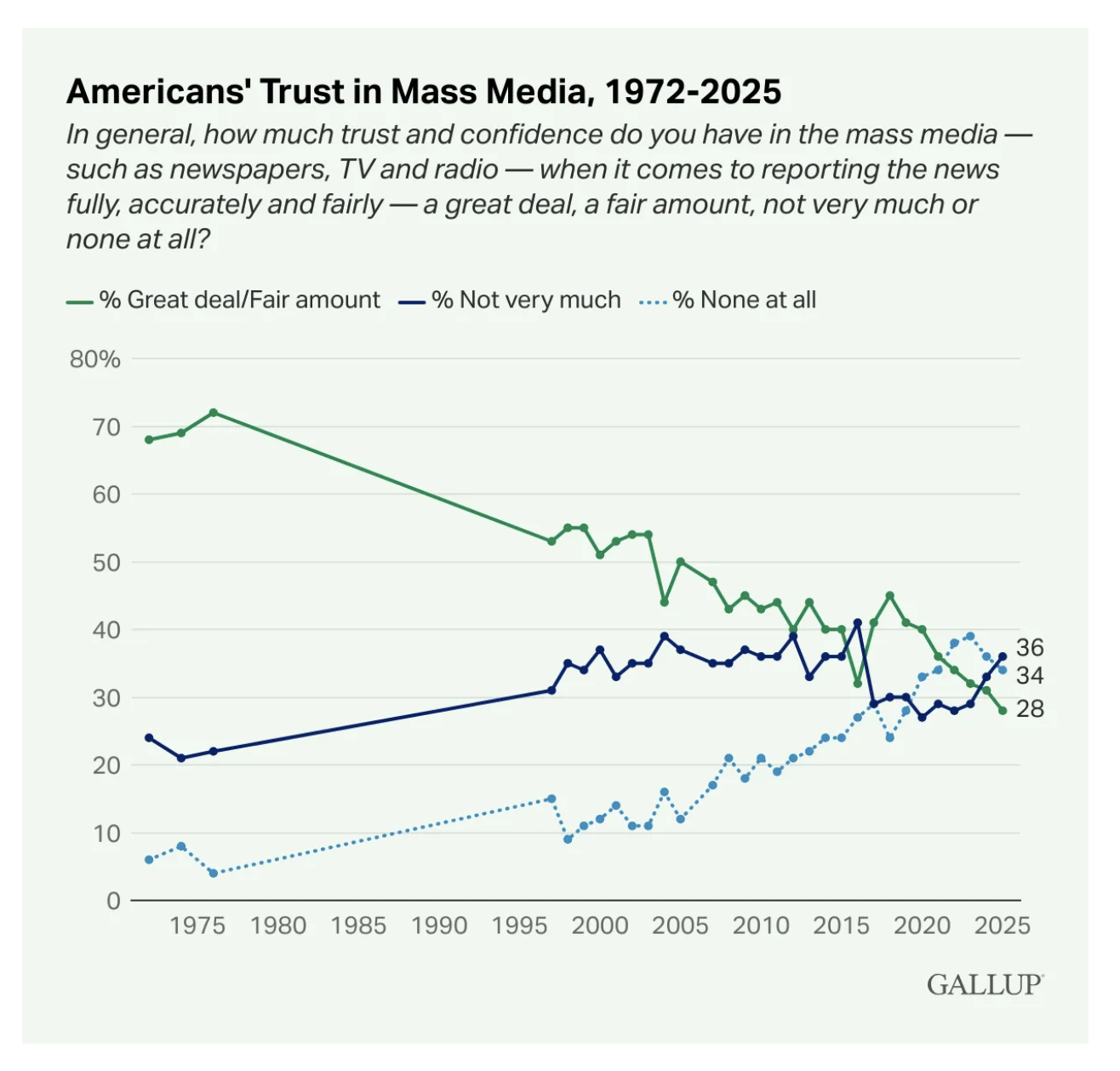
In the U.S., trust in media hit an all time low of only 28% in fall 2025, a Gallup poll found.
AI deepens silos by serving people stories they already agree with via personalized AI feeds — reinforcing and amplifying existing views rather than exposing them to new ones.
ChatGPT and other popular models are trained to make users happy — which can include feeding them information to confirm their beliefs and possibly bending truth. These models have also been accused of their own political biases.
The technology also makes it easier to create targeted and persuasive content that appears “new,” but is not.
A study from video-editing service Kapwing finds that AI-generated “slop” now makes up more than 20% of YouTube Shorts content. It defines “AI slop” as “careless, low-quality content generated using automatic computer applications and distributed to farm views and subscriptions or sway political opinion.”
THERE’S MORE
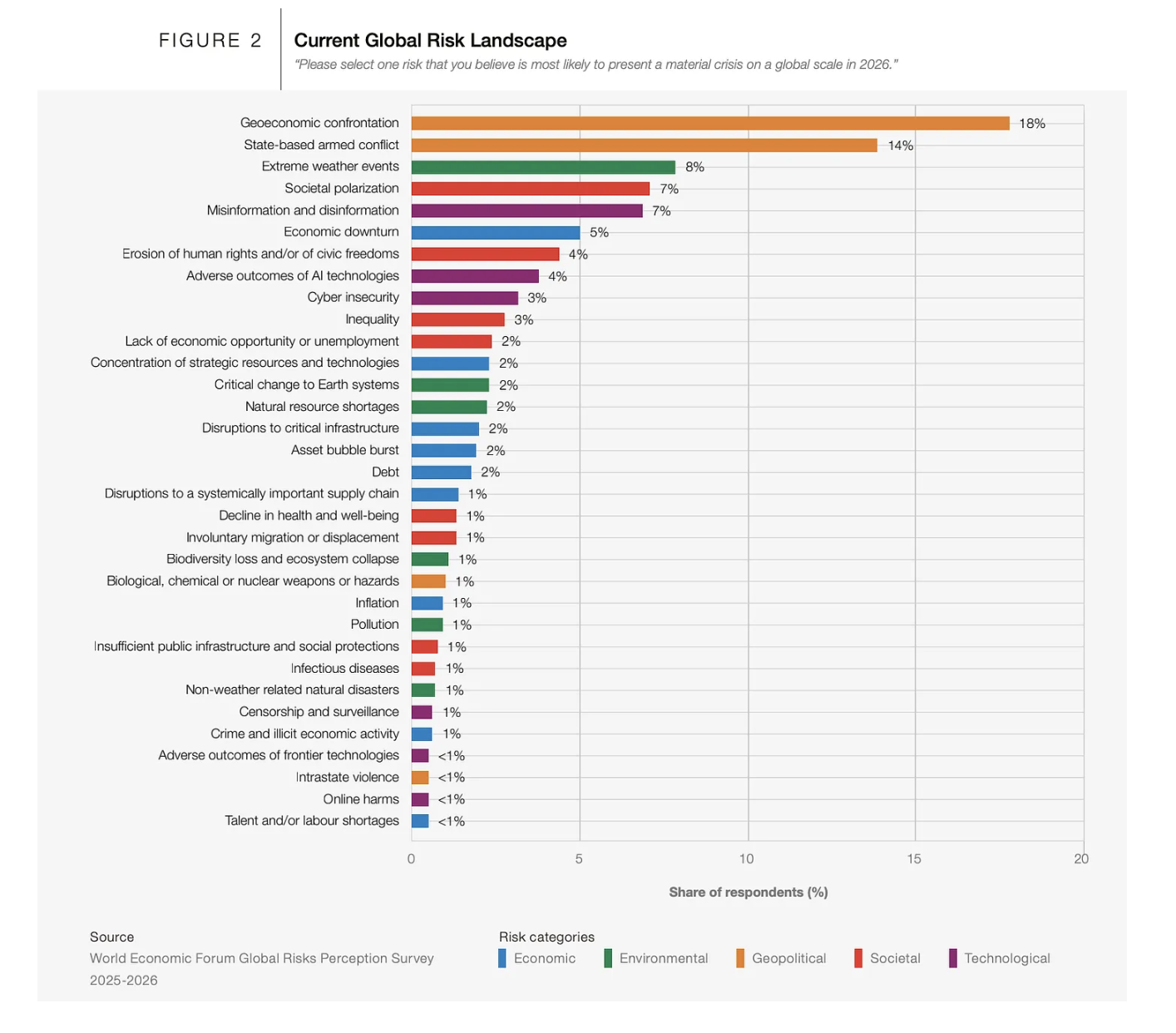
The data comes as global leaders prepare to meet at the World Economic Forum in Davos next week, where major topics are expected to include AI, tariffs, and broader economic tensions. Here are some things to look out for this year from the Forum’s annual Global Risks Report.