
France’s Fertility Push Sparks Debate Over Government Intervention In Family Planning

France is planning to send letters to all 29-year-olds in the country warning them that their fertility is declining, and encouraging women to consider freezing their eggs.
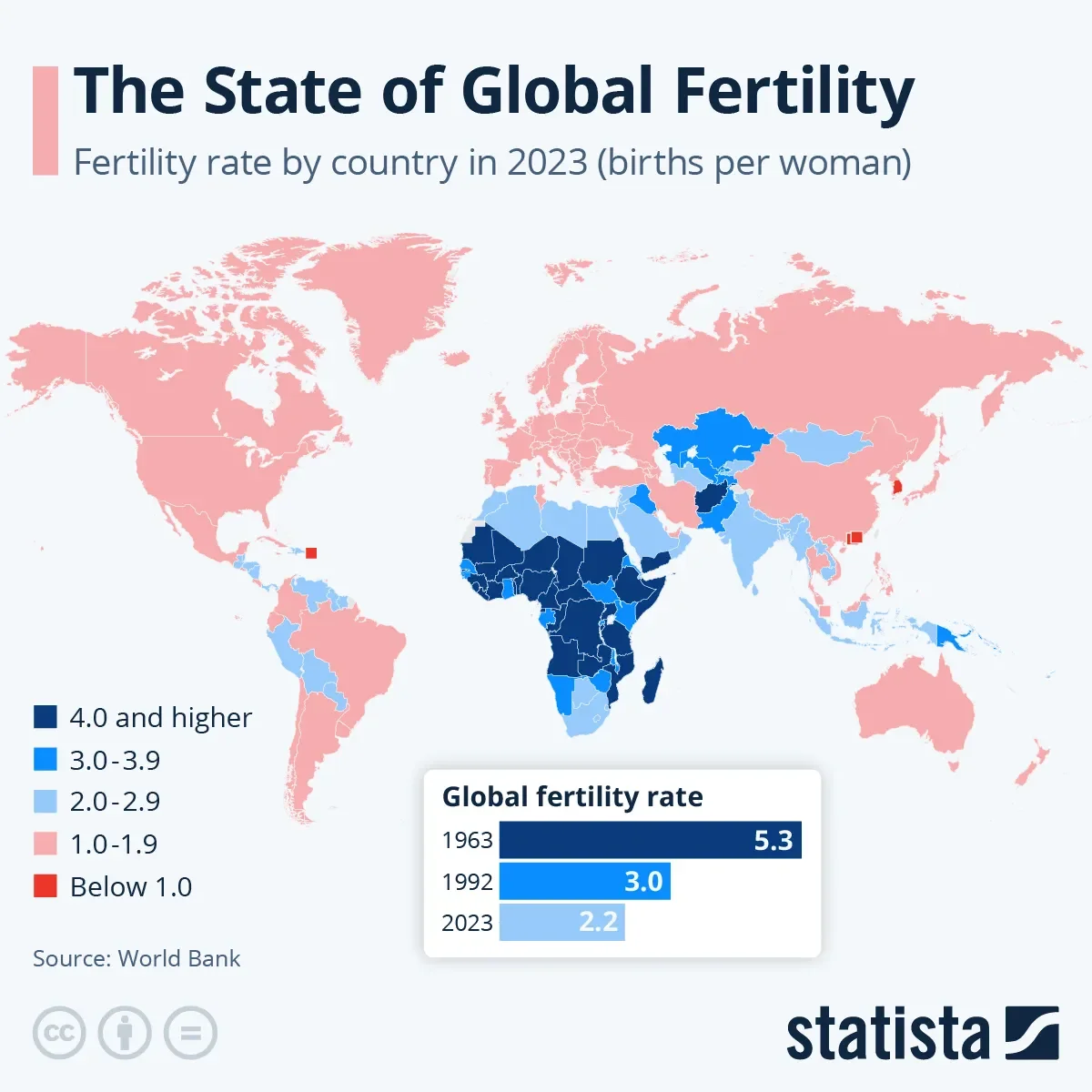
The letters are meant to address France’s waning birth rate, which sits around 1.56 children per woman — well below the 2.1 replacement level needed to keep the population stable.
The move is opening a wider global conversation about whether governments should encourage people to have children amid global declining birth rates, or just provide better information earlier.
INSIDE FRANCE’S CAMPAIGN
The letter will highlight that the French government covers the cost of egg freezing between ages 29 and 37. The government says it’s trying to make sure women don’t later say, “I wish I’d known.”
Not just for women: Men will also receive these letters, which frames fertility struggles as a shared responsibility affecting one in eight couples in France. It’s a stark shift from older messaging that focused almost entirely on women’s biological clocks.
Male partners contribute to about half of infertility cases worldwide.
France will also launch a new fertility website advising on the impacts of smoking, weight, and other lifestyle choices on fertility outcomes, as well as implement additional sex education in schools.
BIGGER PICTURE
It comes as we’re seeing similar birth rate declines across dozens of developed countries, including the U.S. (birth rate 1.6 in 2023), South Korea (1.8), UK (1.6), Japan (1.2), Italy (1.2), and China (1.0). Governments worry shrinking populations will lead to fewer workers paying taxes and more retirees needing pensions and healthcare.
Not just if, but when: From 2016 to 2023, first births to younger mothers in the U.S. dropped sharply. While first births to moms above age 35 jumped 25%. The takeaway: people aren’t necessarily opting out of kids entirely — many are just delaying until they feel financially or emotionally stable enough. But by that point, they may have fewer kids or struggle to conceive.
So, do government campaigns actually work? Critics argue pressure — especially on women — ignores the real drivers of birth rate decline: housing costs, childcare expenses, career timing, and economic stability.
It’s why politicians in the U.S. have introduced major policy changes like expanded tax credits, baby bonuses, and free IVF — most of which have not yet materialized.
Others worry pretending fertility isn’t time-sensitive leaves people without real planning tools.
WHAT THE DR. ORDERED
Connecticut OB-GYN, Dr. Alicia Robbins, tells Mo News that early information can matter: “I have had patients say to me, I wish I had known about my fertility and how ovarian age changes over time sooner,” she says.
Her tips: Good sleep, avoiding smoking, limiting processed foods and sugar, and exercising all support fertility by reducing inflammation and improving blood flow. Robins says the ideal time for egg freezing is between ages 29 to 35.
“It’s also not just a sort of steep cliff at the age of 35,” Dr. Robbins says. “In the U.S., 35 is what we deem as advanced maternal age because we know that the quality of our eggs start to change and there’s more genetic abnormalities at the point… So I think both things are true. I think it’s important to educate as early as possible. And I think it’s also important for women to realize that it’s not an absolute.”