Anti-ICE Sentiment Grows As Feds Double Down
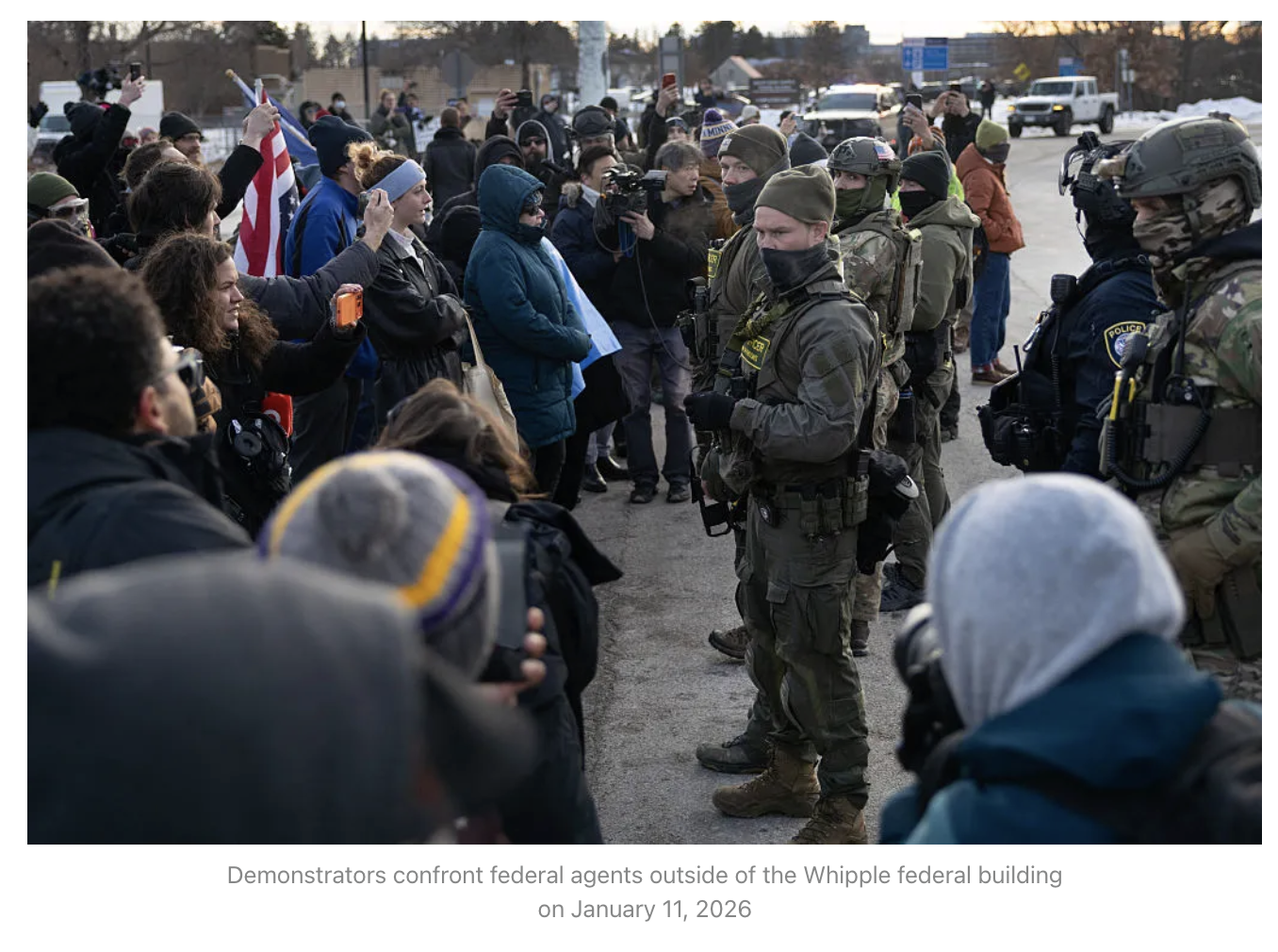
Anti-ICE protests continue in Minnesota, a week after the fatal shooting of 37-year-old Renee Good. On Tuesday, six federal prosecutors in Minnesota resigned over concerns about the direction of the investigation into Good’s death, specifically the push to investigate Good’s widow.
PROTESTS: Federal agents threw flash bangs and tear gas towards protesters outside the federal Whipple building in Minneapolis. At least eight people involved in the protests were arrested on Tuesday, Jan. 13.
MORE FROM THE ICE SHOOTING CASE: The ICE agent who fatally shot Good, identified as Jonathan Ross, reportedly suffered internal bleeding to the torso after the incident, U.S. officials said.
ON THE GROUND
A federal judge in Minnesota declined Wednesday to immediately block the deployment of additional immigration agents to the Minneapolis area after state officials sued to challenge the surge of federal officers. There are more than 2,400 federal personnel in the area — more than three times the number of local police officers.
ARRESTS: The Department of Homeland Security says more than 2,400 undocumented immigrants have been arrested in the Minnesota area since the operation began Nov. 29.
Minneapolis is on edge after dozens of images and videos in recent days have shown ICE agents pulling people from vehicles, knocking down doors, and tackling individuals who were filming the them. In several cases, the incidents have involved U.S. citizens.
Federal personnel arrested two U.S. citizens working at Target in a Minneapolis suburb last Thursday, according to video footage and local officials.
The president of Oglala Sioux Tribe, an Indigenous group, said that ICE agents arrested and detained several of its members in Minneapolis last Friday.
Some Minneapolis residents say they’re living in fear if they have darker skin, and that they need to carry proof of citizenship.
STANDING BY THE STRATEGY: “We’re doing the right thing,” border czar Tom Homan told reporters Wednesday. “They can protest all they want.”
TRUMP LOSING SUPPORT
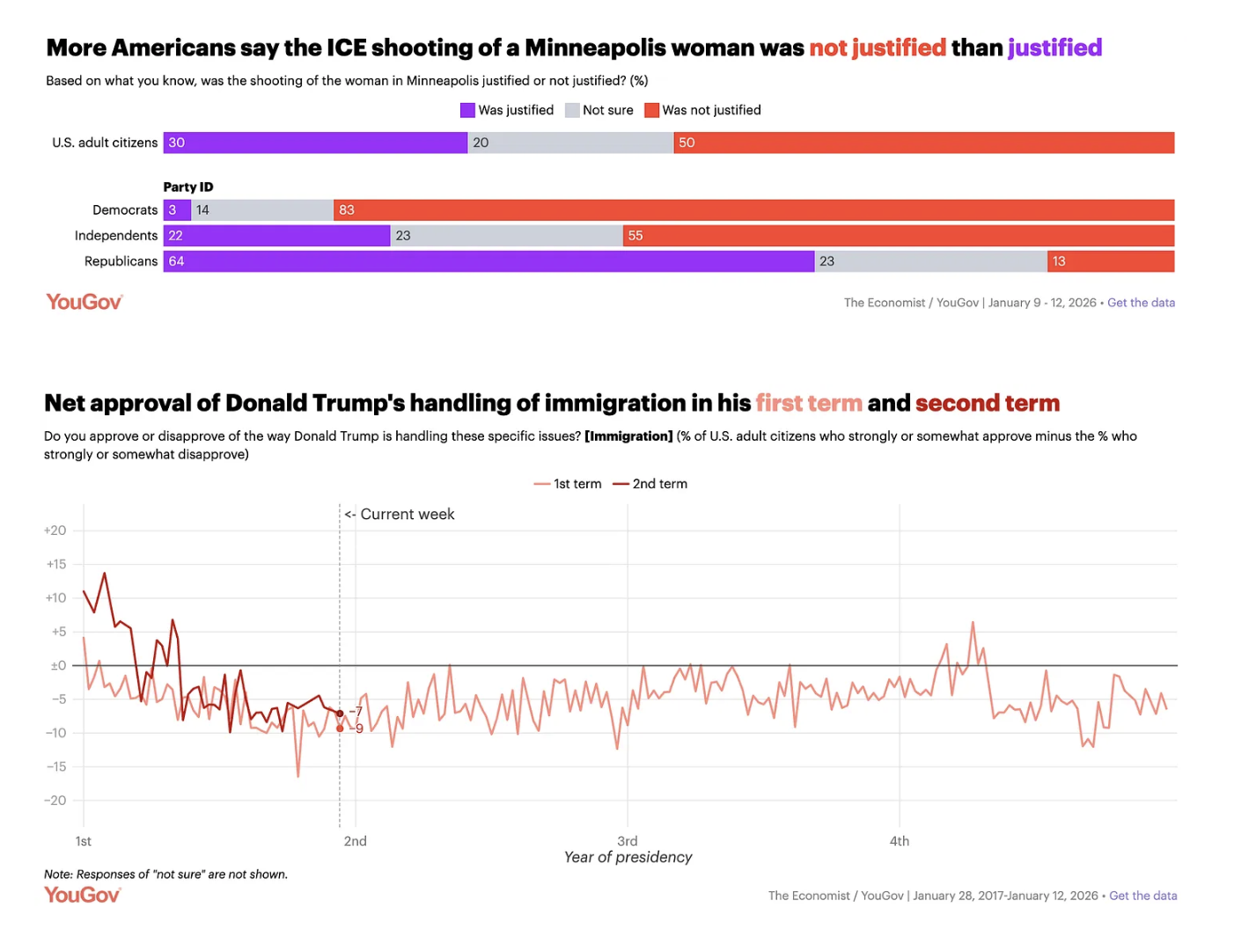
Polling shows public support for the immigration crackdown has waned since Trump returned to office. A YouGov poll released Tuesday found the president’s net approval on immigration has fallen from +14 shortly after his inauguration to –9 today.
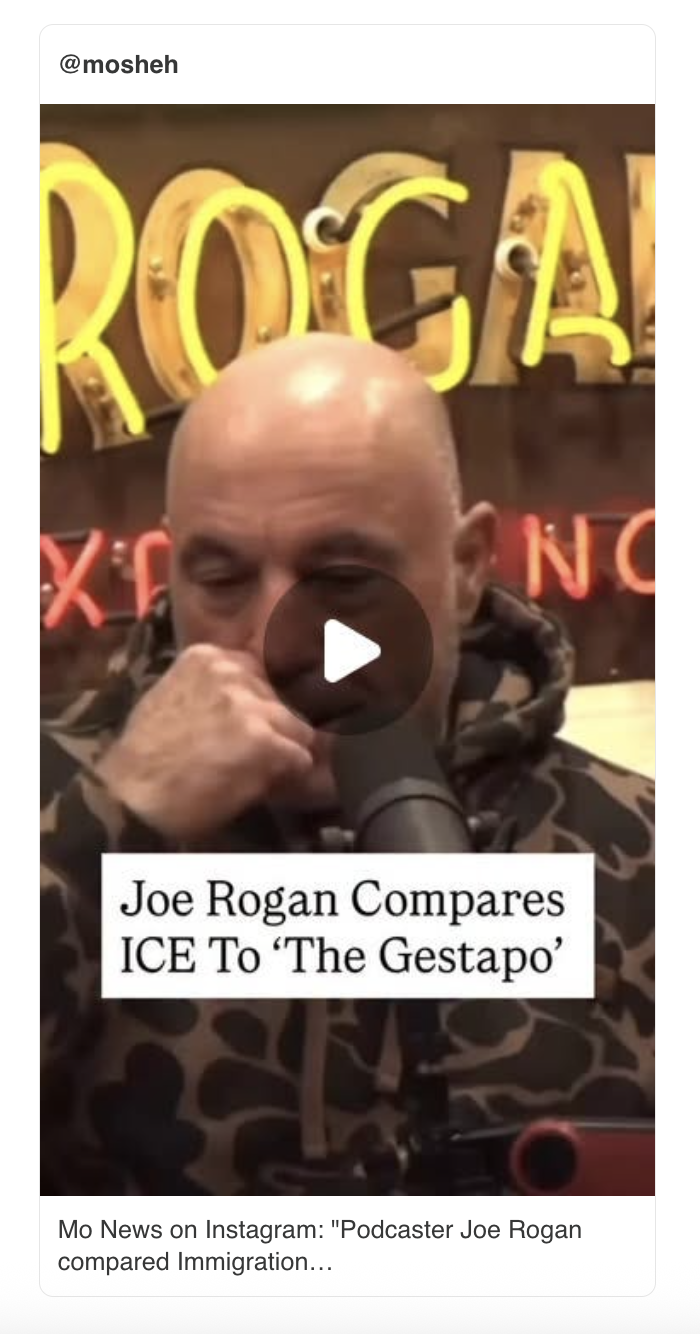
Podcaster Joe Rogan — who formally endorsed Trump in 2024 — has expressed concern in recent months about ICE tactics. This week, he compared ICE agents to “the Gestapo.”
“Are we really going to be the Gestapo? ‘Where’s your papers?’ Is that what we’ve come to?" Rogan said on his podcast, calling recent anti-ICE protests in Minneapolis — and the fatal shooting of Renee Good — “complicated.”